Five Hours of Parole—But Only After His Mother’s Death: What Kind of Humanity Is This?
The iron gates of the prison opened for just five hours—not to offer the joy of freedom, but to allow a grieving son to attend…


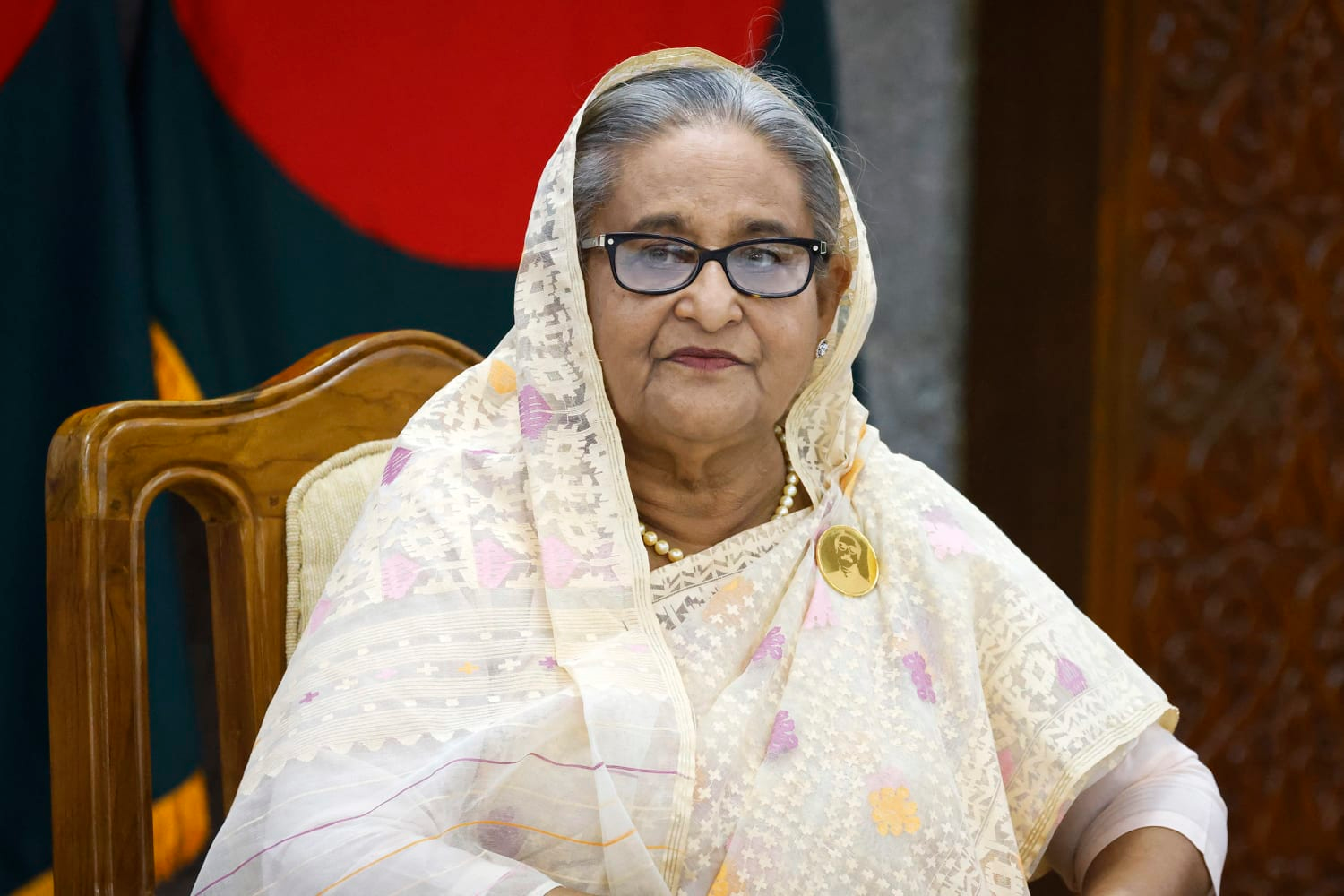
On 5 August, marking two years since Sheikh Hasina was ousted from power during the 2024 mass uprising, she delivered a speech from India in which she declared that she would return to Bangladesh in December.
If her statement is viewed as a prediction, there appears to be little reason to consider it realistic. But if it is interpreted as a political signal, its meaning is clearer. She was attempting to reassure the scattered and demoralised leaders and activists of the Awami League that she remains in control of the party and that the time has not yet come to decide on her successor.
However, three separate questions need to be distinguished: whether Sheikh Hasina can return to Bangladesh, whether the Awami League can return to competitive democratic politics, and whether Sheikh Hasina can return to state power. These are not the same question. Each requires a different set of political realities and conditions.
Given the current circumstances, the first appears possible, the second may become possible over a period of several years, but the prospects for the third have almost disappeared.
Sheikh Hasina was convicted in absentia and sentenced to death in November 2025 over the killings of protesters during the 2024 mass uprising. If she returns to Bangladesh from India, therefore, she would not be returning to the political stage. She would be returning to legal custody.
To understand Sheikh Hasina’s current position, it is useful to compare it with her return to Bangladesh from India in 1981.
In 1981, she was the surviving daughter of Bangabandhu Sheikh Mujibur Rahman, who had been assassinated six years earlier. At that time, she held no state office and had no record of governing the country.
A divided Awami League needed a figure who could unite the party against military rule. Sheikh Hasina filled that role.
The situation today is completely different.
She is a former prime minister who remained in power for 15 years. She has been sentenced to death and faces allegations and documented political records relating to repression during her rule. As a result, the political identity of the Awami League has become deeply intertwined with the actions of her government.
In 1981, Sheikh Hasina’s greatest political advantage was the absence of a personal record of governing the country. That opportunity no longer exists.
Research in comparative politics shows that authoritarian rulers do not remain in power solely because of popular support. The continued backing of powerful groups and institutions is also critical.
According to political scientist Milan Svolik’s analysis, dictators depend on powerful groups such as the military, police, government officials, businesspeople, party leaders and activists, and locally influential political figures to remain in power.
These groups tend to support a ruler when they believe the ruling party will remain in power. But once the prospect of the ruler’s downfall becomes clear, they may withdraw their support.
That is what happened in Bangladesh in August 2024. The mass uprising not only forced Sheikh Hasina to leave office, but also demonstrated that her government could no longer maintain complete control over the situation and that her political future was uncertain.
Once this weakness became apparent, it became easier and safer for powerful actors to distance themselves from her government.
In politics, loyalty is often a bet placed on survival.
India is providing Sheikh Hasina with a safe haven and an opportunity to make political statements. But remaining safely abroad and controlling a government at home are two very different things.
The political and administrative structures that once transformed loyalty into authority under Sheikh Hasina cannot simply be rebuilt by anyone from abroad.
To return to power, she would need the consent of forces that once supported her but later turned away. These include the military, the courts, student organisations associated with the July uprising, and the political parties currently competing for power.
Under present circumstances, there appears to be no credible coalition among these forces capable of bringing Sheikh Hasina back to power.
Political institutions scholar Samuel Huntington emphasised adaptability, complexity, autonomy and internal cohesion when assessing the durability of an institution. By these measures, the Awami League has demonstrated significant weaknesses.
Research by Barbara Geddes and her colleagues has shown that when highly personalised regimes collapse, political parties associated with them often face deeper crises.
This is because personalised systems of rule do not necessarily create political institutions capable of removing an individual leader while preserving the party. As a result, when the leader is removed from power, the party itself can struggle to survive.
That does not mean, however, that the Awami League has ceased to exist as a political party.
Research by James Loxton shows that political parties that emerge as successors to fallen authoritarian regimes can, over time, return to politics.
Chile’s UDI, El Salvador’s ARENA, Taiwan’s Kuomintang and Indonesia’s Golkar are examples.
Several factors were important in the revival of these parties. They developed new leadership, accepted new constitutional frameworks, maintained their organisational foundations and publicly distanced themselves from the repression and abuses associated with their previous regimes.
A similar path may be the most realistic option for the Awami League in Bangladesh.
The party’s voters and political base may survive, and its party symbol may also survive. But that does not mean the fallen leader will return to state power.
Sheikh Hasina’s political future will not depend solely on what the Awami League does. How the current government governs the country will also be crucial.
Political scientists V. O. Key and, later, Morris Fiorina showed that voters often assess the past through the lens of present circumstances.
If a government led by the Bangladesh Nationalist Party can maintain price stability, ensure law and order without repression, create genuine opportunities for political competition and deliver credible institutional reforms, public interest in seeing the Awami League return to power may decline.
On the other hand, if the government fails, or if the winner-takes-all political culture associated with Sheikh Hasina’s era returns, political nostalgia for the Awami League could grow.
Ensuring accountability for the killings and enforced disappearances associated with the events of 2024 is also crucial. Impunity would not only betray the victims, but could also give future governments an opportunity to commit similar abuses.
The opposite danger is equally important. Treating all Awami League voters collectively as criminals would also be politically self-defeating.
Experiences in different countries show that banning a political party does not generally make its voters or supporters disappear. They reorganise elsewhere, wait and can become politically active again over time.
Bangladesh’s current political balance is therefore highly complex.
The solution is neither to forget the past nor to pursue indiscriminate revenge. What is required is to hold individuals accountable for their own actions and ensure justice through lawful procedures. At the same time, a reformed Awami League should have a transparent and lawful path back into peaceful political competition.
From this perspective, Sheikh Hasina’s December declaration is better understood as a strategy to retain internal control over the party than as a realistic plan to retake state power.
This may be politically rational for Sheikh Hasina, but it could prove costly for the Awami League.
The longer the Awami League waits for Sheikh Hasina to return to leadership, the further the party may fall behind in developing new leadership and formulating a political strategy for the future.
Several developments are now more important than Sheikh Hasina’s statement.
Key indicators will include whether any senior Awami League leader begins speaking with independent political authority, whether the government creates a legal pathway for the party to regain registration and return to politics and, if so, what conditions are imposed; whether opportunities emerge for the cases and convictions handed down in absentia to be reviewed by higher courts; whether the political alliance that emerged from the July 2024 movement remains intact or breaks apart; and whether inflation and the law-and-order situation improve or deteriorate.
For Sheikh Hasina to return to power, almost all of these factors would need to move in her favour at the same time.
This creates one of the biggest contradictions facing one of Bangladesh’s oldest major political parties. If the Awami League wants to return to politics, its most realistic path may be to move away from the effort to restore Sheikh Hasina to power.
At the same time, Bangladesh’s new rulers face an important warning.
If a political system is created in which the winning party controls every part of the state apparatus while the defeated side has no lawful political future, the same political conditions that produced the July 2024 mass uprising could eventually be recreated.
Sheikh Hasina may return to Bangladesh one day. But under the current circumstances, the possibility of Bangladesh returning to Sheikh Hasina’s rule appears very remote.
Md Obaidullah is a PhD researcher in the Department of Politics at the University of Virginia and a visiting scholar in the Department of Development Studies at Daffodil International University in Dhaka.
Md Sohrab Hossain is a PhD researcher in the Department of Political Science at the University of Utah.
Source: Asia Times


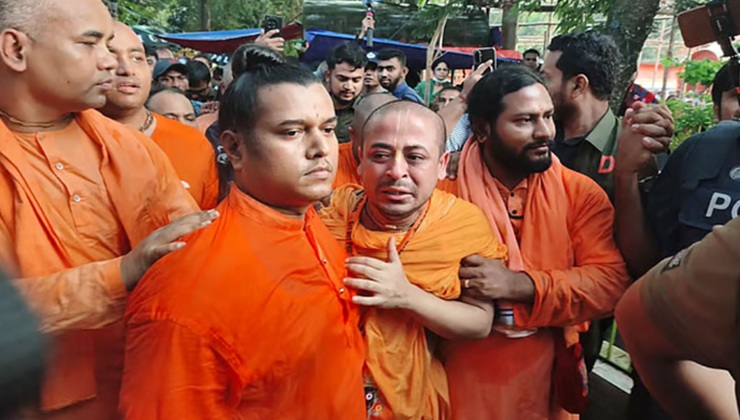
The iron gates of the prison opened for just five hours—not to offer the joy of freedom, but to allow a grieving son to attend…
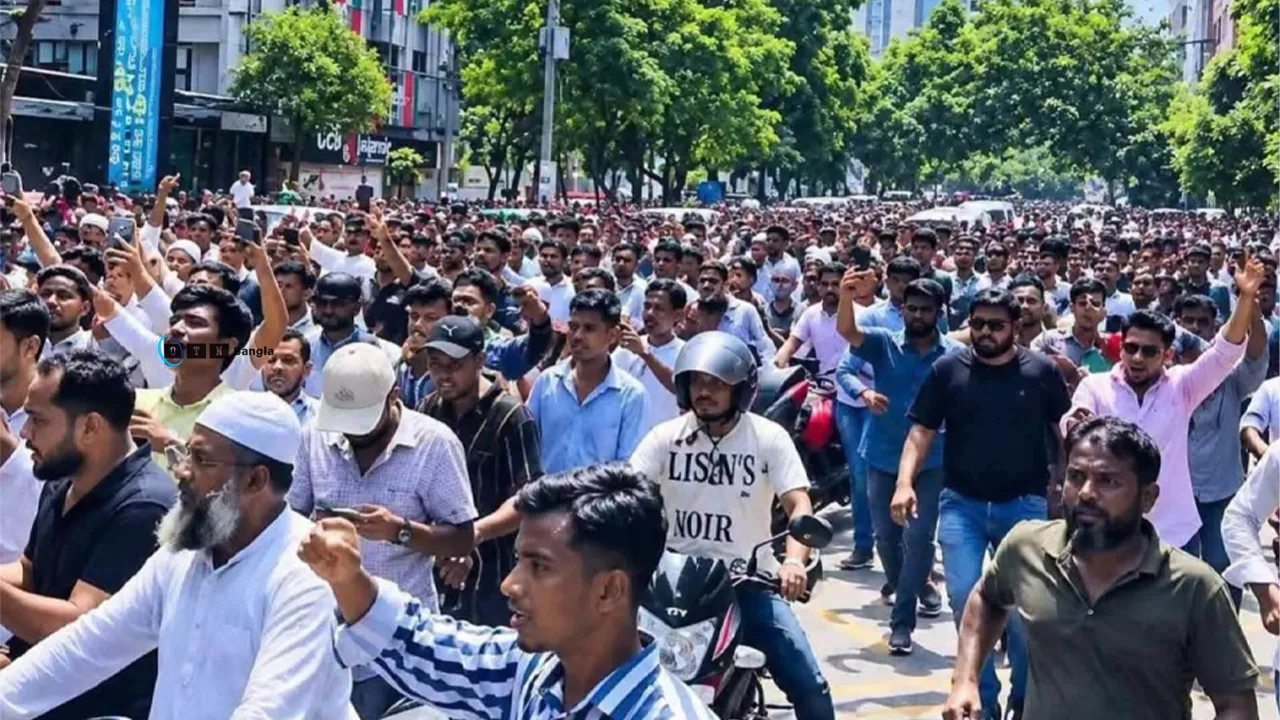
Hundreds of Awami League supporters took part in a march in Dhaka’s Gulshan area on Friday, chanting the slogan ‘Joy Bangla’. The march was planned…
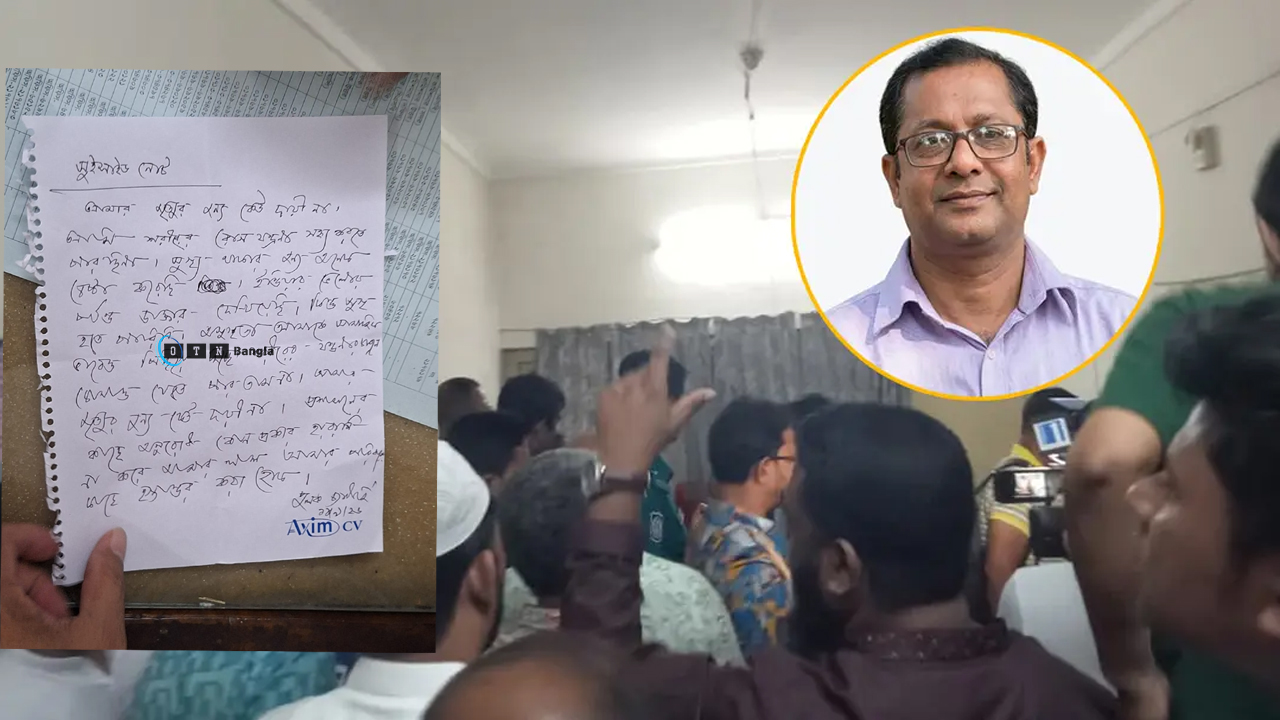
Police have recovered the body of senior journalist Pulak Chatterjee, president of the National Dailies Bureau Chief Association and former bureau chief of Bangladeshi newspaper…
Melbourne: The Australian Federation for Ethnic and Religious Minorities in Bangladesh (AFERMB) has expressed profound sorrow over the death of Shrimati Sandhya Rani Dhar, mother…

Melbourne: “Ask R U OK? Any Day” — Australians are being encouraged to check in with the people around them, not just today but throughout…
A gold trader has been hacked to death by unidentified assailants while returning home after closing his shop in Mahadebpur, Naogaon. The victim, identified as…
Bangladesh’s former Prime Minister and Awami League president Sheikh Hasina may be accompanied by a group of independent international observers if and when she returns…

Police in Gopalganj have arrested Hafizur Rahman Piyal, owner of FNF Convention Hall and Party Centre, over allegations that a concert was organised without police…




All Rights Reserved by © OTN Bangla.com.au - 2026 | Privacy Policy | Terms of Use | Editorial Policy | Proudly Developed by @SSB it.au