Hundreds of Awami League supporters march through Gulshan chanting ‘Joy Bangla’
Hundreds of Awami League supporters took part in a march in Dhaka’s Gulshan area on Friday, chanting the slogan ‘Joy Bangla’. The march was planned…


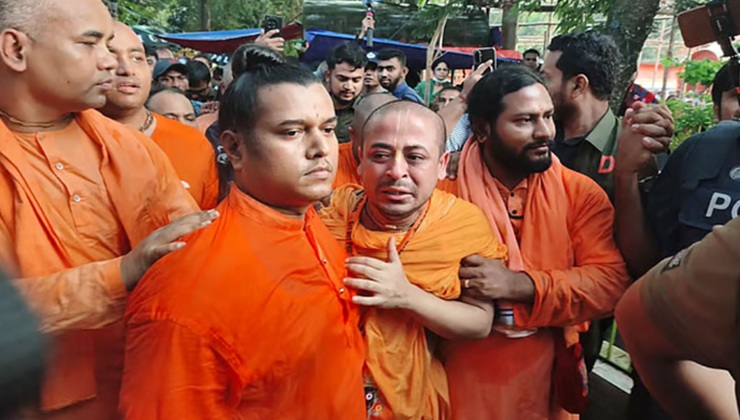
The iron gates of the prison opened for just five hours—not to offer the joy of freedom, but to allow a grieving son to attend his mother’s funeral.
Chinmoy Krishna Das Brahmachari, a Hindu monk and spokesperson for the Sanatani Jagaran Jot, has been imprisoned for nearly two years. When he emerged briefly from captivity and broke down in tears at Pundarik Dham in Chattogram, resting his head at the feet of the Radha-Krishna deities, those tears belonged not only to a son mourning his mother. They also seemed to expose a deeper crisis within Bangladesh’s justice system: administrative rigidity and the erosion of compassion within the machinery of the state.
His 71-year-old mother, Sandhya Rani Dhar, had one final wish—to see her imprisoned son before she died. The family reportedly sought conditional parole so that Chinmoy could visit her during her final days. The authorities, however, maintained that there was no provision allowing a prisoner to be released on parole to visit an ailing relative.
Only after his mother died was he granted five hours of parole to attend her final rites.
My question is simple: Is the purpose of law not also to protect human dignity? A dying mother was denied the chance to see her son one last time, yet after her death, that same son was permitted to stand before her lifeless body. What could be a more cruel irony?
While trying to obtain updates about Chinmoy Krishna Das, I had the privilege of speaking with his mother. Every time we spoke, she made only one appeal:
“I do not want anything else, my son. I only want them to release my child.”
After speaking with Chinmoy in prison, she once told me that he had said:
“I only want to get out of here. I will never make another public statement. I want to live.”
The desperate appeal of a helpless mother seeking her son’s freedom now echoes repeatedly in my ears. Yet before the machinery of the state, I—and perhaps all of us—remain painfully powerless.
Forgive us, Mashima.
Chinmoy Krishna Das faces several criminal cases, including a sedition charge. Although the High Court has granted him bail in some cases, his release remains blocked by others. Judicial proceedings are also continuing in connection with the killing of lawyer Saiful Islam Alif in Chattogram.
Under the fundamental principles of justice, an accused person is not guilty until proven so by a court. The cases against Chinmoy must therefore be heard promptly, transparently and free from political or institutional influence. When a detainee receives bail in one case only to remain imprisoned under another, prolonged detention can effectively become indefinite incarceration.
After the political upheaval of 2024, Chinmoy Krishna Das became a prominent voice at rallies demanding security, protection and equal rights for Bangladesh’s religious minorities. His arrest and continued imprisonment have therefore raised serious questions both at home and abroad.
According to his lawyer, cases began to accumulate against him only after he started speaking publicly about minority rights. The allegations include obstructing police duties, using explosive substances and even occupying land. His lawyer maintains that these accusations are baseless.
Most significantly, before Chinmoy began leading the movement for the rights of the Sanatani community, there was reportedly not a single case or general diary entry against him anywhere in the country. The allegations appeared only after he took to the streets to advocate for the legitimate rights and security of minorities.
According to his lawyer and OTN Bangla’s on-the-ground reporting, Chinmoy Krishna Das had no direct or indirect involvement in the alleged incident of disrespecting the national flag—the accusation at the centre of the sedition case. Nevertheless, his attempts to secure bail have repeatedly been obstructed.
Meanwhile, allegations have emerged that the flags of extremist organisations such as ISIS and al-Qaeda have been displayed publicly in different parts of Bangladesh during the past two years. The state must answer: How many of those incidents have been investigated impartially, and how many individuals have been brought to justice?
Following 5 August 2024, allegations of repeated attacks against minority communities emerged from across the country. According to various reports, the homes and businesses of at least 1,068 minority families were attacked during the first 15 days alone. It was amid this frightening situation that Chinmoy Krishna Das stood publicly for the security and constitutional rights of religious minorities.
On 25 October, a large gathering was held at Laldighi Maidan in Chattogram under the banner of the Bangladesh Sanatani Jagaran Mancha. From that platform, an eight-point set of demands was presented, calling for security, justice and equal rights for minority communities.
Following that peaceful gathering, however, a sedition case was swiftly filed against Chinmoy Krishna Das over an alleged incident at New Market intersection. The apparent inconsistencies involving the location of the rally, the site of the alleged incident and the subsequent sequence of events naturally raise serious questions.
Would it truly have been impossible to take a Hindu monk to his dying mother’s bedside for just a few hours?
Sandhya Rani Dhar may have continued waiting until her final breath, hoping that her son would come. That wait never ended. The state that could not grant them five hours while she was alive approved five hours of parole after she had died. By then, there could be no final meeting—only a final farewell.
The image of Chinmoy Krishna Das weeping with his head bowed at the feet of the deities at Pundarik Dham leaves a profound question before our collective conscience:
What kind of state is this—and what kind of humanity?
Dr Prodip Roy
Editor, OTN Bangla, Melbourne


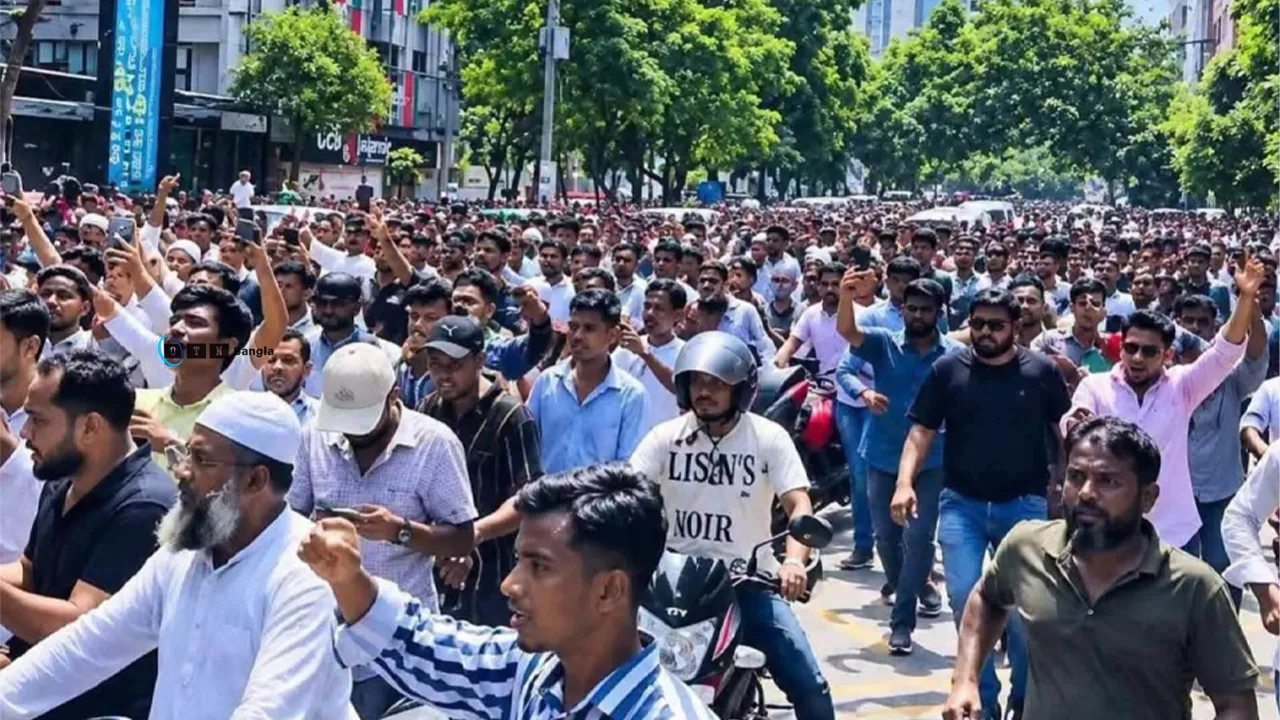
Hundreds of Awami League supporters took part in a march in Dhaka’s Gulshan area on Friday, chanting the slogan ‘Joy Bangla’. The march was planned…
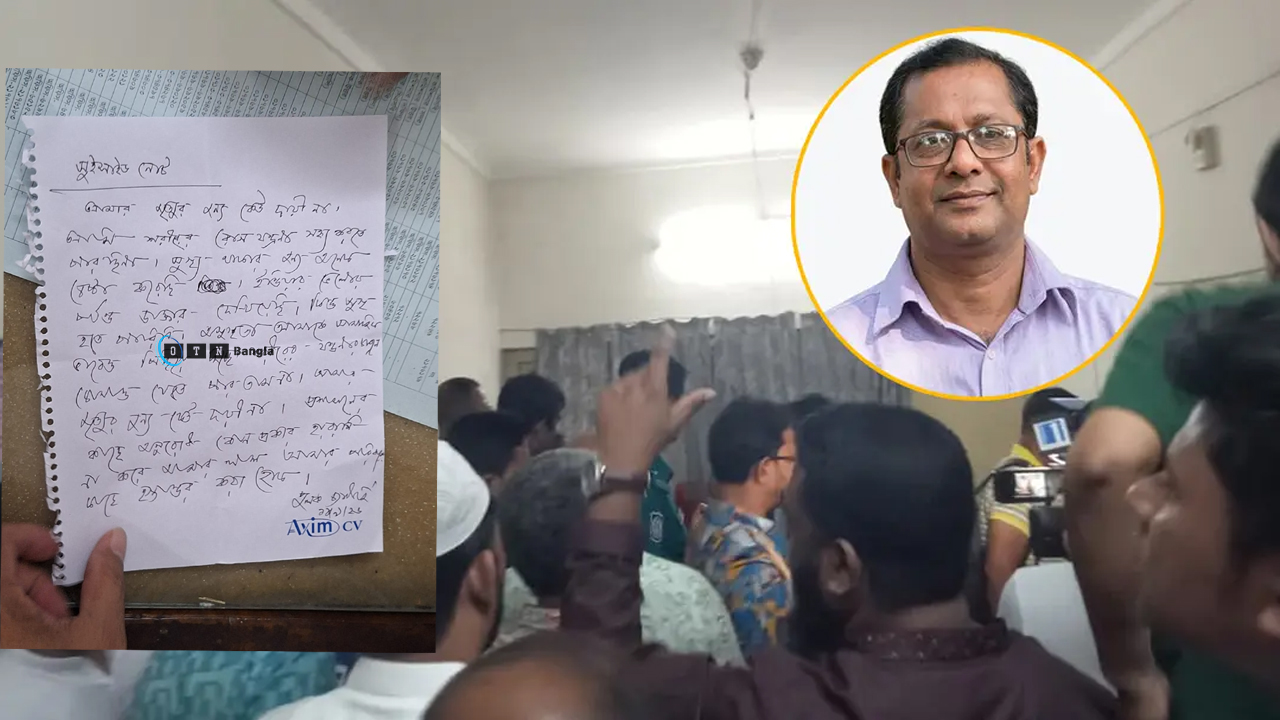
Police have recovered the body of senior journalist Pulak Chatterjee, president of the National Dailies Bureau Chief Association and former bureau chief of Bangladeshi newspaper…
Melbourne: The Australian Federation for Ethnic and Religious Minorities in Bangladesh (AFERMB) has expressed profound sorrow over the death of Shrimati Sandhya Rani Dhar, mother…

Melbourne: “Ask R U OK? Any Day” — Australians are being encouraged to check in with the people around them, not just today but throughout…
A gold trader has been hacked to death by unidentified assailants while returning home after closing his shop in Mahadebpur, Naogaon. The victim, identified as…
Bangladesh’s former Prime Minister and Awami League president Sheikh Hasina may be accompanied by a group of independent international observers if and when she returns…
Police in Gopalganj have arrested Hafizur Rahman Piyal, owner of FNF Convention Hall and Party Centre, over allegations that a concert was organised without police…
On 5 August, marking two years since Sheikh Hasina was ousted from power during the 2024 mass uprising, she delivered a speech from India in…




All Rights Reserved by © OTN Bangla.com.au - 2026 | Privacy Policy | Terms of Use | Editorial Policy | Proudly Developed by @SSB it.au