Durga Puja: A Pledge of Harmony, a Question of Security
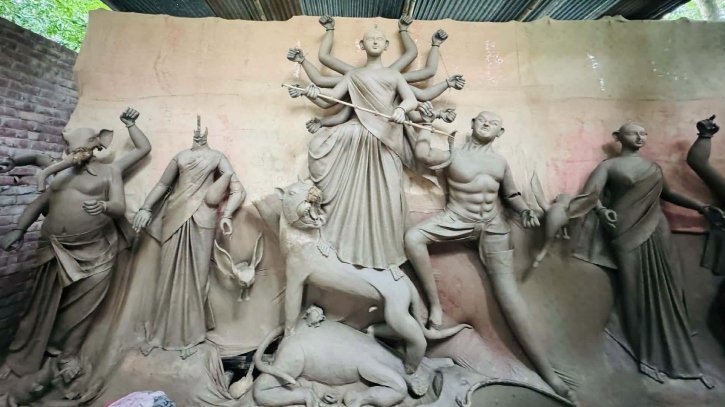
Durga Puja: A Pledge of Harmony, a Question of Security Autumn’s white clouds, swaying kash flowers and the beat of the dhak herald the return…



Melbourne, 24 August- The brutal killing of retired schoolteacher Ganapati Chakraborty, his wife Pritilata Chakraborty, their daughter Agami Chakraborty, and their 12-year-old son Ayush Chakraborty Priyam in Rangpur’s Machuapara area is not merely the tragic story of an entire family being wiped out. It is also a critical test of Bangladesh’s justice system, the safety of its religious minorities, and the credibility of its law-enforcement agencies.
Four members of one family were murdered inside their own home. Their bodies were found in different parts of the building. The electricity supply had been disconnected, furniture and places where valuables were likely stored had been ransacked, and the main gate was reportedly locked from outside. The CID also told the media that a flammable substance appeared to have been poured on the victims’ faces.
Despite these disturbing circumstances, investigators initially appeared inclined to describe the incident as a possible robbery. Police later offered a different explanation, claiming that two young men killed the family one by one after Ganapati Chakraborty confronted them for consuming yaba on his rooftop.
Such a rapid shift in the official narrative—from robbery to a multiple murder allegedly triggered by a confrontation over drugs—has understandably raised serious public doubts.
Police said that two suspects, Mugdha Das and Siddhartha Das, had admitted their involvement. However, an alleged confession made to police cannot be treated as the final truth. The account must be independently established in court through forensic evidence, post-mortem findings, digital records, witness testimony and a coherent reconstruction of the crime.
Bangladesh has previously witnessed controversial investigations involving manufactured suspects, coerced confessions and the notorious “Joj Mia” episode. Public scepticism, therefore, cannot simply be dismissed. It must be answered with credible evidence.
Questions that must be investigated
The victims’ relatives have alleged that Ganapati Chakraborty faced demands for extortion money while constructing his house. Claims have also emerged concerning a dispute with a locally influential individual. Some residents, reportedly speaking on condition of anonymity, claimed that the person and several associates had been seen near the house around the time of the killings.
These remain allegations and must not be presented as established facts. Nevertheless, they are serious enough to require a thorough and impartial investigation. If any politically, socially or financially influential individual is connected to the alleged extortion dispute, that person must also be brought within the scope of the inquiry.
The police account leaves several important questions unanswered:
How did the suspects know they could enter the rooftop without being noticed?
Who disconnected the electricity supply, and when?
How was the main gate locked after the killings?
Why were cupboards, furniture and places used to store valuables damaged?
Where were the family’s four mobile phones, and what do their call records and location data show?
Why was an apparent flammable substance used on the victims’ faces?
Whose fingerprints and DNA were found on the ropes, towels or other suspected murder weapons?
Do the suspects’ mobile locations and the forensic evidence support the police account?
Were all available CCTV recordings from the surrounding area collected?
Is the alleged extortion dispute being investigated as a separate line of inquiry?
Was the possibility of sexual violence against the daughter properly examined during the post-mortem?
Unless these questions are answered clearly, a narrative based primarily on alleged confessions will not remove public suspicion. It may instead create fears that other perpetrators, accomplices or planners—if there were any—could remain beyond the reach of justice.
The victims’ minority identity cannot be ignored
All four victims belonged to Bangladesh’s Hindu community. Investigators must therefore examine every plausible motive, including communal hatred, intimidation of a minority family, attempted property seizure, extortion and personal conflict.
Their religious identity does not automatically prove that this was a communal crime. At the same time, it would be equally irresponsible to exclude that possibility before completing a credible investigation.
The religious identity of investigators or government officials cannot guarantee the independence of an investigation. Nor should minority officials be placed before the public as a shield against legitimate questions.
Whether an investigator is Hindu, Muslim, Buddhist or Christian is irrelevant. What matters is whether that officer can work independently, professionally and without political or administrative pressure. Using minority officials to lend credibility to a questionable investigation would also be unfair and disrespectful to those officials.
Why the government must address suspicions
If the full horror of this crime exposes a broader failure to protect religious minorities, it could intensify public anger and strengthen opposition to the government. The case could also attract international scrutiny of Bangladesh’s human-rights situation.
At a time when the government’s relationship with India is already sensitive on several issues, the murder of an entire Hindu family could create further diplomatic unease. There may consequently be public concern that authorities have an incentive to promote the least politically damaging explanation.
There is, at present, no independently established evidence that the government is deliberately covering up the crime. However, premature conclusions, changing explanations and the avoidance of critical questions would inevitably deepen that suspicion.
The government’s responsibility is not to silence those raising questions. It must ensure a transparent investigation so that allegations of a cover-up cannot gain credibility. Even if the truth proves politically uncomfortable, the state remains obligated to reveal it.
An independent, evidence-based investigation is essential
This investigation should not depend solely on statements from local police. Experienced criminal investigators and forensic specialists should be involved, with appropriate judicial oversight if necessary.
The authorities should disclose the material findings of the post-mortem and forensic examinations without compromising the prosecution. They must verify the suspects’ statements against DNA, fingerprints, mobile-phone data, CCTV footage, financial transactions and the reported extortion dispute.
The safety of the victims’ relatives, neighbours and potential witnesses must also be guaranteed. Anyone possessing information about an influential individual should be able to speak to investigators without fear of retaliation or losing employment.
Justice for Ganapati Chakraborty and his family cannot mean arresting two young men and closing the file as quickly as possible. Justice requires establishing who committed the murders, why they did so, whether anyone assisted or directed them, and whether the crime scene was manipulated to mislead investigators.
Four lives have been extinguished with horrifying brutality. If the state chooses a convenient narrative over the complete truth, it will amount to a second betrayal of the victims.
This case must not be hastily closed as either a robbery or the spontaneous result of a confrontation over drug use. Every layer of the Rangpur family murders must be uncovered.
Justice must not only be delivered; the public must be able to see, through evidence and transparency, that justice has truly been done.
Editor: Dr. Prodip Roy, Melbourne


Durga Puja: A Pledge of Harmony, a Question of Security Autumn’s white clouds, swaying kash flowers and the beat of the dhak herald the return…
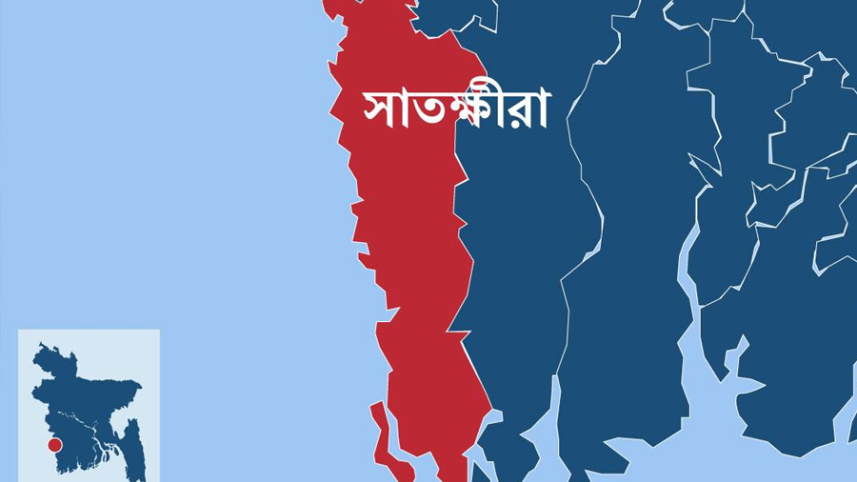
OTN Bangla Desk: A 52-year-old fish farmer was allegedly beaten to death on suspicion of stealing fish from a fish enclosure in Tala upazila of…
The death of Wahiduzzaman Shamim in Satkhira exposes the danger of mob violence in Bangladesh. According to police, the 30 year old man was beaten…

OTN Bangla Desk: Former Bangladesh Prime Minister Sheikh Hasina has criticised Prime Minister Tarique Rahman for declining to attend the BRICS summit in India. In…

I am not an avid reader, but I do go through a book whenever I can make time for it. The last audiobook I finished…
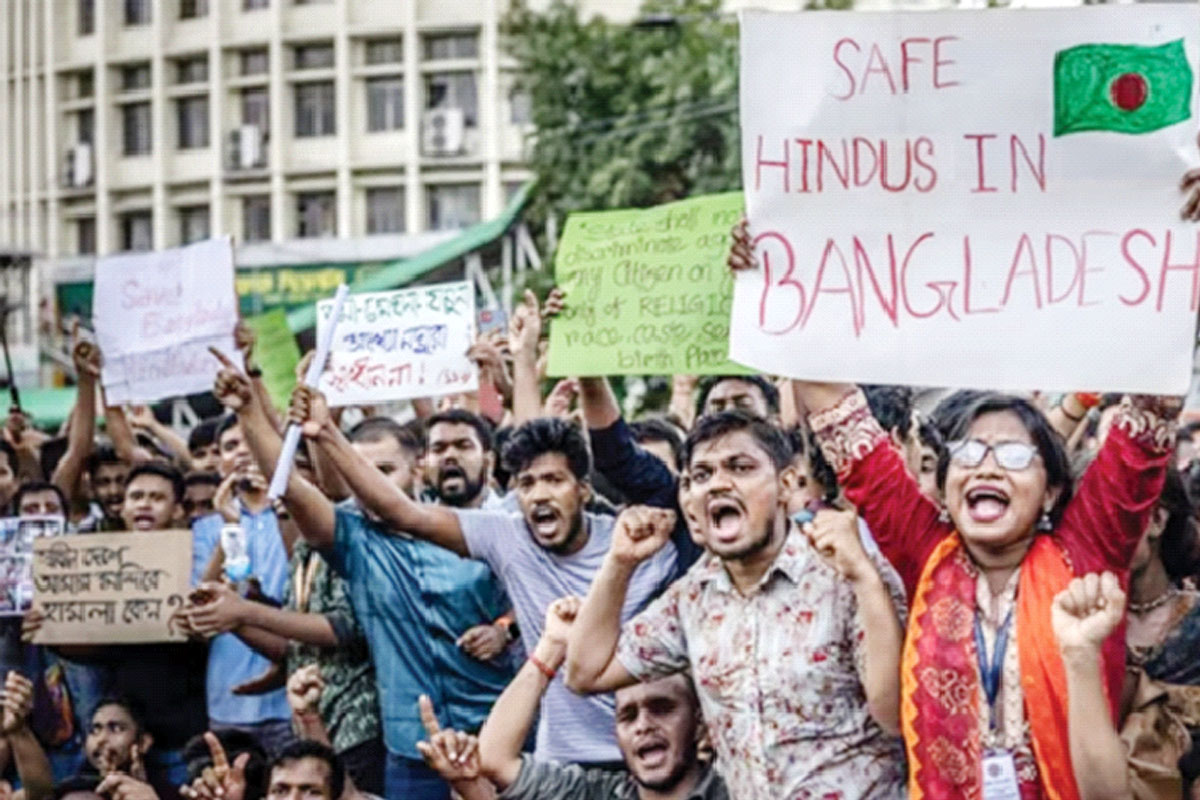
OTN Bangla Desk: Land and property disputes, disappearances, kidnappings, physical assaults, attacks on religious sites, murders and mysterious deaths feature in the July–September 2026 quarterly…

Reports about General Waker-Uz-Zaman’s future have fuelled speculation, while ISPR has warned against misleading information. No confirmed government announcement of his removal has been cited….
A Festival Overshadowed by Fear As Bangladesh’s Hindu community prepares for Durga Puja, reports of idol vandalism in several parts of the country have cast…




All Rights Reserved by © OTN Bangla.com.au - 2026 | Privacy Policy | Terms of Use | Editorial Policy | Proudly Developed by @SSB it.au