International ‘Bangladesh in Crisis’ Conference Held in Australia: Sheikh Hasina Calls for Global Support to Restore Democracy
12:02 am - November 21, 2026
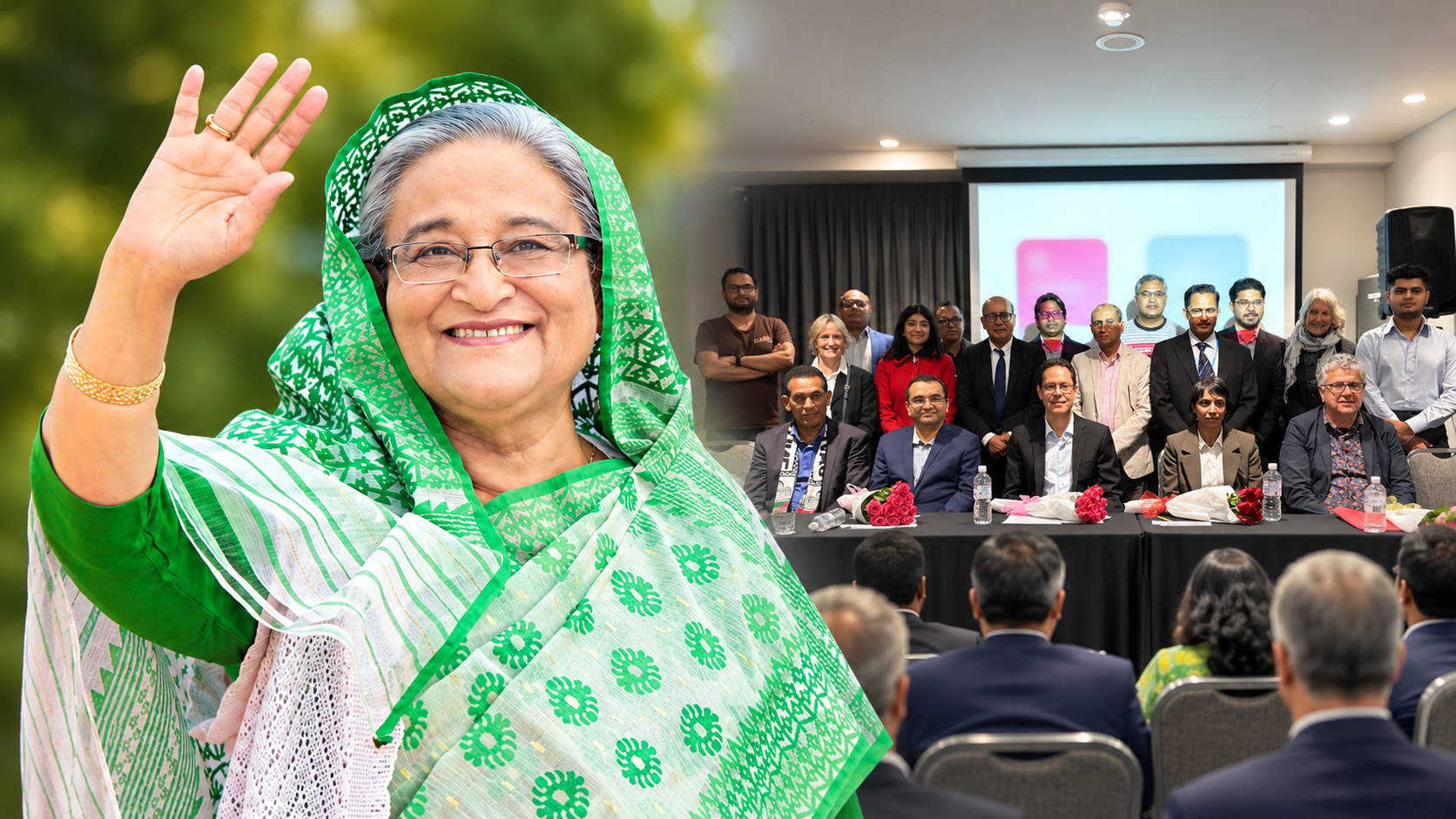
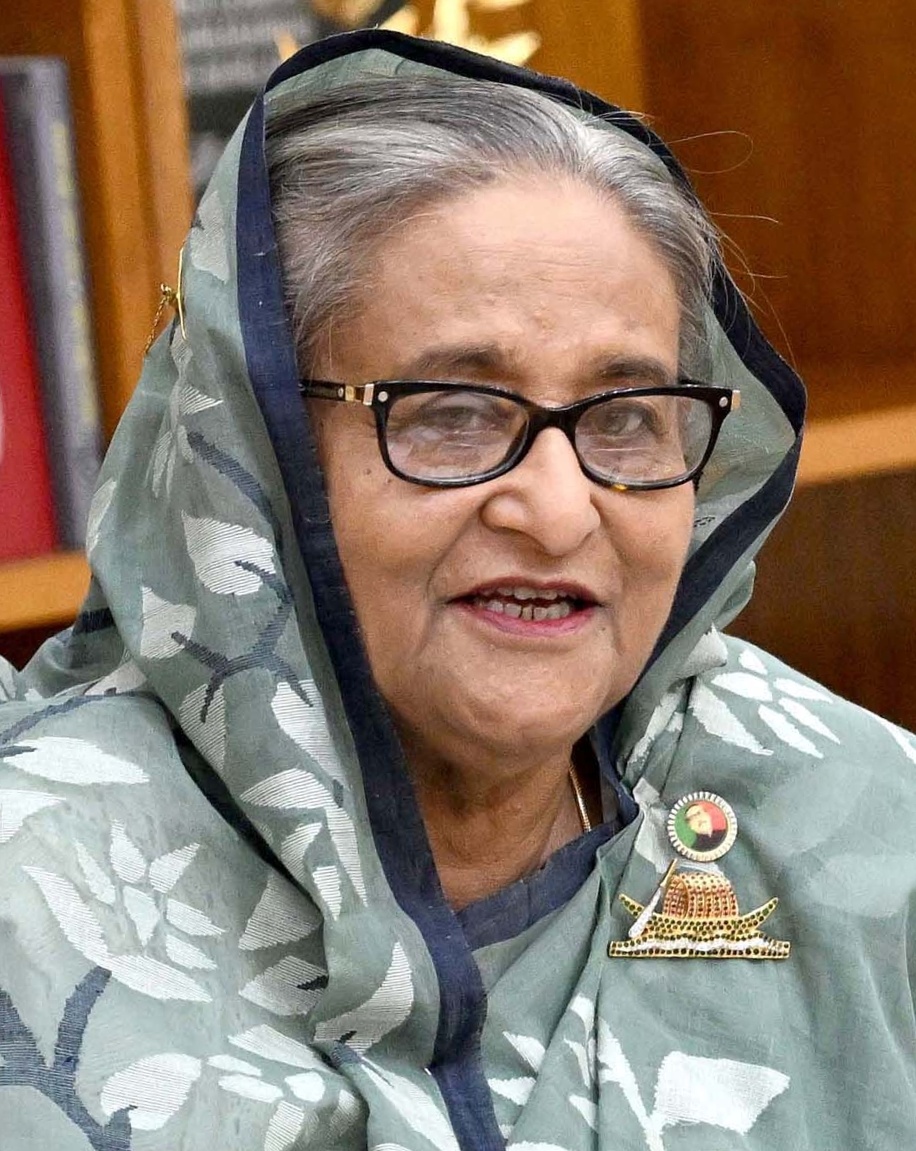
Former Prime Minister Sheikh Hasina highlighted the recent human rights situation in Bangladesh and sought the international community's cooperation in restoring democracy. Photo: OTN Bangla
OTN Bangla | Melbourne, Australia | 20 November 2026
An international conference titled “Bangladesh in Crisis” was held in Melbourne, Australia, bringing together human rights advocates, former elected representatives, legal researchers, community leaders and representatives from diverse backgrounds to discuss Bangladesh’s ongoing political situation, allegations of human rights violations, the safety of religious and ethnic minorities, and reported persecution based on political affiliation.
The conference took place on Friday, 20 November 2026, at the Novotel Hotel in Melbourne. It was organised by the Australia-based human rights organisation Democracy, Rights and Persecution Watch (DRPW).
A major highlight of the conference was the virtual participation of Bangladesh’s former Prime Minister and Awami League President, Sheikh Hasina, who joined the event live via Zoom. She addressed the gathering about recent developments in Bangladesh, allegations of political persecution, and the need to restore democratic governance and protect fundamental human rights.
Throughout the conference, speakers emphasised that human rights are universal and must be protected regardless of a person’s political affiliation, religion, ethnicity or ideology. They highlighted the importance of safeguarding every individual’s right to life, personal security, freedom of expression, political participation and access to justice.
Sheikh Hasina Urges Australian Community to Support the Restoration of Democracy
Addressing the Melbourne conference through a live Zoom connection, former Prime Minister Sheikh Hasina expressed serious concerns about the current political and human rights situation in Bangladesh.
She alleged that since the fall of her government in August 2024, Awami League leaders, party workers, supporters and members of religious and ethnic minority communities had experienced political retaliation, intimidation, arbitrary arrests and various forms of persecution.
During her address, Sheikh Hasina referred to several recent incidents that she described as examples of restrictions on civil liberties and political expression.
In particular, she alleged that children had been arrested by police simply for chanting “Joy Bangla”, a slogan historically associated with Bangladesh’s independence movement and the Awami League. She raised concerns about the treatment of children and ordinary citizens for expressing political opinions, arguing that freedom of expression should be protected rather than criminalised.
Her remarks also addressed allegations of politically motivated arrests, attacks on party supporters, intimidation of individuals associated with the Awami League, and insecurity affecting minority communities in different parts of Bangladesh.
Sheikh Hasina urged Bangladeshi Australians, Australian human rights organisations, civil society representatives and the broader Australian community to raise their voices over the reported human rights situation in Bangladesh.
She specifically called for international support to help restore democratic governance, protect citizens’ voting rights and ensure the fundamental freedoms of the Bangladeshi people.
The former Prime Minister emphasised the importance of equal rights and legal protections for all citizens, irrespective of political differences.
She also encouraged the international community to build awareness and support for democracy, security and justice in Bangladesh.
Her participation added significant political prominence to the Melbourne conference and brought international attention to the concerns raised by the organisers.
International Panel Featured Former Australian Political Representatives and Human Rights Experts
The international conference featured five panellists representing Australia’s political, legal, human rights and multicultural community sectors.
Guests and delegates participating in an international conference held in Melbourne on the human rights situation, political repression, and the safety of minorities in Bangladesh. Photo: OTN Bangla
The panellists included:
Mr Carlo Carli — Former Member of Parliament, Parliament of Victoria.
Mr Gautam Gupta — Former Acting Mayor, Wyndham City Council.
Mr Mark Little — Executive Director, Citizens Commission on Human Rights, Victoria.
Ms Johanna de La Rosière — Legal Researcher, Yellow Rose Foundation.
Dr Berhan Ahmed — Chief Executive Officer, Africause Youth & Community Services.
The panel discussions focused on the importance of protecting fundamental human rights, preventing discrimination, ensuring the safety of minority communities, upholding the rule of law and strengthening democratic principles.
Ms Johanna de La Rosière — Legal Researcher, Yellow Rose Foundation. Photo: OTN Bangla
A central theme of the conference was that human rights protections must apply equally to everyone, regardless of political beliefs, religious identities or cultural backgrounds.
The discussions also highlighted the importance of accountability, political tolerance, peaceful coexistence and respect for differing opinions.
Political Persecution Is Incompatible with Fundamental Human Rights
One of the key issues discussed during the conference was the alleged persecution of individuals because of their political affiliations.
The discussions highlighted that political diversity is a fundamental characteristic of democratic societies. Citizens must be free to support different political parties and express differing political opinions without fear of intimidation, violence, discrimination or arbitrary detention.
Particular attention was given to allegations of politically motivated violence, arrests and harassment involving Awami League leaders, members and supporters in Bangladesh.
The importance of examining such allegations through internationally recognised human rights principles was emphasised.
The broader message emerging from the discussions was that human rights are not privileges reserved for any particular political party, government or ideological group. Rather, they are inherent rights belonging to every individual.
The conference also highlighted that political transitions or changes in government should never justify the removal of constitutional protections, restrictions on fundamental freedoms or the targeting of individuals because of their political identities.
Respect for diversity of political opinion, peaceful political participation and equality before the law were identified as essential principles of a functioning democratic society.
Concerns Raised Over the Safety of Religious and Ethnic Minorities
The safety and security of Bangladesh’s religious and ethnic minority communities emerged as another significant topic of discussion.
The conference addressed allegations of violence, intimidation, attacks on property and insecurity affecting Hindus, Buddhists, Christians, Indigenous peoples and other ethnic minority communities.
Speakers and participants highlighted the importance of ensuring that every citizen can practise their religion, maintain their cultural identity and live safely without experiencing discrimination or persecution.
The discussions reinforced the principle that no individual should face violence, unequal treatment or insecurity because of religious belief or ethnic identity.
The protection of minority communities was presented not merely as an issue affecting particular groups, but as an important measure of a country’s democratic health, social harmony and commitment to human rights.
The need to promote communal harmony, safeguard freedom of religion and ensure access to justice for victims of alleged violence was also highlighted.
Participants considered the broader implications of minority insecurity for Bangladesh’s democratic institutions, social cohesion and international human rights obligations.
DRPW Reports Document Allegations of Human Rights Violations
Recent reports published by Democracy, Rights and Persecution Watch provided an important context for the international conference.
The organisation’s report, titled “Bangladesh in Crisis: Human Rights Violations”, reviewed reported incidents in Bangladesh between 5 August 2024 and 7 November 2026.
The report documented allegations involving deaths resulting from mob violence, deaths in law enforcement custody, arrests linked to political affiliation and attacks on religious and ethnic minority communities.
A separate DRPW report, titled “Bangladesh in Crisis: Minority Lives Lost”, documented 146 deaths involving members of religious and ethnic minority communities between 4 August 2024 and 27 October 2026.
According to the organisation’s findings, the documented deaths included:
119 Hindus;
Five Barua Buddhists; and
22 individuals from various Indigenous and ethnic minority communities.
DRPW compiled the information using published news reports and other available sources. The organisation did not claim that every incident had been independently investigated.
The findings were presented as documented allegations and reported incidents requiring further scrutiny, independent investigation and appropriate legal accountability.
The organisation emphasised the importance of transparent investigations, accountability for those responsible for human rights abuses and access to justice for affected individuals and families.
The reports also underscored the need for continued monitoring of Bangladesh’s human rights situation and greater international awareness of allegations involving political violence and minority persecution.
International Responsibility to Protect Human Rights
The conference discussions placed particular emphasis on the universal nature of human rights and the responsibility of the international community to respond to serious allegations of abuse.
Participants explored the importance of assessing Bangladesh’s human rights situation against internationally recognised principles rather than treating all such concerns solely as matters of domestic political disagreement.
The protection of the right to life, personal liberty, fair legal proceedings, religious freedom, peaceful political participation and freedom of expression featured prominently in the broader discussions.
These principles reflect the values established under the Universal Declaration of Human Rights, which recognises the equal dignity and fundamental rights of all human beings.
The conference also drew attention to the importance of peaceful political engagement, the rule of law and transparent investigations into alleged violations.
The discussions reinforced the view that human rights concerns should be addressed consistently, regardless of the political identity of victims or those accused of responsibility.
International solidarity, public awareness and constructive engagement were highlighted as important elements in promoting accountability and protecting vulnerable communities.
Melbourne Conference Brings International Attention to Bangladesh’s Human Rights Situation
The Melbourne gathering provided an opportunity for members of Australian civil society to engage in discussions about Bangladesh’s political developments and reported human rights challenges.
The involvement of former Australian political representatives, human rights advocates, legal researchers and multicultural community leaders brought a range of professional and community perspectives to the conference.
Beyond expressing concern about reported incidents in Bangladesh, the discussions highlighted the importance of building international awareness, encouraging solidarity and supporting conditions conducive to peaceful democratic participation.
The virtual appearance of former Prime Minister Sheikh Hasina gave the event added political significance.
Her address focused particularly on allegations of persecution involving Awami League members and supporters, concerns about minority safety, restrictions on political expression and the need for international engagement in support of democratic rights.
The conference also provided a platform for considering the relationship between political stability, minority protections, accountability and the development of inclusive democratic institutions.
A Message of Democracy, Equality and Human Rights for All
The overarching message emerging from the conference was that human rights must transcend national borders, political affiliations, religious differences and ideological divisions.
In a democratic society, every citizen should have the freedom to express opinions, practise religion, participate in political activities and live without fear of persecution.
The discussions stressed the importance of independently investigating allegations of human rights violations in Bangladesh, ensuring accountability under the law and providing access to justice for affected individuals and families.
Political tolerance, equal protections for minority communities and respect for democratic institutions were highlighted as essential foundations for an inclusive, peaceful and humane society.
The conference reinforced the principle that political differences should never undermine the fundamental dignity, equality or legal rights of any individual.
Dr Molla Haque of Democracy, Rights and Persecution Watch (DRPW) served as the moderator throughout the conference, conducting the proceedings from beginning to end.
The international gathering concluded with a continuing emphasis on the importance of protecting human rights, promoting political tolerance, safeguarding vulnerable communities and supporting democratic principles in Bangladesh.
OTN Bangla participated as the official media partner of the international conference, providing live news coverage and broadcasting the proceedings directly from the Melbourne venue.
OTN Bangla Desk | Melbourne | 24 November 2026 Former Bangladeshi Prime Minister Sheikh Hasina has announced her intention to return to Bangladesh on 16…
Sadia Amin was arrested in Bangladesh in 2017 for allegedly translating bomb-making manuals for an extremist organisation. Australian media reports indicate that no connection has…
Bangladesh opposition leader Shafiqur Rahman faces scrutiny over past remarks about a Hamas leader and a controversial social media post about working women, just weeks…
The IEEE Victorian Section brought together members, researchers, engineers, academics and technology professionals at the University of Melbourne for its 2026 Annual General Meeting and…
Australian Federal MP Julian Leeser has expressed concern over reports of persecution targeting religious minorities in Bangladesh, particularly the Hindu community, and the undermining of…
SYDNEY, 15 November 2026: Bijoya Sammilan 2026 opened in Sydney with the national anthems of Australia and Bangladesh, expressing respect and affection for both countries….
Sheikh Hasina once returned from exile to become Bangladesh’s prime minister. Could history repeat itself for the former leader, who is once again living in…
Victoria’s Coalition and One Nation are moving towards placing each other ahead of Labor on how-to-vote cards in key seats at the upcoming state election,…