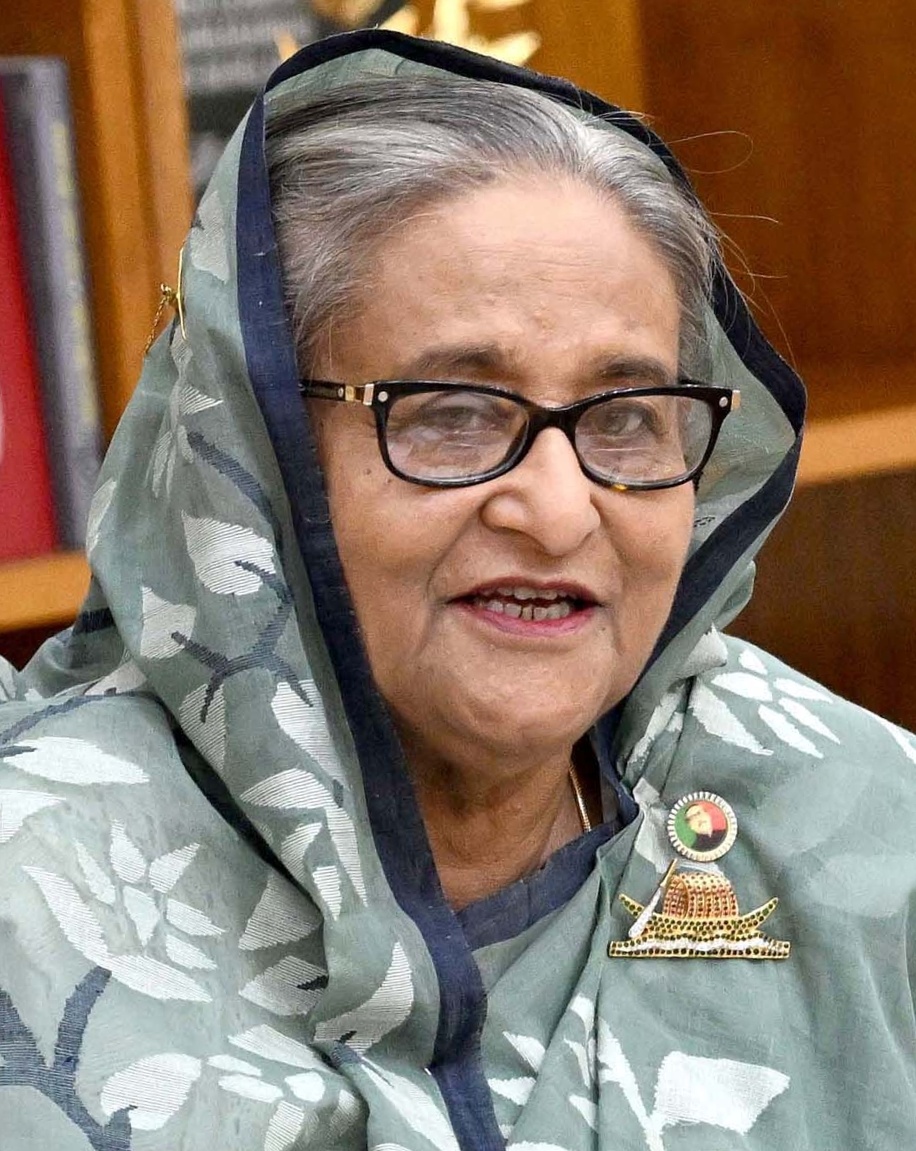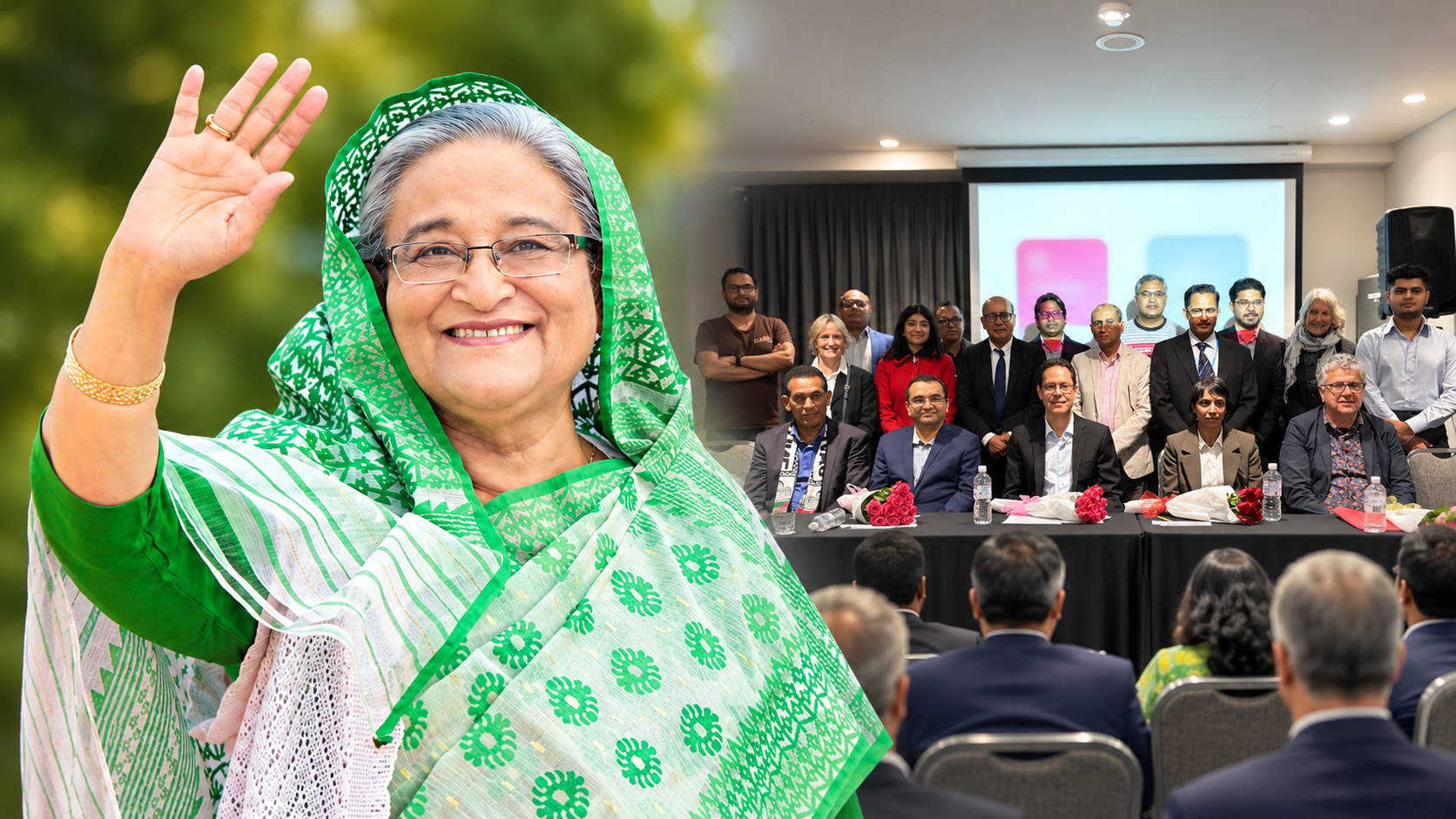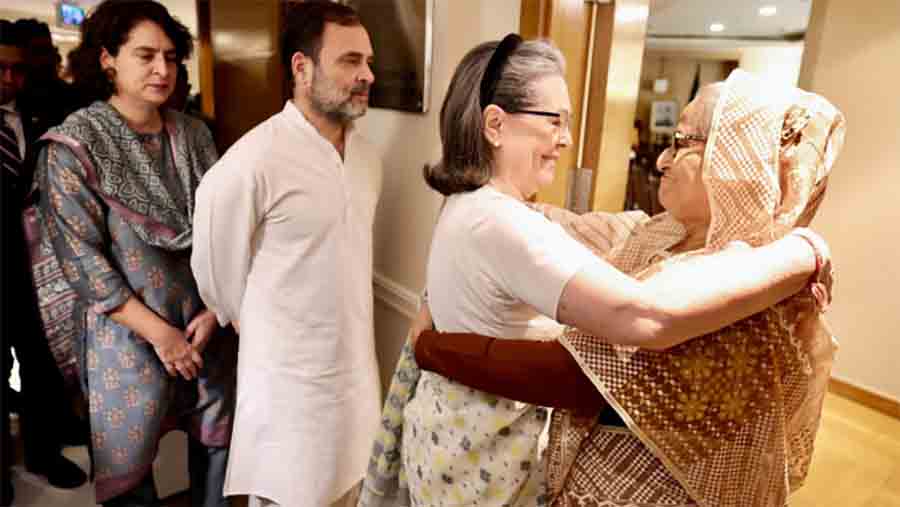
Sonia Gandhi and Sheikh Hasina. Reports surrounding Sonia’s new memoir highlight their long-standing relationship, as well as the period of Hasina’s exile and her subsequent return.
Sheikh Hasina once returned from exile to become Bangladesh’s prime minister. Could history repeat itself for the former leader, who is once again living in India? A report about Indian Congress leader Sonia Gandhi’s new memoir has brought that question into focus.
Published by HarperCollins on November 10, Belonging: A Journey of Love explores Sonia Gandhi’s personal life, her journey within the Gandhi family and her experience of embracing India as her home. Indian media coverage has highlighted the memoir’s blend of personal recollections and political history.

Sonia Gandhi’s memoir, ‘Belonging: A Journey of Love’. (Source: AP)
According to the report, Gandhi recalls meeting Hasina during her first exile in India and reflects on her subsequent return to Bangladesh and rise to political leadership. It also attributes to Gandhi an observation suggesting that, although some consider Hasina’s political career over, a repeat of her earlier comeback cannot be entirely ruled out.
Two periods of exile, different circumstances
Hasina’s first exile followed the devastating loss of most of her family. On August 15, 1975, Bangabandhu Sheikh Mujibur Rahman and most members of his family were assassinated. Hasina and her younger sister, Sheikh Rehana, survived because they were abroad. They subsequently took refuge in India.
After years overseas, Hasina returned to Bangladesh on May 17, 1981, having already been elected president of the Awami League. She consolidated her leadership through years of political mobilisation and electoral campaigning before becoming prime minister for the first time in 1996.
Returning to office in 2009, she remained in power for more than 15 consecutive years. Her government fell on August 5, 2024, in an uprising that the supplied account characterises as a planned conspiracy. She left Bangladesh for India under military security.
Since then, the question of her return has become an issue extending beyond her personal circumstances to Bangladesh’s domestic politics and its relationship with India.
During her first return, Hasina faced the challenge of establishing her political leadership. This time, the circumstances also involve a judicial verdict, extradition demands and uncertainty over her party’s future.
According to an Associated Press report published on November 5, Hasina reiterated her intention to return to Bangladesh in December. In an email interview, she said she wanted to return despite recognising the risks of arrest, imprisonment or death.
In 2025, Bangladesh’s International Crimes Tribunal sentenced her to death for crimes against humanity connected to the suppression of the 2024 protests. Hasina has rejected both the allegations and the verdict. Bangladesh has sought her extradition, but India has not handed her over.
India’s position on her possible return has also attracted renewed attention. According to a BBC report cited in the supplied account, officials in Delhi outlined two principal conditions: the Bangladesh Army should take responsibility for receiving her, and she should be guaranteed an opportunity to appeal the death sentence and face fresh judicial proceedings in cases related to the July uprising. The account further says India wants international observers and the media to be able to scrutinise those proceedings.
The political resonance of family ties
The relationship between Hasina and the Gandhi family is rooted in the history of both countries. Indira Gandhi’s role during Bangladesh’s Liberation War and her relationship with Sheikh Mujibur Rahman provided an important foundation. Hasina’s subsequent refuge in India gave those ties a more personal dimension.
Coverage of Sonia Gandhi’s memoir describes their longstanding contact, family connections and Gandhi’s assessment of Hasina’s leadership. It also refers to her praise for Hasina’s contribution to Bangladesh’s development.
Could Hasina become prime minister again?
The central question arising from these recollections is whether a political life once transformed by a return from exile could enter another unexpected chapter.
Returning to Bangladesh, resuming active politics and becoming prime minister again would, however, be separate developments. Each would depend on legal and political circumstances; an earlier comeback offers no certainty of another.
Gandhi’s recollections bring together a long history of exile, personal relationships and political upheaval. What follows will depend on Bangladesh’s people, its laws and the course of future political events.
The supplied report describes some analysts as viewing the memoir’s references to Hasina as particularly significant, interpreting them as a possible political signal for South Asia, especially Bangladesh. That interpretation remains a reading of the memoir rather than evidence of an agreed path to her return or a renewed premiership.
Source: BD Digest, The Indian Express and BBC.