Durga Puja: A Pledge of Harmony, a Question of Security
Durga Puja: A Pledge of Harmony, a Question of Security Autumn’s white clouds, swaying kash flowers and the beat of the dhak herald the return…


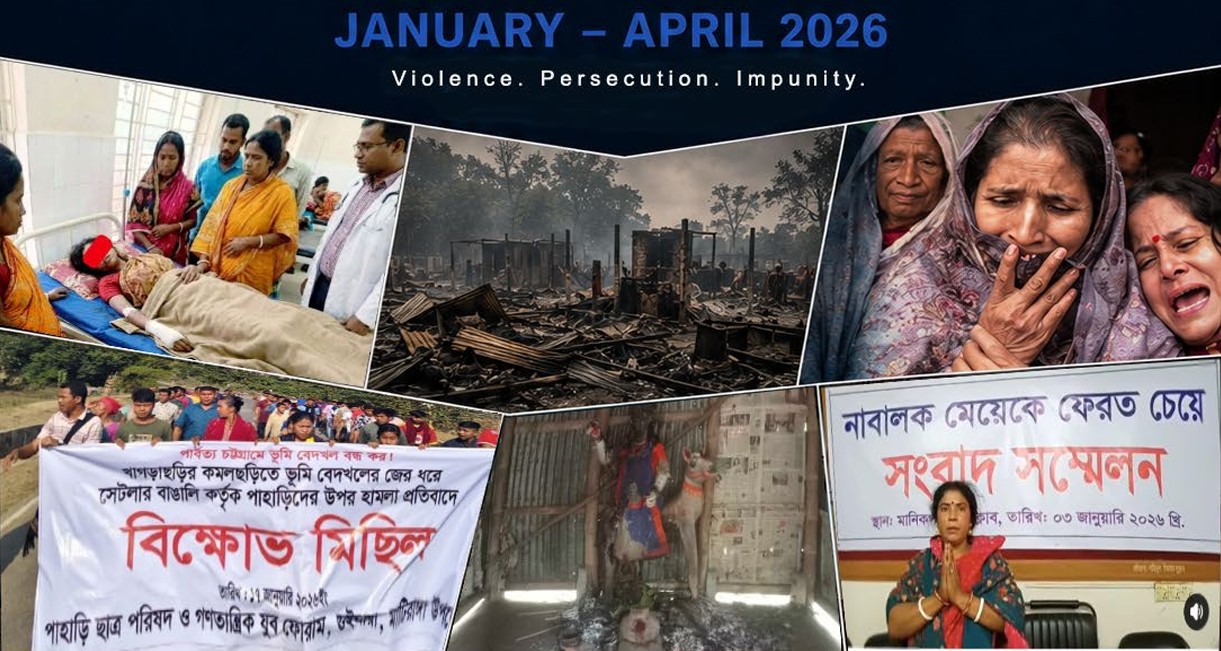
Melbourne, May 24: A major new human rights report has painted a deeply troubling picture of the condition of religious and ethnic minorities in Bangladesh, documenting widespread violence, intimidation, land grabbing, sexual violence, and attacks on religious institutions during the first four months of 2026. According to the report by the Human Rights Congress for Bangladesh Minorities (HRCBM), at least 505 incidents were recorded between January and April across 62 of the country’s 64 districts.

New human rights report raises alarm over minority safety in Bangladesh after 505 documented incidents in four months.
The 89-page report argues that the violence is not isolated or sporadic, but reflects what it describes as a broader pattern of structural persecution and institutional failure affecting minority communities nationwide.
The findings span all eight administrative divisions of Bangladesh and include killings, mysterious deaths, kidnappings, sexual violence, attacks on temples, land dispossession, arson, extortion, and communal intimidation.
The report’s statistical findings reveal that violence against minority communities remains geographically widespread and persistent. HRCBM documented 144 incidents of kidnapping and physical assault, 132 incidents involving land grabbing, arson, looting, and property attacks, 100 cases of murder or mysterious death, and 95 attacks on temples and religious institutions. Another 28 incidents involved rape or gang rape, while six incidents were linked to blasphemy-related allegations.

HRCBM report documents widespread violence against minority communities across 62 districts in Bangladesh.
Researchers noted that the attacks occurred in both densely populated urban areas and remote rural regions, indicating that minority insecurity cuts across geography and social class. Chattogram Division recorded the highest number of incidents with 114 cases, followed by Dhaka with 98 and Khulna with 84.
The report identifies several major hotspots, including Chattogram, Khulna, Dhaka, Satkhira, Barishal, Cox’s Bazar, Cumilla, Rangpur, and Patuakhali. These districts repeatedly appeared across multiple categories of violence, including killings, assaults, temple vandalism, and property attacks.
One of the most striking sections of the report focuses on repeated attacks against Hindu temples and religious institutions. HRCBM documented 95 incidents involving idol vandalism, temple arson, destruction of sacred property, and attacks on places of worship.

From temple vandalism to land dispossession, the report outlines the growing vulnerability of minorities in Bangladesh.
Among the documented incidents were the reported demolition of a historic Durga temple in Barishal, arson attacks on temples in Gopalganj and Sylhet, and vandalism targeting Kali temples in Khulna, Faridpur, and Nilphamari.
The report argues that such attacks are not simply acts of property damage but assaults on collective identity, cultural continuity, and religious freedom. It says these incidents have contributed to growing fear and insecurity among minority communities, particularly Hindus living in vulnerable rural regions.
Land grabbing and economic dispossession also emerged as recurring themes. The report documents numerous cases in which minority-owned land, homes, cremation grounds, crops, and businesses were allegedly targeted through violence, intimidation, and coercion.
Researchers warn that economic pressure and property insecurity have historically contributed to the displacement of minority populations in Bangladesh and continue to operate as major drivers of fear and migration.
The report highlights the particular vulnerability of minority women and girls. HRCBM documented 28 incidents involving rape, gang rape, attempted sexual assault, abduction, and coercive marriage allegations.

Women, children, and Indigenous communities remain among the most vulnerable groups affected by the violence.
Several cases involved school-age girls and young women who reportedly disappeared while travelling to school, attending tutoring sessions, or commuting in their local communities. The report states that these incidents raise serious concerns regarding child protection, bodily autonomy, and access to justice.
Children, students, widows, elderly persons, and Indigenous communities were also repeatedly identified as vulnerable groups. The report documents attacks involving Indigenous Mro, Tripura, and Chakma communities in the Chattogram Hill Tracts and other marginalised regions.
A central argument of the report is that the violence has continued despite Bangladesh’s political transition from the 2025 interim administration to an elected government in 2026. According to HRCBM, this continuity suggests the crisis is rooted not in a single administration but in deeper structural failures involving law enforcement, accountability, and institutional protection.
The organisation says that delayed investigations, weak police responses, intimidation of victims’ families, and limited prosecution of perpetrators have created a climate of persistent impunity.
The report repeatedly references concerns about delayed FIR registration, lack of visible progress in investigations, and pressure placed on victims to avoid pursuing legal action.
Although the report acknowledges that some police responses and arrests did occur, it argues that institutional action has often been inconsistent and inadequate to deter further violence.
The report places current violence within a much longer historical context. It traces repeated waves of communal violence and persecution dating back to 1946 and argues that minority communities in Bangladesh have faced decades of dispossession, displacement, and insecurity.
One of the report’s most controversial claims concerns demographic decline. HRCBM notes that while the overall population of Bangladesh has increased dramatically since 1946, the proportion of minority communities has reportedly fallen from around 30 percent to less than 9 percent by 2020.
The report argues that this decline cannot be explained by demographic trends alone and instead reflects long-term patterns of persecution, forced displacement, and structural exclusion.
HRCBM says its findings are based on field investigations, eyewitness testimony, police interactions, media monitoring, and cross-verification processes designed to ensure evidentiary reliability.
The organisation has called on the Government of Bangladesh, the judiciary, international human rights bodies, diplomatic missions, and the United Nations to strengthen monitoring, ensure independent investigations, and improve protection for minority communities.
The report concludes with a stark warning: unless meaningful reforms and accountability mechanisms are introduced, the patterns documented between January and April 2026 risk contributing to further communal insecurity, displacement, and long-term erosion of minority presence across Bangladesh.
-HRCBM Report 2026
-News OTN Bangla


Durga Puja: A Pledge of Harmony, a Question of Security Autumn’s white clouds, swaying kash flowers and the beat of the dhak herald the return…
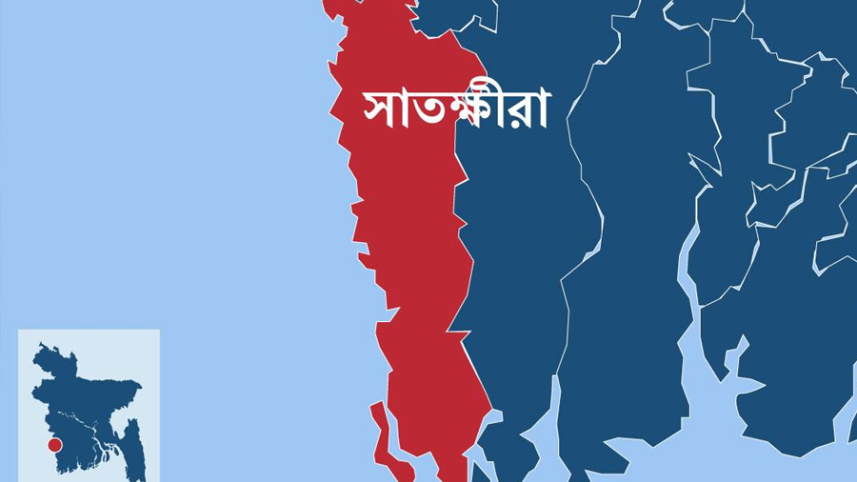
OTN Bangla Desk: A 52-year-old fish farmer was allegedly beaten to death on suspicion of stealing fish from a fish enclosure in Tala upazila of…
The death of Wahiduzzaman Shamim in Satkhira exposes the danger of mob violence in Bangladesh. According to police, the 30 year old man was beaten…
OTN Bangla Desk: Former Bangladesh Prime Minister Sheikh Hasina has criticised Prime Minister Tarique Rahman for declining to attend the BRICS summit in India. In…

I am not an avid reader, but I do go through a book whenever I can make time for it. The last audiobook I finished…
OTN Bangla Desk: Land and property disputes, disappearances, kidnappings, physical assaults, attacks on religious sites, murders and mysterious deaths feature in the July–September 2026 quarterly…
Reports about General Waker-Uz-Zaman’s future have fuelled speculation, while ISPR has warned against misleading information. No confirmed government announcement of his removal has been cited….
A Festival Overshadowed by Fear As Bangladesh’s Hindu community prepares for Durga Puja, reports of idol vandalism in several parts of the country have cast…




All Rights Reserved by © OTN Bangla.com.au - 2026 | Privacy Policy | Terms of Use | Editorial Policy | Proudly Developed by @SSB it.au