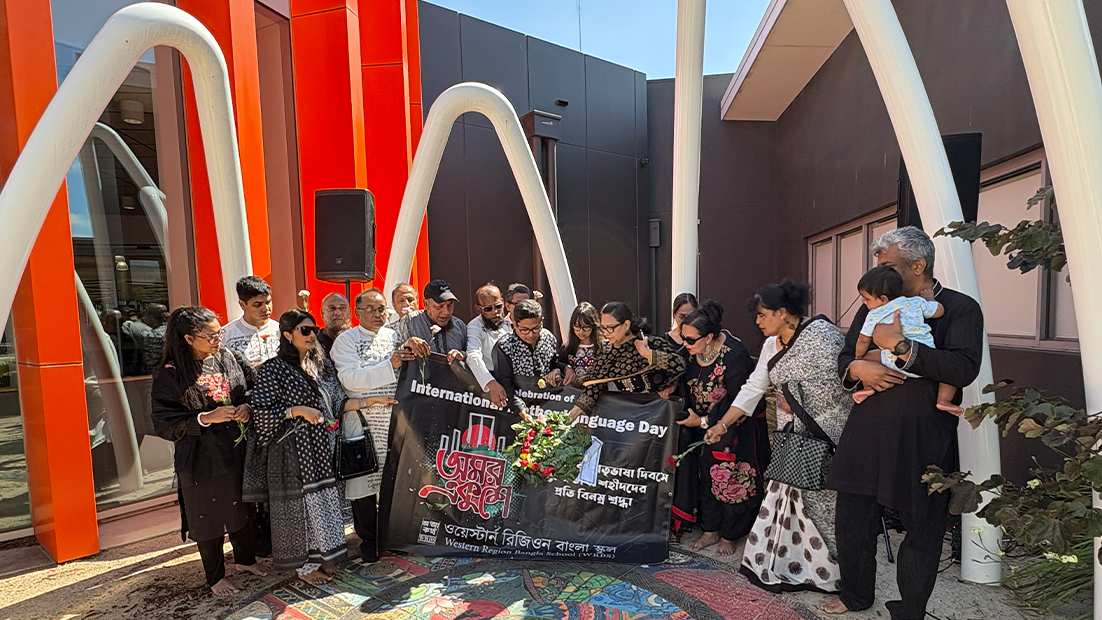
Melbourne, February 21 — Today marks Shaheed Day (Language Martyrs’ Day), a day of pride and remembrance for the Bengali nation. Seventy-five years have passed since the historic Language Movement of 1952, when brave young men laid down their lives to defend the right to speak in their mother tongue. Alongside Bangladesh, the day is being observed worldwide as International Mother Language Day under the initiative of the United Nations, honouring linguistic diversity and cultural heritage.
On this day in 1952, the blood of language martyrs was shed to uphold the dignity of Bangla. The nation bows in deep respect to Rafique, Salam, Barkat, Jabbar, Shafiur and countless unnamed martyrs whose sacrifice laid the foundations of Bangladesh’s later struggle for freedom and independence.
President’s Message
In a message marking Shaheed Day and International Mother Language Day, the President paid solemn tribute to the language martyrs who gave their lives for the right to Bangla. He conveyed heartfelt greetings to people of different linguistic communities across the world and said the Language Movement marked the birth of Bangladesh’s own nationalism.
“The movement was not only about language rights,” the President said. “It was a struggle to protect our national identity, cultural distinctiveness and dignity. The spirit of Ekushey inspired our movements for self-determination, our liberation struggle and ultimately the War of Independence.”
He added that the ideals of Ekushey should foster mutual respect among people of different languages and cultures and contribute to the welfare of humanity.
Prime Minister’s Message
Prime Minister Tareque Rahman, in a special statement, extended greetings to the people of the country and to language communities around the world. He described February 21 as an unforgettable chapter in the national life of Bangladesh and a symbol of pride.
“The Language Movement of 1952 not only established linguistic rights but also strengthened the foundations of democracy, self-determination and cultural consciousness of the Bengali people,” he said. “It was along this bloodstained path of Ekushey that we achieved our independence through the Liberation War.”
Referring to the aspirations of independence in 1971 and the mass uprising of students and citizens in 2024, the Prime Minister said the government is committed to building a self-reliant, secure and humane democratic state. He called for the proper use of Bangla at all levels and urged efforts to protect endangered languages and cultures around the world.
He added that the core spirit of Ekushey lies in democratic values, equality and the rights of the people, and reaffirmed the government’s commitment to strengthening democracy in the country.
The Blood-Soaked Day of 1952
On February 21, 1952, students took to the streets in protest against the then Pakistani rulers’ declaration that Urdu would be the sole state language. Defying bans on public gatherings, they marched, and police opened fire. Rafique, Salam, Barkat, Jabbar, Shafiur and many others were killed. Their sacrifice became a powerful inspiration that eventually led to the Liberation War and the birth of an independent Bangladesh.
Observances and Programmes
To mark Shaheed Day and International Mother Language Day, the Ministry of Cultural Affairs has taken extensive programmes nationwide. The national flag is being flown at half-mast at all educational institutions and government, semi-government, autonomous and private offices in accordance with official guidelines.
Special broadcasts are being aired on Bangladesh Television, Bangladesh Betar and private TV and radio channels to raise awareness about the correct protocol for hoisting the national flag. Educational institutions, city corporations, municipalities and local government bodies are observing the day with their own programmes in line with the national schedule.
Security has been tightened at the Shaheed Minar and the Azimpur graveyard to manage crowds and prevent any untoward incidents. Places of worship across the country are holding prayers for the salvation of the martyrs’ souls. Streets and public spaces in Dhaka and other cities are being decorated with banners featuring the alphabets of Bangla and other ethnic languages of Bangladesh.
The Department of Mass Communication is organising mobile cultural performances and film screenings across districts and upazilas, including musical events on roads and waterways in and around Dhaka. Bangladeshi missions abroad are also observing the day with due respect.
The Bangladesh Shishu Academy is hosting children’s art competitions, poetry recitations and cultural programmes. The Bangla Academy is organising the Ekushey Book Fair, with participation from various cultural institutions and publishers. Museums and heritage sites, including the National Museum and Liberation War Museum, are offering free entry to children, students, senior citizens and people with disabilities, along with documentary screenings, exhibitions on the Language Movement and educational activities.
Social and cultural organisations across the country are also holding programmes to honour the martyrs and uphold the spirit of Ekushey, reaffirming Bangladesh’s commitment to linguistic rights, cultural diversity and democratic values.