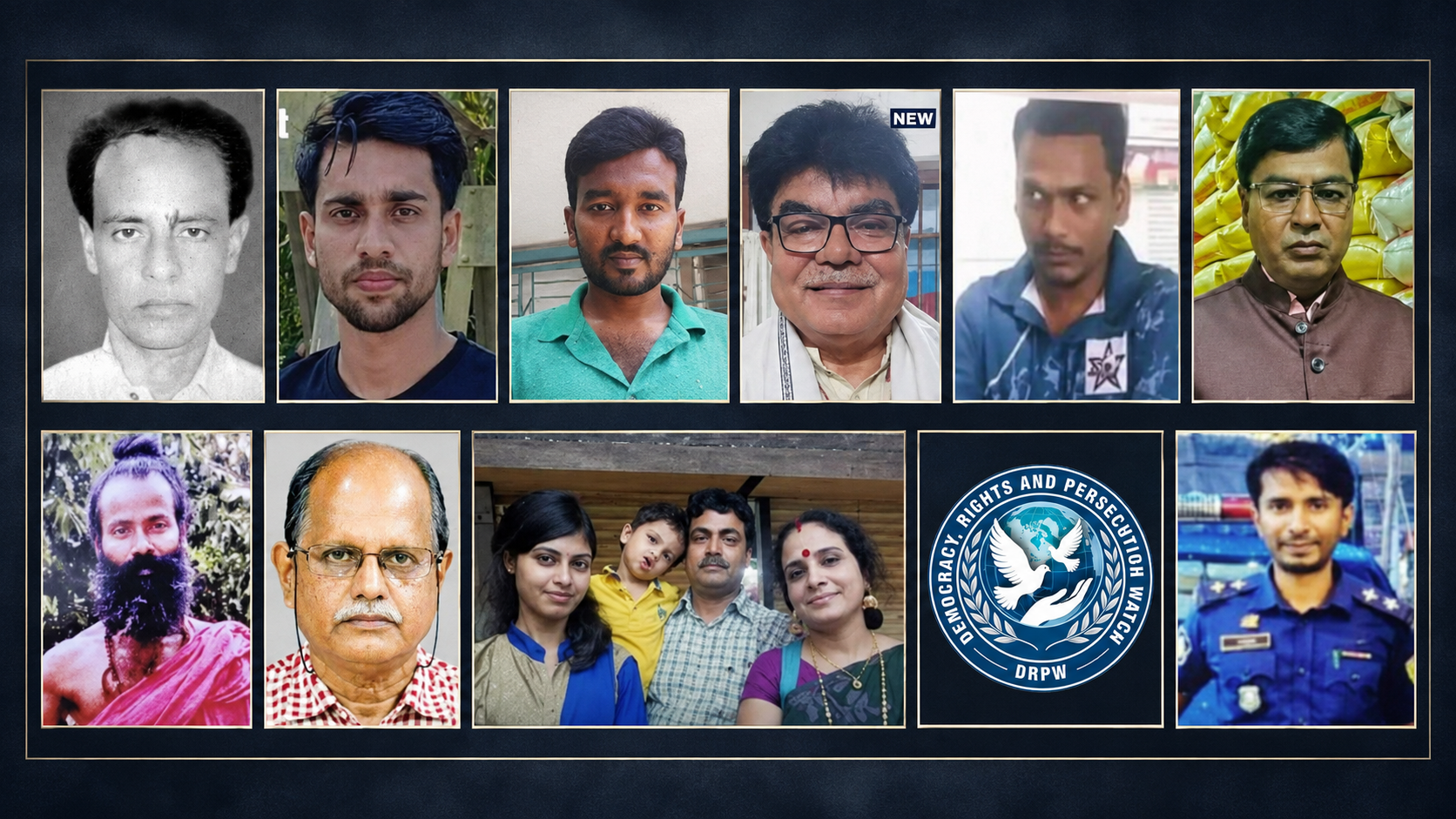
DRPW’s report, ‘Bangladesh in Crisis: Minority Lives Lost,’ details the deaths of 146 individuals from religious and ethnic minority communities in Bangladesh.
A retired teacher, a musician, a labourer and a schoolchild—their lives were different, yet their names appear in the same report. Documenting the deaths of 146 members of Bangladesh’s religious and ethnic minority communities, the compilation raises questions about safety, protection and access to justice.
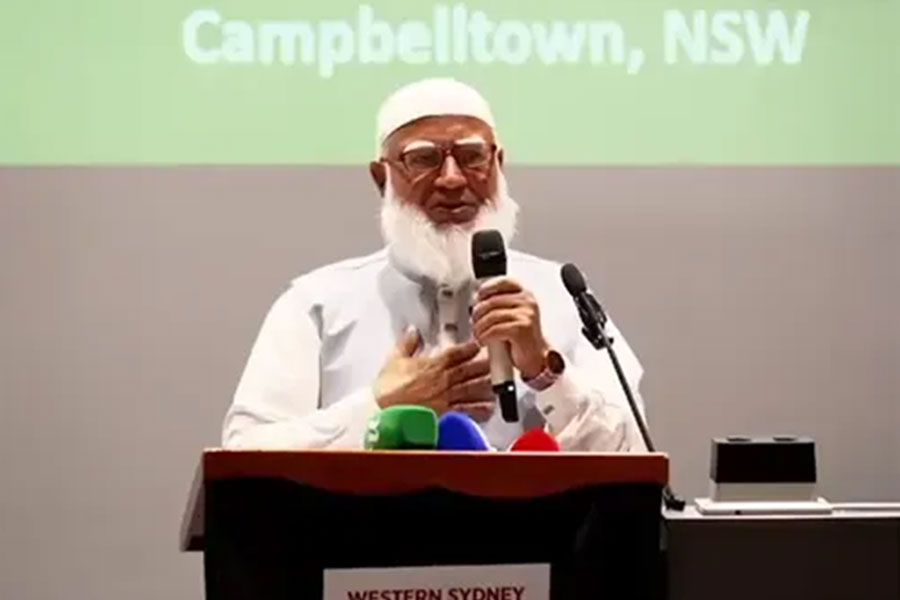
The report, Bangladesh in Crisis: Minority Lives Lost, was prepared by Dr Molla Huq and Aditya Protap Ghosh for the Australia-based organisation Democracy, Rights and Persecution Watch (DRPW). Version 1.3, published on 8 November 2026, compiles deaths reported by news outlets and other organisations between 4 August 2024 and 27 October 2026.
According to the report, those listed include 119 Hindus, five Barua Buddhists and 22 members of Indigenous communities, including the Chakma, Marma, Tripura, Bawm, Santal and Munda. Indigenous victims are classified separately in this breakdown, although they also include Buddhists and Christians.
The report makes clear, however, that inclusion in the list does not establish that a death was motivated by religious or ethnic hatred. The circumstances vary, and in some cases the motives remain disputed or under investigation.
Four Names from One Family
Among the cases documented is the death of four members of retired teacher Ganapati Chakraborty’s family in Machhuapara, Rangpur. According to the compiled account, Chakraborty, his wife Pritilata, their daughter Agami and their 13-year-old son Ayush, also known as Priyam, were killed at their home in August 2026. Their bodies were recovered on 22 August.
The inclusion of four members of one family conveys the devastating scale of a single household’s loss. The report’s broader disclaimer also stresses the importance of investigations and judicial proceedings in establishing motives and responsibility.
When Theft Allegations Turn Deadly
The compilation includes several cases in which published sources reported deaths following accusations of theft or local arbitration proceedings.
One was Ripon Murmu, a Santal labourer from Ghoraghat in Dinajpur. According to a news report cited in the compilation, he was beaten and fined Tk 20,000 during a local arbitration meeting in Bogura over the theft of a welding machine. He was found dead later that night.
The account of Kshitish Mondal, a fish farmer from Tala in Satkhira, also describes alleged violence following an accusation of fish theft. According to the compiled information, he was tied to a tree, beaten and attacked with sharp weapons. He died while being taken to hospital.
These accounts raise concerns about the use of mob violence in place of legal procedures to address allegations.
Deaths in Custody and Questions About Medical Care
The report also includes deaths in prisons and other forms of custody. Its account of musician Proloy Chaki states that he died at Rajshahi Medical College Hospital while in prison custody. According to the report, his family alleged medical negligence.
Former minister Ramesh Chandra Sen is also listed as having died in hospital after falling ill in prison. Accounts involving Bawm detainees describe illness and include allegations of inadequate medical treatment.
Although the circumstances differ, DRPW draws attention through these cases to questions about medical care, safety and state accountability for people held in custody.
Each entry includes the deceased person’s name, identity and address, a brief account of the incident, and a link and QR code directing readers to the published source. The organisation says its purpose is to bring named, sourced accounts into public discussion rather than leave the debate dependent on speculation.
DRPW acknowledges that it has not independently investigated every incident. Some entries rely on a single source, while names, ages, dates and descriptions of events may differ between sources. Subsequent investigations, arrests or court decisions may also have changed the information available about individual cases.
The report calls for impartial investigations into every death, accountability for those responsible and effective protection for religious and ethnic minorities. It also invites people to contact the organisation with supporting evidence to request corrections.
At its centre is a fundamental question: regardless of a deceased person’s religious, ethnic or political identity, how effectively are the circumstances of their death being established—and their family’s right to justice being upheld?
Source: Bangladesh in Crisis: Minority Lives Lost, Democracy, Rights and Persecution Watch (DRPW).