Durga Puja: A Pledge of Harmony, a Question of Security
Durga Puja: A Pledge of Harmony, a Question of Security Autumn’s white clouds, swaying kash flowers and the beat of the dhak herald the return…



Melbourne, 22 August- Bangladesh is facing a severe energy crisis that has significantly disrupted industrial production across the country. With gas supplies falling sharply, more than half of the country’s textile and yarn-producing factories have reportedly shut down completely. Production in gas-dependent industries, including steel, paper, particle board and ceramics, has also fallen to less than half of normal capacity.
The crisis has persisted for more than 25 days. The situation improved slightly on August 15 after Summit’s floating liquefied natural gas (LNG) terminal resumed full operations and Excelerate Energy’s terminal resumed partial operations. However, supplies from Excelerate’s terminal quickly declined because no new LNG cargo arrived. At around 3pm on August 19, gas supplies from the terminal stopped completely, worsening the nationwide shortage.
Against this backdrop, the government has taken steps to import additional LNG. On August 19, Bangladesh approved the purchase of one LNG cargo at US$23.93 per million British thermal units (MMBtu). The purchase was approved at a meeting of the government procurement committee following a recommendation from the Energy and Mineral Resources Division.
Aramco Trading Singapore Pte Ltd is expected to deliver the cargo between September 1 and 2. It will be Bangladesh’s 44th LNG cargo of 2026.
Meanwhile, a seven-member Bangladeshi delegation led by Foreign Minister Khalilur Rahman returned from a two-day visit to Qatar without securing additional LNG supplies. The delegation travelled to Doha on August 18 to explore ways to increase LNG imports from Qatar. However, continuing uncertainty over shipping through the Strait of Hormuz prevented Bangladesh from securing additional supplies.
The delegation included Foreign Minister Khalilur Rahman, Foreign Affairs Adviser Humayun Kabir, Finance and Planning Adviser Rashed Al Mahmud Titumir, State Minister for Power, Energy and Mineral Resources Aninda Islam Amit, UCB Bank Chairman Sharif Zahir, Humayun Kabir’s secretary Abdul Haque, Director General of the Foreign Ministry’s West Asia Division Mohammad Humayun Kabir, and Zakir Ahmed.
The Bangladesh Textile Mills Association (BTMA) President Shawkat Aziz Russell said more than 900 of the association’s over 1,800 member mills have completely shut down because of the gas shortage.
He said the prolonged crisis was affecting not only textile mills but also other gas-dependent industries. Production in steel, paper, particle board and ceramic factories has also been severely disrupted.
Bangladesh Knitwear Manufacturers and Exporters Association (BKMEA) President Mohammad Hatem said gas supplies in Narayanganj had improved slightly on August 17, but the situation deteriorated again the following day.
Bangladesh’s daily gas demand is around 3.8 billion cubic feet, while the country is currently receiving about 2.7 billion cubic feet. LNG accounts for roughly 1.05 billion cubic feet of the supply. Imported LNG is fed into the national gas network through floating terminals operated by US-based Excelerate Energy and local company Summit.
Excelerate Energy’s terminal has a daily capacity of around 600 million cubic feet, while Summit’s terminal can supply about 500 million cubic feet.
When both LNG terminals were shut down on the afternoon of August 14, the country’s total gas supply fell to 1.64 billion cubic feet per day. Summit resumed supplying around 90 million cubic feet that evening, raising total gas availability to 2.42 billion cubic feet by the morning of August 15.
Supply then fell to 2.4 billion cubic feet on August 16 and 2.28 billion cubic feet on August 17. After Excelerate’s terminal stopped supplying gas completely, total national supply fell further to around 2.18 billion cubic feet.
On August 19, LNG contributed around 660 million cubic feet to the national gas grid. After Excelerate’s supply stopped, LNG input dropped to around 550 million cubic feet, intensifying shortages across the country.
Factory owners in industrial areas including Narayanganj, Savar, Gazipur, Mymensingh and Manikganj said that although gas supplies improved slightly in some areas on August 14, conditions soon returned to previous levels and, in some cases, became even worse.
Reports also emerged that loom workers in Madhabdi, Narsingdi, one of Bangladesh’s largest weaving hubs, had taken to the streets demanding uninterrupted gas and electricity supplies. However, the officer-in-charge of Madhabdi Police Station denied reports of such demonstrations.
Industrialists said there had been repeated government assurances that gas supplies would improve, but there has been no significant improvement in industrial areas. They said more than half of the country’s textile and yarn-producing mills have already been forced to shut down.
The gas shortage has also reduced production capacity in the ready-made garment, steel, paper and other sectors to less than half. As a result, factories are suffering major production losses, while workers are also losing income.
On August 6, Power, Energy and Mineral Resources Minister Iqbal Hasan Mahmud assured businesspeople and industrial owners that the gas supply situation would improve quickly. However, with no significant improvement by Wednesday, industrialists expressed growing frustration and uncertainty.
Bangladesh has two floating LNG terminals at Maheshkhali in Cox’s Bazar. One is operated by US-based Excelerate Energy and the other by local company Summit. Excelerate Energy’s terminal was shut down following a fire on July 21.
The terminal was ready to resume LNG supplies at full capacity on Saturday. However, as no new cargo had arrived, it could supply only limited volumes from its existing reserves. Those reserves began declining from Monday, and supplies eventually stopped completely on August 19.
One LNG cargo was expected to arrive in Bangladesh on August 21 and could be connected to Summit’s terminal. Another cargo for Excelerate’s terminal could arrive on August 23 or 24, according to a source familiar with the matter. This means Excelerate’s terminal could remain without fresh supplies for several more days, potentially worsening the gas crisis.
The managing director of a leading spinning mill in Araihazar, Narayanganj, speaking on condition of anonymity, said gas pressure at his factory had fallen almost to zero, far below the 15 PSI level promised by the government.
“We are losing around Tk 20 million every day,” he said. “We have no option left. We may have to sell our property to pay workers’ salaries.”
He also feared that if the crisis continued, many factory owners would struggle to pay gas and electricity bills for July and August as well as workers’ wages.
Minhaz Haque, managing director of Fatullah Dyeing and Calendering Limited, said the government had repeatedly assured industries in the past that the gas supply situation would improve.
“Several deadlines have already passed, and now the government cannot even give us any hope. We are completely in the dark about when the situation will return to normal,” he said.
The current crisis began on July 21 after a fire and technical malfunction at Excelerate Energy’s floating storage and regasification unit (FSRU) in Maheshkhali caused an abrupt reduction in gas supplies to the national grid. The severe shortage has continued across the country since then.
Sources at Petrobangla and Rupantarita Prakritik Gas Company Limited (RPGCL) said several LNG cargoes had been ordered through direct procurement this month in an effort to secure supplies at lower prices. Four of those cargoes were scheduled to arrive in August, but none had reached Bangladesh.
The failure of the directly procured cargoes to arrive has deepened the crisis. Although the LNG terminals may be operational, they cannot supply gas to the national grid without sufficient LNG cargoes.
Petrobangla oversees LNG imports with approval from the Energy Division, while its subsidiary RPGCL is responsible for import operations. Officials involved in LNG supply said gas deliveries had stopped because LNG reserves at the terminals had been exhausted.
A former leader of the Narsingdi Chamber of Commerce and Industry said workers at the district’s weaving mills were losing their incomes because factories had shut down. Many of the workers are paid according to production, meaning their earnings stop when production stops.
He said loom workers had taken to the Dhaka-Sylhet Highway on Wednesday demanding uninterrupted gas and electricity supplies, although they could not remain on the road for long.
Industrialists and workers fear that unless gas supplies are restored quickly, the crisis could cause further factory closures, deepen financial losses for businesses, reduce workers’ incomes and create wider disruption across Bangladesh’s industrial supply chains.



Durga Puja: A Pledge of Harmony, a Question of Security Autumn’s white clouds, swaying kash flowers and the beat of the dhak herald the return…
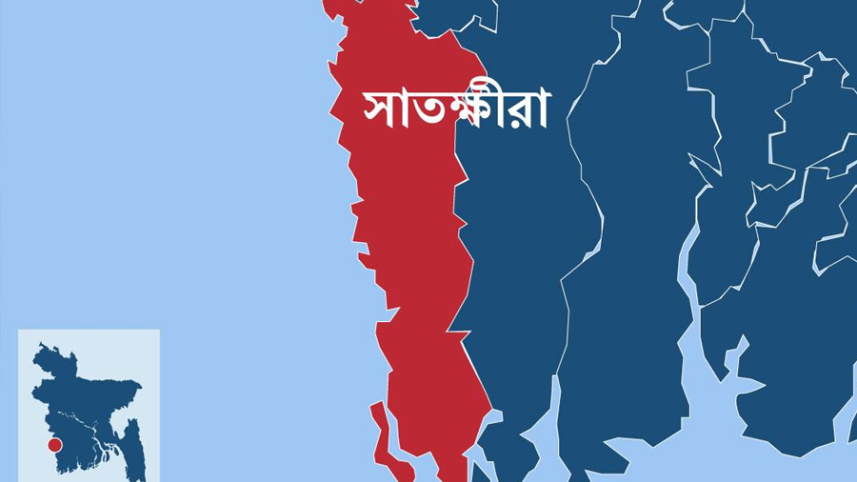
OTN Bangla Desk: A 52-year-old fish farmer was allegedly beaten to death on suspicion of stealing fish from a fish enclosure in Tala upazila of…

The death of Wahiduzzaman Shamim in Satkhira exposes the danger of mob violence in Bangladesh. According to police, the 30 year old man was beaten…

OTN Bangla Desk: Former Bangladesh Prime Minister Sheikh Hasina has criticised Prime Minister Tarique Rahman for declining to attend the BRICS summit in India. In…

I am not an avid reader, but I do go through a book whenever I can make time for it. The last audiobook I finished…

OTN Bangla Desk: Land and property disputes, disappearances, kidnappings, physical assaults, attacks on religious sites, murders and mysterious deaths feature in the July–September 2026 quarterly…

Reports about General Waker-Uz-Zaman’s future have fuelled speculation, while ISPR has warned against misleading information. No confirmed government announcement of his removal has been cited….
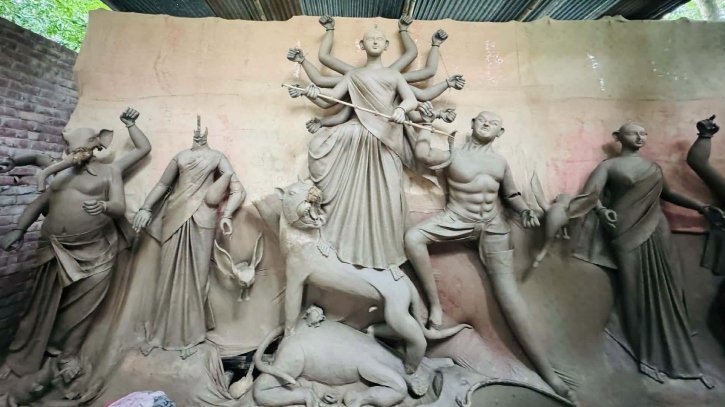
A Festival Overshadowed by Fear As Bangladesh’s Hindu community prepares for Durga Puja, reports of idol vandalism in several parts of the country have cast…




All Rights Reserved by © OTN Bangla.com.au - 2026 | Privacy Policy | Terms of Use | Editorial Policy | Proudly Developed by @SSB it.au