Durga Puja: A Pledge of Harmony, a Question of Security
Durga Puja: A Pledge of Harmony, a Question of Security Autumn’s white clouds, swaying kash flowers and the beat of the dhak herald the return…


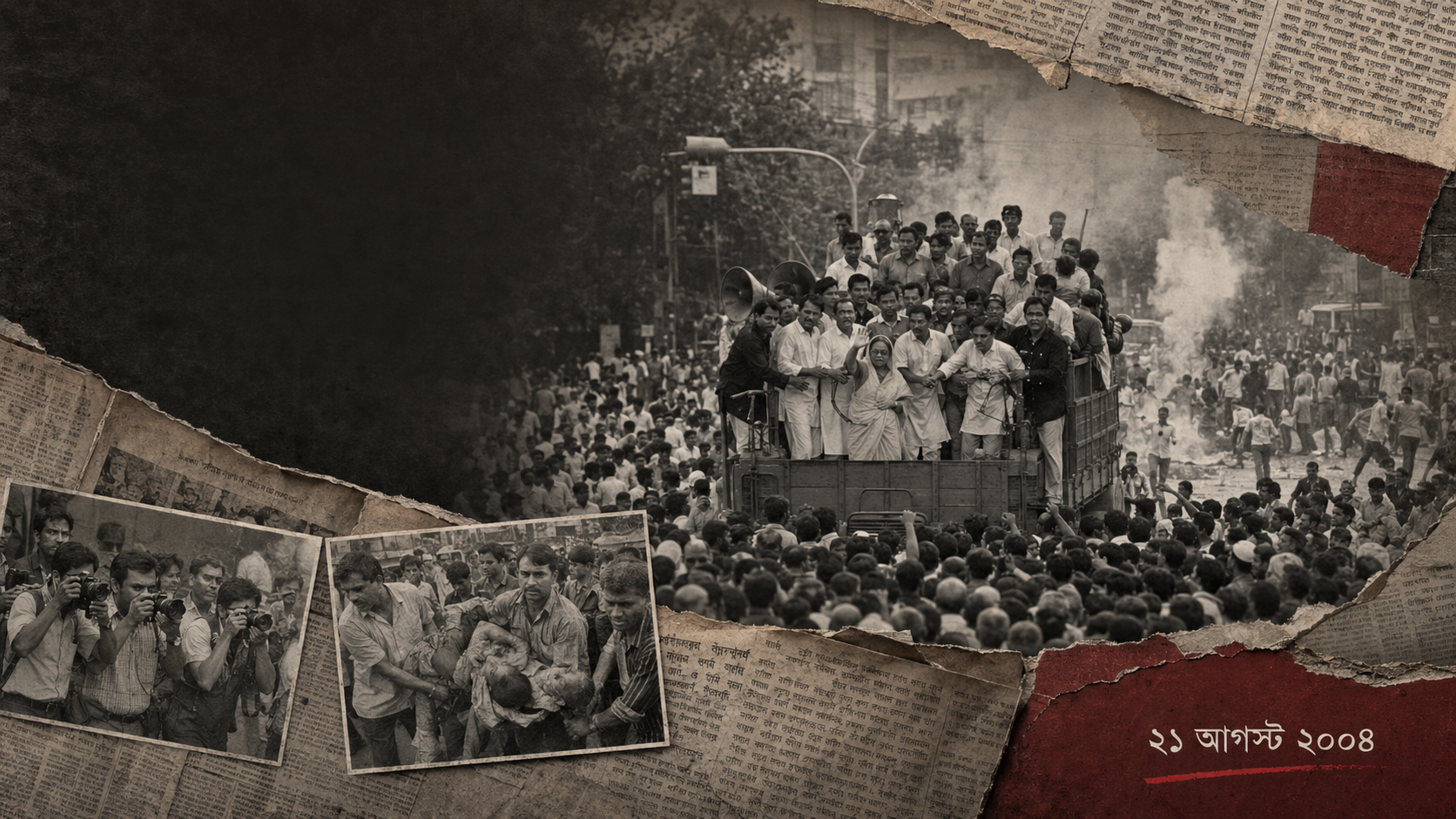
Melbourne, August 21: On the afternoon of August 21, 2004, an Awami League anti-terrorism rally on Bangabandhu Avenue in Dhaka was drawing to a close. Sheikh Hasina, then leader of the opposition and president of the Awami League, had just finished addressing the gathering. Party leaders and supporters were preparing to begin a procession.
Then, one grenade after another exploded.
More than two decades later, the August 21 grenade attack remains more than an assault on one political party. It is an enduring wound—and an unresolved challenge to Bangladesh’s democracy, state institutions, justice system and political conscience.
Within minutes, a political gathering was transformed into a scene of blood, smoke, panic and death. People who had been listening to speeches moments earlier were lying wounded on the street. Survivors ran in every direction as others desperately tried to carry the injured to hospitals by rickshaw, motorcycle, private car or any available vehicle.
Political violence was not new to Bangladesh. But a coordinated grenade attack using military-grade weapons at a public rally of a major political party was unprecedented in its scale and brutality. The timing, method and apparent target made it difficult to regard the attack as an isolated attempt merely to create chaos.
The following morning, the attack dominated the front pages of newspapers across Bangladesh. International media organisations also treated it as a major story.
Prothom Alo devoted extensive space on its front and back pages to the attack, publishing eyewitness accounts, photographs, casualty information and reports from hospitals. In the days that followed, the newspaper continued its coverage of the victims, Ivy Rahman’s condition, the political response and the progress of the investigation.
The coverage did not portray the incident only as a political story. It also documented the individual tragedies of the victims, the struggle to obtain urgent medical care and the serious questions surrounding security and law enforcement.
The Daily Star carried the headline “Assassination Attempt on Hasina.” Its initial report said at least 16 people had been killed and around 200 injured, including senior Awami League leaders Abdur Razzaq, Amir Hossain Amu, Suranjit Sengupta, Ivy Rahman and Kazi Zafarullah.
The newspaper identified Sheikh Hasina as the apparent target of the attack. Party leaders and security personnel reportedly formed a human shield around her on the makeshift truck-stage, allowing her to escape with her life.
The BBC reported the incident under the headline “Blasts hit Bangladesh party rally.” Its initial report placed the death toll at 19 and noted that approximately 20,000 people had attended the gathering.
Differences in the early casualty figures were inevitable. People were still being taken to hospitals, some victims had not been identified and the number of deaths continued to rise. Eventually, 24 people, including Ivy Rahman, lost their lives. Hundreds were injured, many of whom were left permanently disabled or forced to live with grenade splinters in their bodies.
The accounts of journalists and survivors recorded the human reality behind the statistics.
The Daily Star photojournalist Anisur Rahman was covering the rally and standing a short distance behind Ivy Rahman. According to his recollection, the first explosion occurred just as Sheikh Hasina finished speaking. At first, some people assumed the sound had come from firecrackers, which were not unusual at political gatherings.
The second explosion left little room for doubt.
People fell to the ground, blood spread across the street and the air filled with screams. Despite the horror surrounding him, Anisur continued taking photographs, including an image of a critically wounded Ivy Rahman.
The newspapers also reported that some injured people were unable to obtain timely treatment because hospitals lacked beds, doctors or the capacity to cope with the sudden influx of casualties. For several families, the struggle to find medical care became another painful chapter of the tragedy.
The newspapers did more than document the violence. They raised fundamental questions that would later become central to the investigation, trial and political controversy:
Why was security so inadequate at such a major opposition rally? How did the attackers obtain military-grade grenades? Why was the scene reportedly washed down before the evidence could be properly preserved? How were unexploded grenades and other materials handled? Why did police allegedly use batons and tear gas while people were trying to rescue the injured? How were the attackers able to leave the area? Was the objective simply to spread terror, or was it an attempt to eliminate the Awami League’s senior leadership?
More than two decades later, those questions read as though the old newspaper pages are still demanding answers from the present.
The first few hours after an attack are critical to any investigation. The scene must be secured, physical evidence preserved, witnesses interviewed and escape routes blocked. Serious concerns were raised from the beginning about whether these basic obligations were fulfilled after the August 21 attack.
The later emergence of the widely criticised “Joj Mia” narrative further damaged public confidence in the investigation. When an investigation into mass murder becomes questionable, the damage extends far beyond one case. It weakens people’s faith in the state’s willingness and ability to establish the truth.
Two cases—one for murder and another under the Explosive Substances Act—were filed following the attack. In 2018, a trial court sentenced several defendants to death, life imprisonment or other prison terms.
In December 2024, however, the High Court overturned the trial court’s decision and acquitted all those who had been convicted, including Tarique Rahman and Lutfozzaman Babar. Following an appeal by the state, the Appellate Division of the Supreme Court upheld the acquittals in September 2025.
Judicial decisions must be respected. Respect for the courts is an essential foundation of the rule of law. Yet the acquittal of every defendant makes one fundamental question even more urgent: who, then, was responsible for killing 24 people?
Twenty-four lives were lost. Hundreds were wounded. The leader of the country’s main opposition party was apparently targeted at a public gathering. If the perpetrators cannot be conclusively identified after so many years, that is not merely the failure of a single prosecution. It raises profound questions about investigation, evidence preservation and the state’s capacity to deliver justice to victims.
An acquittal legally clears an accused person, but it does not erase the crime. It does not remove the grenade splinters still carried by survivors. It does not end the grief of bereaved families.
An accused person and the actual perpetrator are not necessarily the same. Understanding that distinction is central to justice. Punishing the wrong person is a grave injustice; failing to identify and prosecute the true offender is also a profound failure.
August 21 should not be viewed solely as a day of mourning for the Awami League. The rally belonged to that party, and Sheikh Hasina was the apparent target—that is part of the historical record. But the attack struck at something larger: Bangladesh’s democratic political order.
An attempt to eliminate a political party’s leadership through grenades and gunfire is an attack on the electorate’s right to choose. Political opponents must be challenged through ideas, policies, elections and public support—not through bullets, explosives or the misuse of state authority.
Politics that seeks to physically destroy its opponents ultimately damages the democratic foundations of the entire state.
This lesson belongs to every political party. Governments change, and those in power today may be in opposition tomorrow. If state institutions are used for partisan purposes, investigations follow political instructions and justice changes direction whenever power changes hands, no political group—and no citizen—can remain secure.
Newspapers do not deliver history’s final verdict. But they preserve the evidence and emotions of history as it unfolds.
The photographs from August 21 captured terrified faces, bloodstained streets, people carrying the wounded and party leaders forming a human shield around Sheikh Hasina. Eyewitness reports recorded the explosions, smoke, gunfire and desperate cries for help.
Not every detail published on the first day could have been completely accurate. Confusion over the number of casualties or the direction from which the grenades were thrown was understandable amid such chaos. Some witnesses spoke of rooftops; others described attackers operating from the pavement or within the crowd.
Nevertheless, the collective record establishes an undeniable truth: an extraordinary and apparently coordinated act of political violence took place on Bangabandhu Avenue that afternoon.
Being responsible toward history requires more than commemorative speeches, wreaths and annual expressions of grief. It requires independent investigation, proper preservation of evidence, protection of witnesses and a justice process that does not depend on which party holds power.
The most meaningful way to honour the victims of August 21 is to oppose all forms of political violence—regardless of which party is attacked, which political opinion the victims hold or who controls the government.
Justice applied selectively ceases to be justice.
The newspaper pages from August 2004 have yellowed, and some of their photographs may have faded. But the questions printed on those pages have lost none of their sharpness.
Who planned the attack? Who threw the grenades? Who, if anyone, helped the attackers escape? Why did the original investigation fail to earn public confidence? And why, after more than two decades, have the families of the 24 victims still not received a definitive answer identifying those responsible for the deaths of their loved ones?
Until those questions receive credible answers, August 21 will remain more than a bloody date from the past. It will continue to confront the conscience of the state with one unresolved question:
Have we truly delivered justice to the victims?


Durga Puja: A Pledge of Harmony, a Question of Security Autumn’s white clouds, swaying kash flowers and the beat of the dhak herald the return…
OTN Bangla Desk: A 52-year-old fish farmer was allegedly beaten to death on suspicion of stealing fish from a fish enclosure in Tala upazila of…
The death of Wahiduzzaman Shamim in Satkhira exposes the danger of mob violence in Bangladesh. According to police, the 30 year old man was beaten…
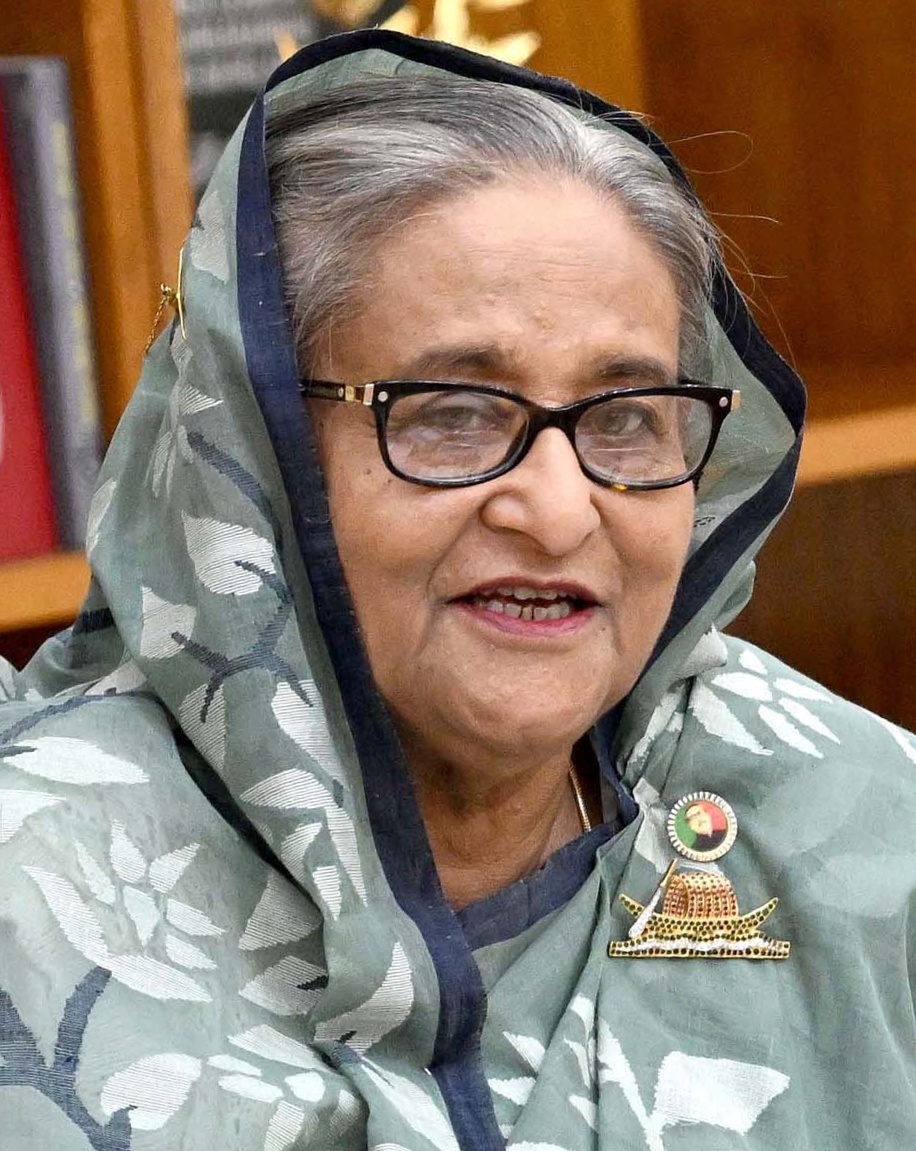
OTN Bangla Desk: Former Bangladesh Prime Minister Sheikh Hasina has criticised Prime Minister Tarique Rahman for declining to attend the BRICS summit in India. In…

I am not an avid reader, but I do go through a book whenever I can make time for it. The last audiobook I finished…
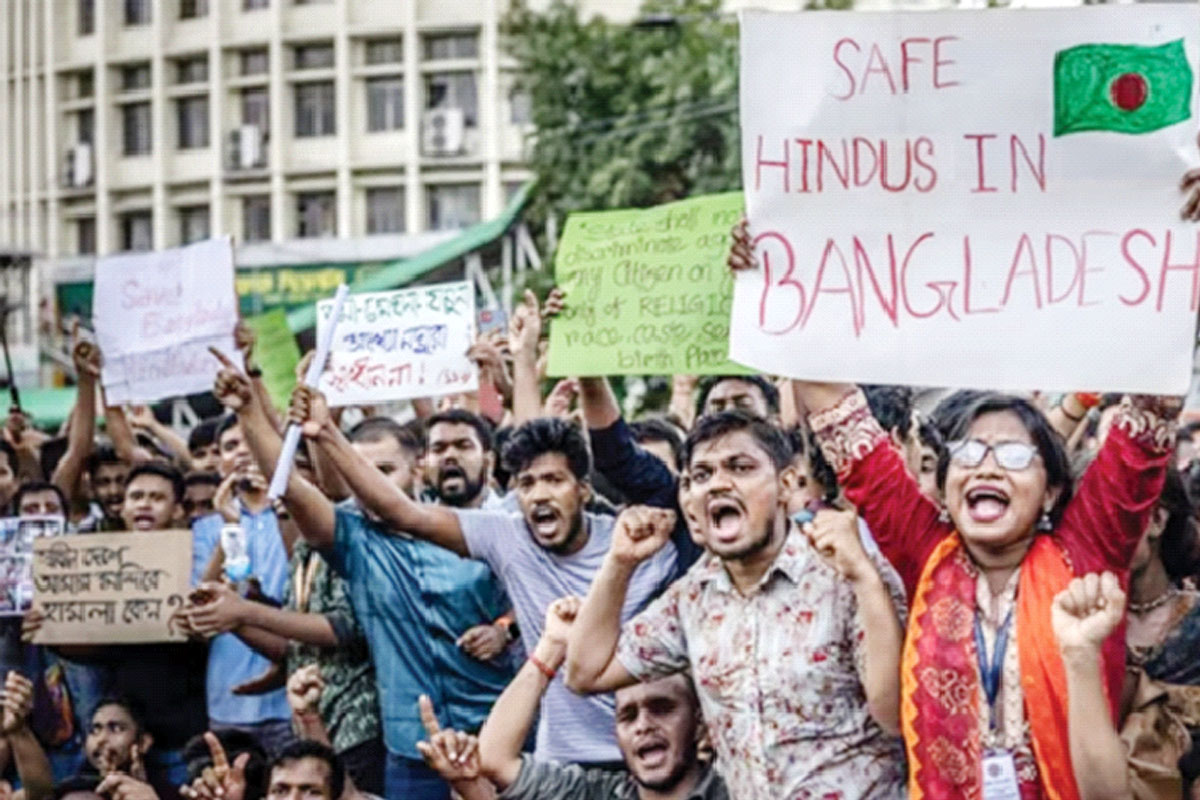
OTN Bangla Desk: Land and property disputes, disappearances, kidnappings, physical assaults, attacks on religious sites, murders and mysterious deaths feature in the July–September 2026 quarterly…
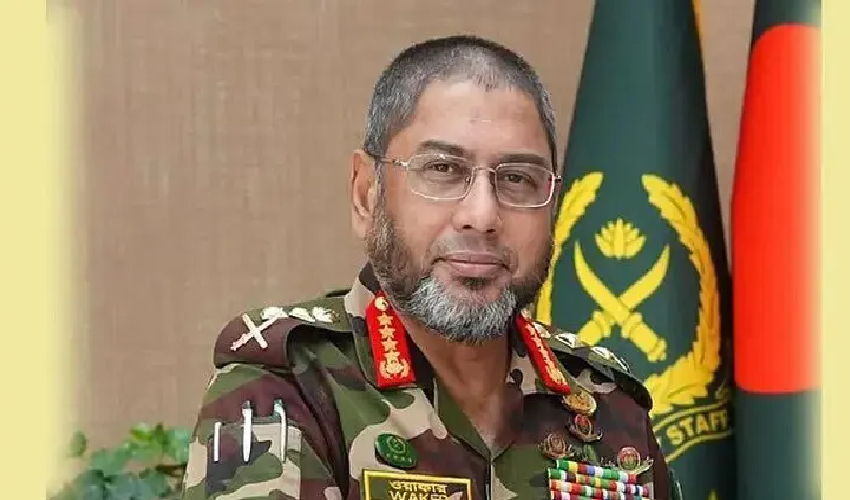
Reports about General Waker-Uz-Zaman’s future have fuelled speculation, while ISPR has warned against misleading information. No confirmed government announcement of his removal has been cited….
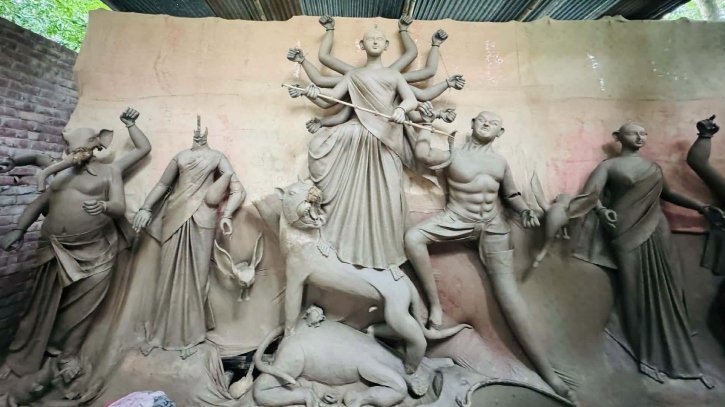
A Festival Overshadowed by Fear As Bangladesh’s Hindu community prepares for Durga Puja, reports of idol vandalism in several parts of the country have cast…




All Rights Reserved by © OTN Bangla.com.au - 2026 | Privacy Policy | Terms of Use | Editorial Policy | Proudly Developed by @SSB it.au