Durga Puja: A Pledge of Harmony, a Question of Security
Durga Puja: A Pledge of Harmony, a Question of Security Autumn’s white clouds, swaying kash flowers and the beat of the dhak herald the return…


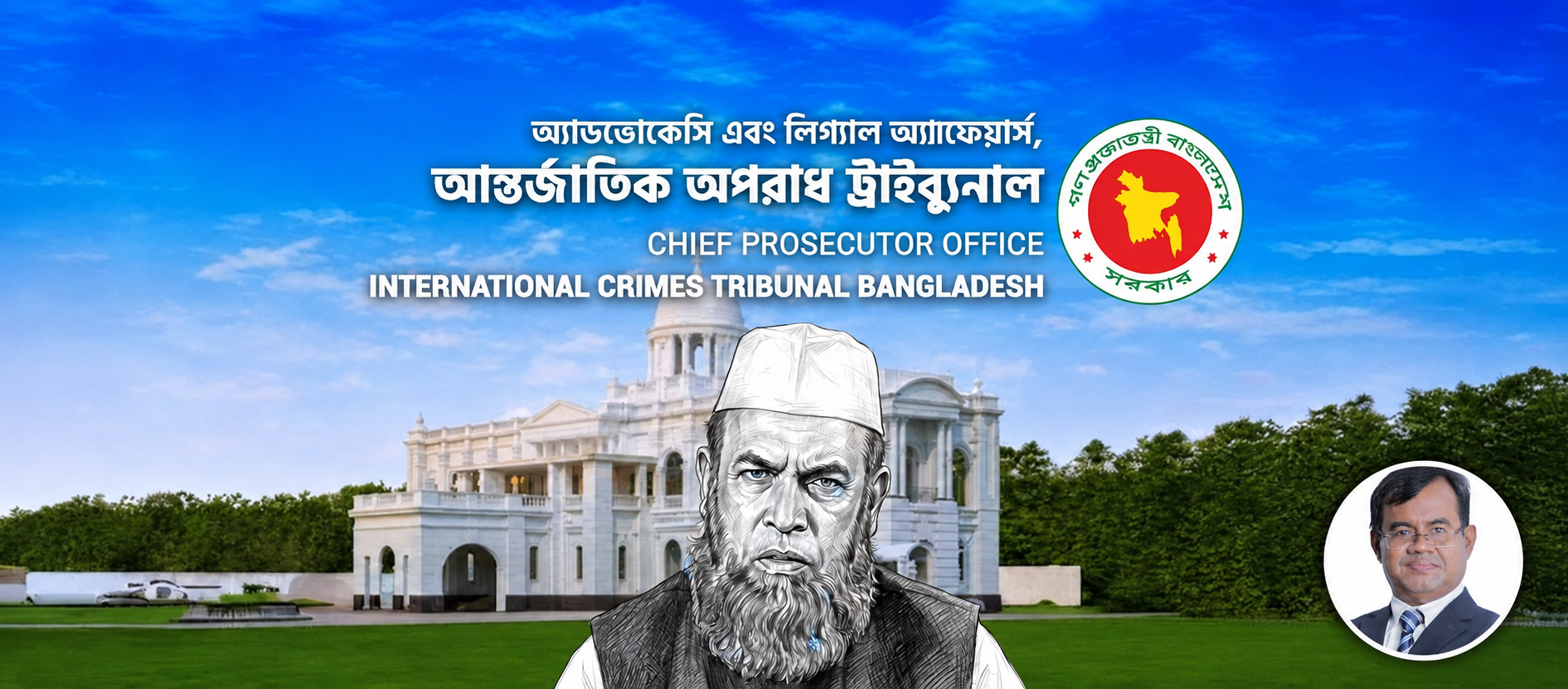
Melbourne, August 13: On 21 January 2013, International Crimes Tribunal-2, then headed by Justice Obaidul Hasan, sentenced Maulana Abul Kalam Azad, a former Jamaat-e-Islami student wing leader also known as Bachchu Razakar, to death in absentia. He was found guilty of abduction, torture, rape, and the mass killing of unarmed civilians, particularly members of the Hindu community, during the 1971 Liberation War, along with collaborating with the occupying Pakistani forces. Azad had fled the country before the verdict and was believed to be in Pakistan.
Thirteen years on the run, and then a courtroom order that raises more questions than it answers
Almost exactly thirteen years later, on 21 January 2026, Azad walked into the tribunal registrar’s office and surrendered, still maintaining his innocence. He had, the prosecution said, already petitioned the Home Ministry the previous year seeking suspension of his sentence. A day later, the three-member International Crimes Tribunal -2 bench, this time led by Justice Md. Nozrul Islam Chowdhury, passed an order permitting him to “remain at liberty as he is” until the appellate forum decided the matter, and directed that he be given certified copies of the case record so that he could file an appeal.
In plain terms, a man under sentence of death walked out of the tribunal premises in a car, free, at least for now.

The International Crimes Tribunal and the trial of Bacchu Razakar. Image: OTN Bangla
What the general practice actually looks like
In Bangladesh, the settled legal practice has long been that a person convicted and sentenced to death is taken into custody immediately upon surrender or arrest. This is not a matter of judicial discretion but the general legal consequence of a death sentence. Regardless of the merits of the conviction or the prospect of an appeal, the convicted person is committed to prison pending further proceedings. A person convicted by the International Crimes Tribunal has a statutory right of appeal to the Appellate Division of the Supreme Court of Bangladesh, which possesses the jurisdiction to suspend the execution of the sentence or grant bail pending disposal of the appeal. However, jurisdiction should not be confused with established judicial practice. Although the Appellate Division has the authority to suspend a sentence, it has traditionally exercised that power with exceptional restraint, particularly in capital punishment cases, where the gravity of the punishment demands the highest degree of judicial caution. As with other convicted persons serving sentences exceeding one year’s imprisonment, suspension of sentence is never automatic but depends upon the appellate court being satisfied, after judicial scrutiny, that sufficient grounds exist to justify such relief. In death penalty cases, ad interim bail has therefore remained an extraordinary remedy, granted only after careful consideration of the merits of a duly instituted appeal. Against this well-established legal backdrop, the Tribunal’s order in the case of Abul Kalam Azad (Bachchu Razakar) represents a significant departure from ordinary practice. Instead of committing him to custody upon his surrender, the Tribunal permitted him to remain “at liberty as he is.” More strikingly, this relief was granted before any appeal had been filed, while the Tribunal simultaneously directed that certified copies of the judgment and case records be supplied to enable him to prepare that very appeal.
The established sequence in Bangladesh criminal procedure has consistently been custody first, followed by an application before the Appellate Division for suspension of sentence pending appeal. In Azad’s case, however, that sequence was effectively reversed, resulting in an order for which no readily identifiable precedent appears to exist in the ordinary administration of criminal justice.
Why “we have done it before” is not a satisfactory answer
The deeper worry is not this order in isolation, but what it signals for the future. If the tribunal has now, in effect, exercised a power to suspend a death sentence that Parliament never granted it, the precedent value of that order becomes significant. The next fugitive who surrenders, or the next convict who seeks similar relief, will point to Azad’s case as proof that the tribunal is competent to grant it.
That is precisely the difficulty. A tribunal’s past practice is not, by itself, a source of jurisdiction. Courts and tribunals derive their powers from the statutes that create them, not from the accumulation of their own precedents. If a power was not there in 1973, and Parliament has not amended the Act to insert it since, then repeating the exercise of that power, however well intentioned, does not conjure it into existence. It simply normalizes an assumption of jurisdiction that was never tested.
An ad hoc, undefined power to suspend sentences on surrender cuts both ways: it can operate as a humane safety valve for a convict finally submitting to the law, but if applied inconsistently or without settled criteria, it also opens the door to arbitrariness, since nothing in the statute tells future benches what circumstances warrant suspension, for how long, or under what conditions.
The way forward is legislative clarity, not judicial improvisation
The International Crimes Tribunal was established to ensure accountability for crimes against humanity committed during Bangladesh’s Liberation War of 1971. Following the political changes of August 5, 2024, Bangladesh has experienced a resurgence of anti-Liberation and pro-Pakistan political forces. This changing political landscape has, in the view of many observers, affected key state institutions, including the judiciary and the International Crimes Tribunal. One of the most notable developments was the release of convicted Jamaat-e-Islami leader A T M Azharul Islam by the Appellate Division of the Supreme Court of Bangladesh after his review petition was allowed. The decision has generated considerable debate regarding the direction of post 2024 judicial developments and the future of accountability for the crimes of 1971.
Against this broader backdrop, the Tribunal’s recent order staying the execution of death row fugitive Maulana Abul Kalam Azad raises a distinct but equally important legal question. The issue is not whether Azad should have been taken to the gallows immediately upon surrender. There may be legitimate policy reasons for allowing a returning fugitive to exhaust available legal remedies before a death sentence is carried out. Such considerations involve questions of justice, due process, and the administration of capital punishment.
However, if such a safeguard is to become part of Bangladesh’s legal framework, it should be introduced through legislation rather than judicial innovation. It is for Parliament to determine whether the International Crimes (Tribunals) Act, 1973 should be amended to specify when and under what conditions the execution of a death sentence may be suspended following the surrender of a convicted fugitive. In the absence of such statutory authority, a tribunal should not create a new procedural mechanism through individual orders that may gradually evolve into an unwritten rule.
This raises a fundamental question for Bangladesh’s higher judiciary and the legal community. Can a tribunal exercise a power that Parliament has never conferred simply because it has done so in practice? If the answer is affirmative, the boundaries of judicial authority risk being determined by precedent rather than by statute, allowing procedural innovations to acquire the force of law without legislative approval. If the answer is negative, then the Tribunal’s order in the Azad case, regardless of its underlying humanitarian or practical considerations, should be subjected to careful judicial scrutiny. If found to be legally justified, it should be expressly authorized through legislative amendment. If not, it should be corrected before repeated use transforms an exceptional order into an accepted legal practice.
Ultimately, the issue extends beyond the fate of a single convicted individual. It concerns the limits of judicial power, the supremacy of Parliament in defining legal procedures, and the integrity of Bangladesh’s system of international crimes justice. In matters involving capital punishment and crimes against humanity, legal certainty must rest on clear statutory authority rather than on implied powers or evolving judicial practice.
Parvez Hashem, Lawyer and Human Rights Defender



Durga Puja: A Pledge of Harmony, a Question of Security Autumn’s white clouds, swaying kash flowers and the beat of the dhak herald the return…

OTN Bangla Desk: A 52-year-old fish farmer was allegedly beaten to death on suspicion of stealing fish from a fish enclosure in Tala upazila of…

The death of Wahiduzzaman Shamim in Satkhira exposes the danger of mob violence in Bangladesh. According to police, the 30 year old man was beaten…

OTN Bangla Desk: Former Bangladesh Prime Minister Sheikh Hasina has criticised Prime Minister Tarique Rahman for declining to attend the BRICS summit in India. In…

I am not an avid reader, but I do go through a book whenever I can make time for it. The last audiobook I finished…
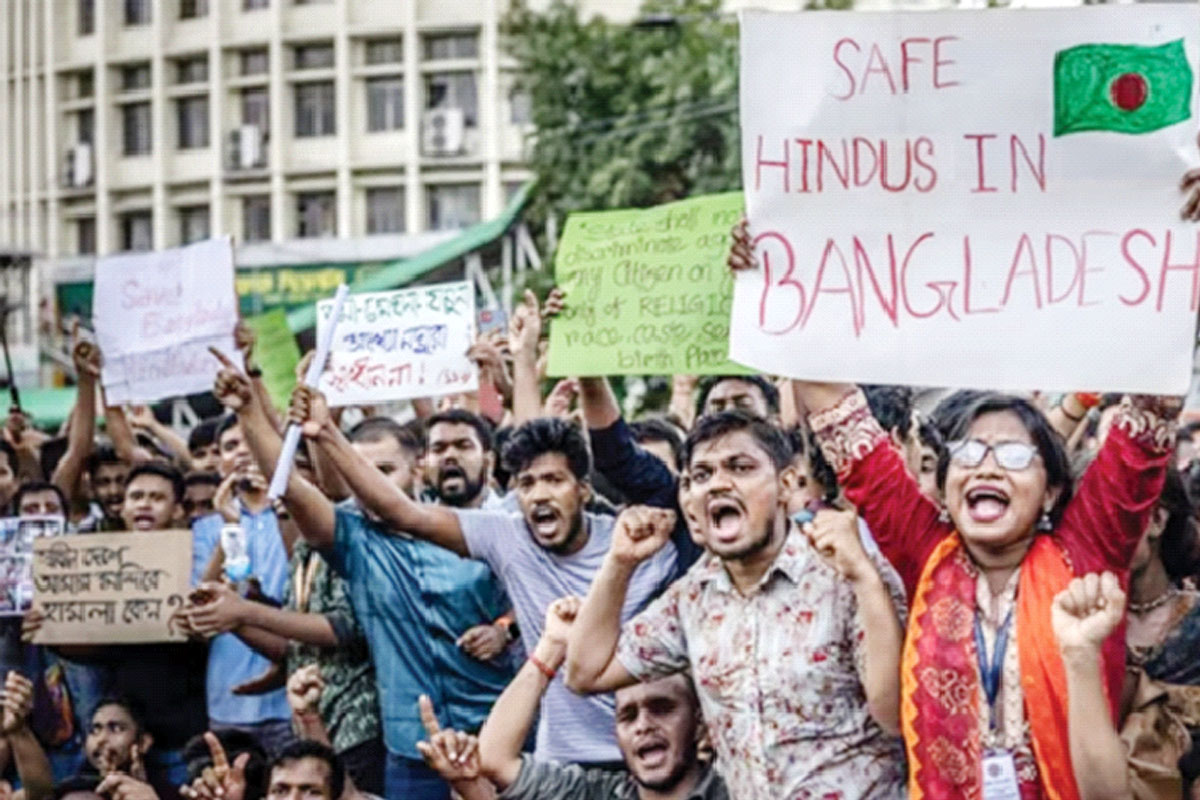
OTN Bangla Desk: Land and property disputes, disappearances, kidnappings, physical assaults, attacks on religious sites, murders and mysterious deaths feature in the July–September 2026 quarterly…

Reports about General Waker-Uz-Zaman’s future have fuelled speculation, while ISPR has warned against misleading information. No confirmed government announcement of his removal has been cited….
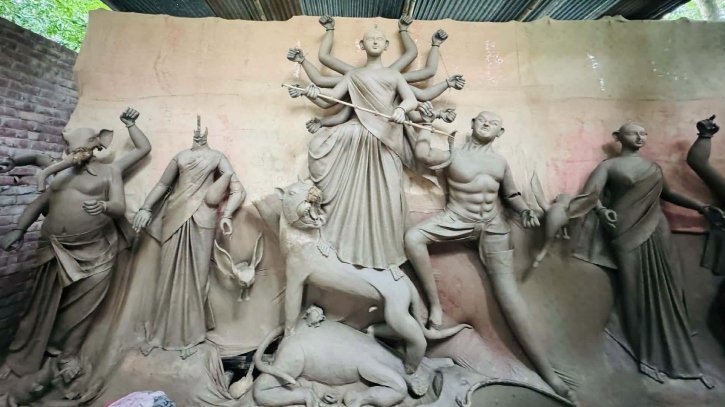
A Festival Overshadowed by Fear As Bangladesh’s Hindu community prepares for Durga Puja, reports of idol vandalism in several parts of the country have cast…




All Rights Reserved by © OTN Bangla.com.au - 2026 | Privacy Policy | Terms of Use | Editorial Policy | Proudly Developed by @SSB it.au