Durga Puja: A Pledge of Harmony, a Question of Security
Durga Puja: A Pledge of Harmony, a Question of Security Autumn’s white clouds, swaying kash flowers and the beat of the dhak herald the return…



MELBOURNE, August 3: For more than a century, Dhaka University has been regarded as the conscience of Bangladesh, the institution from which the Language Movement, the Liberation War, and the Mass Uprising of 1990 all drew their early strength. It is therefore deeply troubling that this same university, in the two years since the fall of the previous regime, now finds itself accused of doing to its own teachers what earlier governments were once accused of doing: punishing them first and offering explanations later.
On 30 July 2026, Dhaka University’s Syndicate, chaired by Vice Chancellor Professor ABM Obaidul Islam, adopted a series of far reaching disciplinary measures against several faculty members and university officials. The decisions, which the university linked to the legacy of the July 2024 mass uprising and allegations of professional misconduct, have generated significant debate over academic freedom, institutional autonomy, and procedural fairness.
The Syndicate temporarily suspended Professor Sadeka Halim of the Department of Sociology over allegations of unprofessional conduct inside and outside the classroom, ethical misconduct, and moral turpitude. It also suspended Professor Md Shafiqul Islam and Professor Afroza Shelley of the Department of Nuclear Engineering following student complaints and the findings of an internal fact finding committee.
In addition, the Syndicate relieved Professor Md Abdul Muhit of the Department of Clinical Pharmacy and Pharmacology of all academic and administrative responsibilities, alleging that he had engaged in activities contrary to the spirit of the July 2024 mass uprising, disseminated anti-government and anti-administration propaganda, supported a banned organization, and threatened members of the university community. Similar action was taken against Professor Abu Shara Shamsur Rouf of the Department of Pharmaceutical Technology and Professor Md Rafiqul Islam (Rafiq Shahriar) of the Department of Peace and Conflict Studies on comparable grounds.
In June this year, four teachers and three officials of Dhaka University were suspended over what the university press release vaguely called “various controversial activities and separate allegations,” without spelling out what those activities were. A group calling itself the Bangladesh Public University Progressive Teachers’ Society said the university had suspended four distinguished teachers based on political differences and ideological intolerance, and called the decision an assault on free thought. Barely a month later, the Syndicate met again and this time temporarily suspended three more teachers and stripped four others of all academic and administrative responsibility, one of them accused of “unbecoming conduct” inside and outside the classroom. Whatever the merit of individual complaints, a pattern of this kind, repeated syndicate meetings quietly removing senior faculty, does not inspire confidence that due process, rather than political convenience, is doing the deciding.
This is where the matter becomes constitutional rather than merely administrative. The Dhaka University Teachers’ Association has itself protested that Dhaka University is an autonomous body governed by the Dhaka University Order of 1973, not by the will of whichever administration happens to be in office, and that under this law no teacher can be punished unless allegations are established through an inquiry committee and a tribunal. The association has further alleged that none of the affected teachers were given a chance to defend themselves before any inquiry committee or tribunal, nor allowed to cross-examine or present their case. If that allegation is accurate, then what is unfolding at Dhaka University is not accountability; it is the very abandonment of the ordinance that has protected the university’s autonomy since Bangladesh’s earliest years. A university that dismisses teachers by fiat has no moral standing left to call itself autonomous.
The atmosphere on campus has also undergone a profound transformation. Islami Chhatra Shibir, the student wing of Jamaat-e-Islami, won a sweeping victory in the 2025 Dhaka University Central Students’ Union election, securing 23 of the 28 posts, including those of Vice President and General Secretary. It was the first major electoral verdict in campus politics since the July Movement, which led to the fall of the previous government the year before. By many accounts, the outcome has emboldened a more conservative and assertive brand of campus politics, under whose shadow teachers perceived to be sympathetic to the earlier secular, Liberation War era consensus have come under increased scrutiny and, in several cases, have been dismissed from their positions.
The introduction of a separate room for female students in the central cafeteria may appear, on its own, a small administrative matter, even a considerate one. But symbols matter on a campus that has for decades taken pride in a shared, mixed public space as the very embodiment of its egalitarian character. When such segregation arrives at the same moment as the sidelining of progressive faculty and the rise of a more doctrinaire student politics, it reads less like an act of comfort and more like the quiet redrawing of what is considered acceptable at Dhaka University. Small changes of this sort rarely stay small.
For decades, Dhaka University has been recognized as the intellectual and moral center of Bangladesh’s progressive political and cultural life. The university played a pivotal role in the Language Movement of 1952, the Education Movement of 1962, the Mass Uprising of 1969, the democratic movement of 1990, and the country’s Liberation War in 1971. Generations of its teachers, students, and staff have contributed to the advancement of democratic values, secularism, and social justice, often at considerable personal sacrifice.
A university survives on the willingness of its teachers to think aloud, to disagree with power, and to say uncomfortable things in a lecture hall without fear of losing their livelihood the following month. Once that willingness is punished rather than protected, the university stops being a university and becomes merely another arm of whichever politics happens to be ascendant. Progressive teachers who once spoke without hesitation are now, by many accounts, choosing their words with the same caution their predecessors once needed under military rule. That is not a healthy sign for a nation that fought a war and made the ultimate sacrifice of three million lives for democracy, the rule of law, and freedom of expression.
This decision is a Way to Eliminate Progressive Teachers
For decades, Dhaka University has been recognized as the intellectual and moral center of Bangladesh’s progressive political and cultural life. The university played a pivotal role in the Language Movement of 1952, the Education Movement of 1962, the Mass Uprising of 1969, the democratic movement of 1990, and the country’s Liberation War in 1971. Generations of its teachers, students, and staff have contributed to the advancement of democratic values, secularism, and social justice, often at considerable personal sacrifice.
Against this historical backdrop, the recent disciplinary measures against several senior faculty members have raised concerns among many academics and observers. Those affected include professors with established academic reputations in Bangladesh and abroad, many of whom are widely regarded as proponents of progressive and secular scholarship. Critics argue that the concentration of disciplinary action against academics associated with these intellectual traditions creates the perception that the measures extend beyond questions of individual misconduct and reflect a broader ideological shift within the university.
From this perspective, the decisions are viewed not merely as administrative actions but as part of a process that could marginalize progressive voices within Dhaka University. If such perceptions gain wider acceptance, they may reinforce concerns that the university is moving away from its long-standing tradition of intellectual pluralism and toward a more conservative academic and political environment. Whether that perception is justified will ultimately depend on whether disciplinary proceedings are conducted transparently, fairly, and in accordance with the principles of due process and institutional independence.
This is why the controversy extends beyond the fate of a handful of professors. It raises a broader question about the future identity of Dhaka University: whether it will continue to serve as a space where diverse ideas can coexist and be debated freely, or whether ideological conformity will increasingly shape academic life.
Whatever the ultimate outcome, Dhaka University cannot afford to treat due process as optional. A fair, transparent, and impartial inquiry that gives the accused a full opportunity to be heard is not an obstacle to justice. It is what distinguishes justice from revenge.
A university exists to uphold the pursuit, creation, and free exchange of knowledge. It must foster critical thinking, academic freedom, and respect for the rule of law. A university is not a madrasa, nor should it become a place where ideological conformity replaces reasoned judgment.
Arbitrary actions, taken without due process or adherence to established legal and institutional norms, undermine good governance and erode public confidence. If Dhaka University is to preserve its integrity and moral authority, it must ensure that every disciplinary decision is grounded in fairness, evidence, and the principles of natural justice.
–PARVEZ HASHEM
Lawyer and Human Rights Defender, USA


Durga Puja: A Pledge of Harmony, a Question of Security Autumn’s white clouds, swaying kash flowers and the beat of the dhak herald the return…
OTN Bangla Desk: A 52-year-old fish farmer was allegedly beaten to death on suspicion of stealing fish from a fish enclosure in Tala upazila of…
The death of Wahiduzzaman Shamim in Satkhira exposes the danger of mob violence in Bangladesh. According to police, the 30 year old man was beaten…
OTN Bangla Desk: Former Bangladesh Prime Minister Sheikh Hasina has criticised Prime Minister Tarique Rahman for declining to attend the BRICS summit in India. In…

I am not an avid reader, but I do go through a book whenever I can make time for it. The last audiobook I finished…
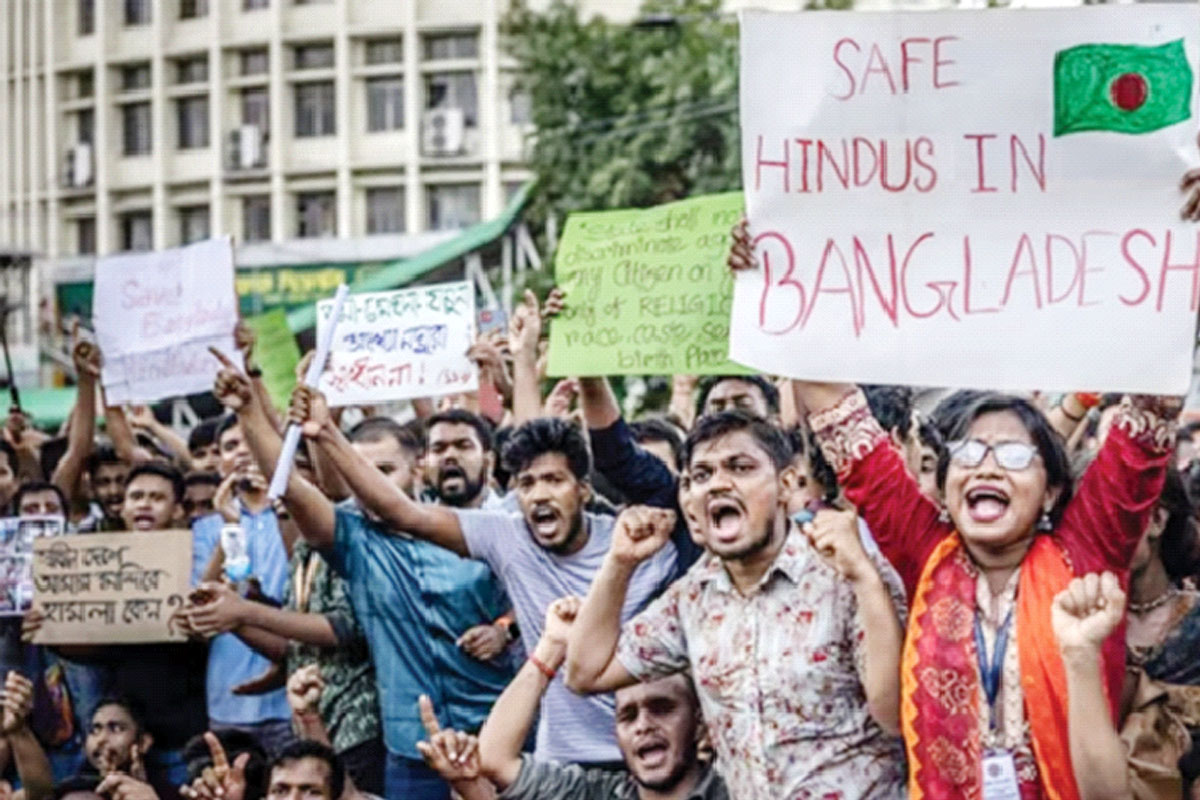
OTN Bangla Desk: Land and property disputes, disappearances, kidnappings, physical assaults, attacks on religious sites, murders and mysterious deaths feature in the July–September 2026 quarterly…
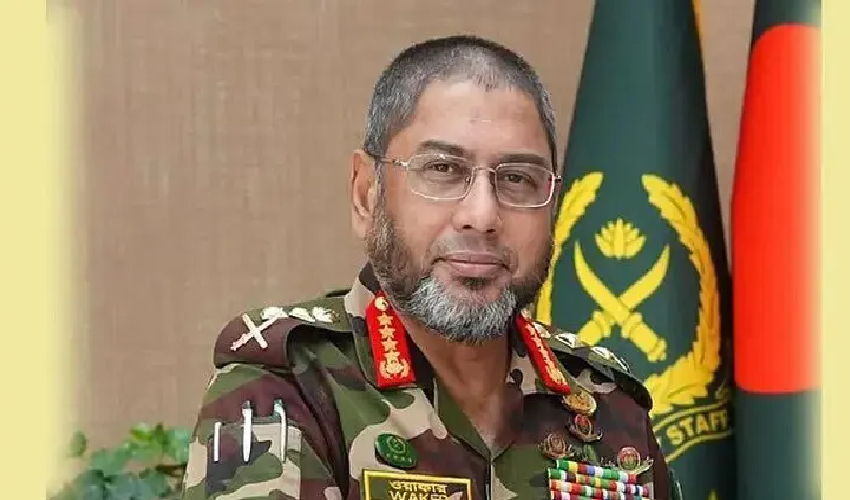
Reports about General Waker-Uz-Zaman’s future have fuelled speculation, while ISPR has warned against misleading information. No confirmed government announcement of his removal has been cited….
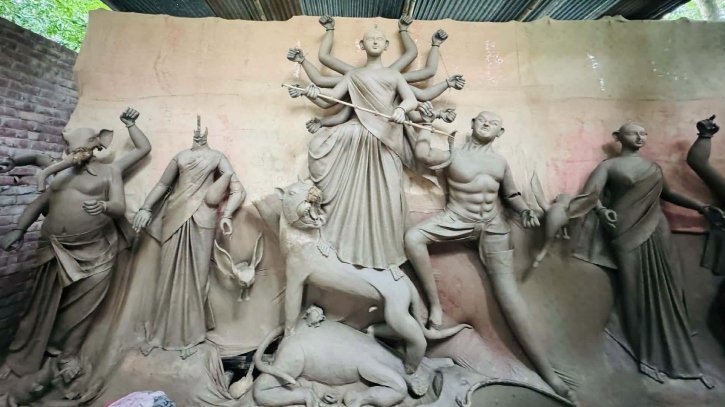
A Festival Overshadowed by Fear As Bangladesh’s Hindu community prepares for Durga Puja, reports of idol vandalism in several parts of the country have cast…




All Rights Reserved by © OTN Bangla.com.au - 2026 | Privacy Policy | Terms of Use | Editorial Policy | Proudly Developed by @SSB it.au