Five Hours of Parole—But Only After His Mother’s Death: What Kind of Humanity Is This?
The iron gates of the prison opened for just five hours—not to offer the joy of freedom, but to allow a grieving son to attend…


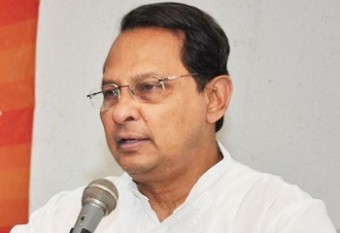
Melbourne, 1 July 2026: The conviction of Hasanul Haq Inu, president of the Jatiya Samajtantrik Dal (JSD) and a former Information Minister of Bangladesh, has become one of the most consequential judicial decisions in the country’s post-July Uprising political landscape. On 1 July, Bangladesh’s International Crimes Tribunal (ICT-2) sentenced Inu to 10 years’ rigorous imprisonment for crimes against humanity related to the July 2024 mass uprising.
The verdict, delivered by a three-member bench led by Justice Nazrul Islam Chowdhury and broadcast live on Bangladesh Television (BTV), has generated intense debate among legal experts, political observers, and the wider public. While the tribunal found three of the eight charges against Inu proven beyond reasonable doubt, it acquitted him of the remaining five.
According to the tribunal, the proven charges primarily concerned Inu’s participation in high-level political decision-making during the unrest and his communication with senior government officials. The remaining allegations—including several of the most serious accusations involving direct operational responsibility for violence—were not established to the court’s satisfaction.
The prosecution had presented eight separate allegations arising from the July uprising. These included inflammatory public statements about protesters, participation in meetings where security responses were allegedly discussed, alleged communications with law enforcement, involvement in political decisions regarding the crackdown on demonstrations, support for government actions through public statements, participation in discussions concerning the banning of political parties, approval of emergency security measures, and alleged responsibility for violence that resulted in widespread deaths and injuries.
The fact that only three of these allegations resulted in conviction raises legitimate legal and public questions. In complex political crises, determining individual criminal responsibility is never straightforward. Membership in political meetings, participation in government deliberations, or communication with senior officials does not automatically establish criminal liability. The legal threshold for proving responsibility in crimes against humanity is necessarily high and must be supported by clear, compelling, and independently verifiable evidence.
This is precisely why transparency in judicial reasoning matters. Public confidence in any verdict—particularly one involving a senior political figure—depends not only on the outcome but also on the clarity with which the evidence and legal standards are explained. The stronger the reasoning, the stronger the legitimacy of the judgment.
Bangladesh’s judiciary carries a profound responsibility in periods of political transition. Courts must remain independent of political influence while ensuring that accountability for alleged abuses is pursued fairly, consistently, and in accordance with internationally accepted standards of due process. Justice must neither become an instrument of political retribution nor appear selective in its application.
Hasanul Haq Inu’s long public career further adds to the significance of the case. He was an active participant in Bangladesh’s Liberation War and later became a prominent political leader and cabinet minister. Earlier in life, he was also known as a talented footballer during the 1960s. His contributions to Bangladesh’s political history do not place him above the law, but they do underscore the importance of ensuring that any conviction rests on rigorous legal scrutiny rather than political perception.
The broader concern extends beyond one individual. Democracies are ultimately judged not by how they treat the popular or the powerful, but by whether their institutions administer justice impartially. In politically sensitive cases, the appearance of fairness is almost as important as fairness itself. Any perception that judicial processes are influenced by political considerations risks weakening public confidence in the rule of law and the credibility of state institutions.
As Bangladesh continues to confront the legacy of the July 2024 uprising, accountability for alleged crimes remains essential. Equally essential, however, is adherence to the principles of judicial independence, procedural fairness, transparency, and the presumption of innocence until guilt is established beyond reasonable doubt. These principles form the foundation of any credible justice system.
The verdict against Hasanul Haq Inu will likely remain the subject of legal and political scrutiny for years to come. Regardless of differing political opinions, the case highlights a broader challenge facing Bangladesh: ensuring that justice is not only done, but is demonstrably seen to be done. The strength of any democracy ultimately rests on public trust in its institutions, and that trust can only be sustained through independent courts, transparent procedures, and unwavering commitment to the rule of law.
Editor: Dr. Pradip Roy, Melbourne


The iron gates of the prison opened for just five hours—not to offer the joy of freedom, but to allow a grieving son to attend…
Hundreds of Awami League supporters took part in a march in Dhaka’s Gulshan area on Friday, chanting the slogan ‘Joy Bangla’. The march was planned…
Police have recovered the body of senior journalist Pulak Chatterjee, president of the National Dailies Bureau Chief Association and former bureau chief of Bangladeshi newspaper…
Melbourne: The Australian Federation for Ethnic and Religious Minorities in Bangladesh (AFERMB) has expressed profound sorrow over the death of Shrimati Sandhya Rani Dhar, mother…
A gold trader has been hacked to death by unidentified assailants while returning home after closing his shop in Mahadebpur, Naogaon. The victim, identified as…
Bangladesh’s former Prime Minister and Awami League president Sheikh Hasina may be accompanied by a group of independent international observers if and when she returns…

Police in Gopalganj have arrested Hafizur Rahman Piyal, owner of FNF Convention Hall and Party Centre, over allegations that a concert was organised without police…
On 5 August, marking two years since Sheikh Hasina was ousted from power during the 2024 mass uprising, she delivered a speech from India in…




All Rights Reserved by © OTN Bangla.com.au - 2026 | Privacy Policy | Terms of Use | Editorial Policy | Proudly Developed by @SSB it.au