Melbourne |

Latest

Special feature:

🔴 Why Are the Falkland Islands Back in Focus, and Who Actually Owns Them?

  • 9:54 pm - May 04, 2026
President Javier Milei says the islands “have always been, are, and will always be Argentine”

Shyamal Sanyal, Bangladesh

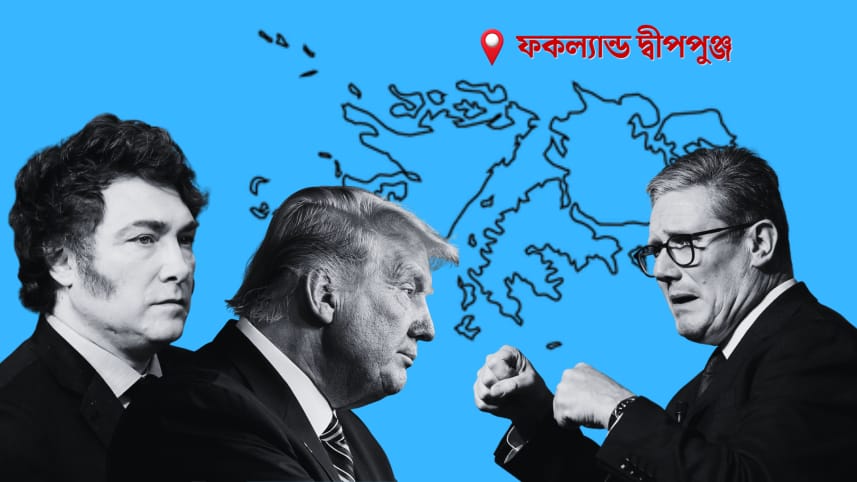
Dhaka, 4 May 2026: The British-controlled Falkland Islands have once again returned to the centre of international debate, as Argentina renewed its long-standing claim over the territory. Argentine President Javier Milei recently made strong statements asserting sovereignty over the islands, known in Argentina as the “Islas Malvinas,” reigniting a historical dispute that has shaped South Atlantic geopolitics for decades.

According to a report by Al Jazeera, Milei’s remarks came at a time when his relationship with US President Donald Trump is becoming increasingly close, while tensions between Trump and the United Kingdom appear to be growing. Trump and Milei have met several times, and the Argentine leader has frequently attended conservative political events in the United States aligned with Trump’s ideology. Trump has previously referred to Milei as his “favourite president.”

Argentina has once again asserted its claim over the British-controlled Falkland Islands, known locally as the Malvinas. Photo: Collected

Amid this evolving political alignment, the Trump administration reportedly brought the sovereignty issue of the Falkland Islands back into discussion in April. A leaked document from the US Department of Defense suggested reconsideration of Britain’s sovereignty over the islands, partly linked to broader diplomatic disagreements involving the United Kingdom’s stance on US-Israel-Iran related geopolitical tensions.

Shortly after the document surfaced, the United Kingdom reaffirmed its full sovereignty over the islands, as reported by the BBC. However, President Milei responded on social media platform X, stating that the islands “have always been, are, and will always be Argentine.”

US Secretary of State Marco Rubio later downplayed the significance of the leaked document, reiterating that Washington’s moral and diplomatic position on sovereignty had not changed.

The dispute itself has deep historical roots. The United Kingdom has maintained control over the islands for nearly 200 years, asserting continuous and peaceful administration since 1833. Argentina, however, argues that the islands were inherited as part of its independence from Spain in 1816, and that Britain forcibly occupied them in the early nineteenth century.

The sovereignty debate has been extensively analysed by institutions such as Chatham House and covered by international media including Al Jazeera and Reuters. At its core, the issue involves competing legal and historical interpretations involving colonial succession, territorial discovery, and international law.

Spanish, British, and French historical claims all play a role in the narrative. Spain’s claim is based on papal decrees and treaties from the late 15th century, while France briefly established settlements in the 18th century before ceding influence. Britain argues it established effective control through exploration, settlement, and sustained administration from the 18th and 19th centuries onward.

The islands were formally contested in 1833 when Britain reasserted control, expelling Argentine authorities. Since then, London has maintained uninterrupted governance, a fact it uses to support its sovereignty claim.

Argentina, however, maintains that British action constituted forceful occupation and that the islands were part of inherited colonial territory following independence from Spain. This disagreement escalated into the 1982 Falklands War, during which Argentina briefly occupied the islands before British forces regained control.

International law adds further complexity. Principles such as “self-determination” and “uti possidetis juris” are both cited by opposing sides. The UK emphasizes the right of the islanders to determine their political future, while Argentina argues that territorial integrity and colonial inheritance should take precedence.

A 2013 referendum held in the Falklands showed that over 99 percent of voters wished to remain a British Overseas Territory, a result London frequently cites in defence of its position. Argentina rejects this, arguing that the population is a result of British settlement and cannot override sovereignty claims.

Today, the United Nations still classifies the Falkland Islands as a non-self-governing territory and continues to encourage negotiations between the UK and Argentina. However, no breakthrough has been achieved, and both sides continue to hold firmly to their positions.

As global politics once again brings attention to the South Atlantic, the question remains unresolved: are the Falkland Islands a case of historical sovereignty, or a matter of modern self-determination? For now, the answer continues to divide nations, lawyers, and historians alike.

Shyamal Sanyal

Related News

Durga Puja: A Pledge of Harmony, a Question of Security

Durga Puja: A Pledge of Harmony, a Question of Security Autumn’s white clouds, swaying kash flowers and the beat of the dhak herald the return…


Khitish Mondal beaten to death in Satkhira on suspicion of fish theft

OTN Bangla Desk: A 52-year-old fish farmer was allegedly beaten to death on suspicion of stealing fish from a fish enclosure in Tala upazila of…

Bangladesh: A State for All Citizens or a State Ruled by the Tawhidi Janata?

The death of Wahiduzzaman Shamim in Satkhira exposes the danger of mob violence in Bangladesh. According to police, the 30 year old man was beaten…

Hasina Calls Tarique Rahman’s Decision to Skip BRICS Summit ‘Immature’

OTN Bangla Desk: Former Bangladesh Prime Minister Sheikh Hasina has criticised Prime Minister Tarique Rahman for declining to attend the BRICS summit in India. In…

Book Series Review: The Farseer Trilogy

I am not an avid reader, but I do go through a book whenever I can make time for it. The last audiobook I finished…

HRCBM Reports 498 Incidents Against Minorities in Bangladesh in Three Months

OTN Bangla Desk: Land and property disputes, disappearances, kidnappings, physical assaults, attacks on religious sites, murders and mysterious deaths feature in the July–September 2026 quarterly…

Bangladesh Army Chief Faces Renewed Scrutiny over Posting Changes and Appointment Controversy

Reports about General Waker-Uz-Zaman’s future have fuelled speculation, while ISPR has warned against misleading information. No confirmed government announcement of his removal has been cited….
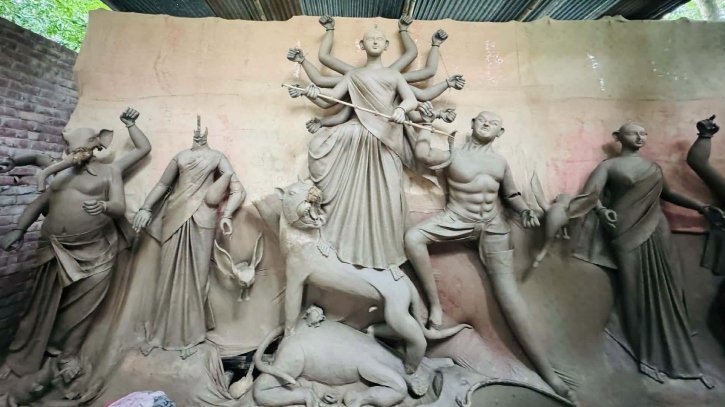
Bangladesh’s Hindus Under Fear Ahead of Durga Puja: Continuing Idol Vandalism Raises Alarms Over Minority Security

A Festival Overshadowed by Fear As Bangladesh’s Hindu community prepares for Durga Puja, reports of idol vandalism in several parts of the country have cast…


All Rights Reserved by © OTN Bangla.com.au - 2026 | Privacy Policy | Terms of Use | Editorial Policy | Proudly Developed by @SSB it.au