Durga Puja: A Pledge of Harmony, a Question of Security
Durga Puja: A Pledge of Harmony, a Question of Security Autumn’s white clouds, swaying kash flowers and the beat of the dhak herald the return…


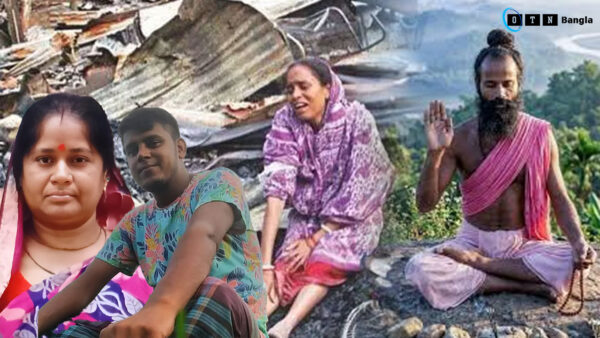
Melbourne, 2 May – The last three months of the first quarter of 2026 – February through April – have written a continuous story of fear for minority communities in Bangladesh. According to verified data from Sanatani Research and IT Ltd, 112 distinct violent incidents have spread across 29 districts in these 90 days, an average of at least 1.2 events per day. This is not a list of isolated crimes; it is a chronicle of structural failure. Temples are being burned, thefts are rampant, land is being seized, women are being raped, and no one – from freedom fighters to the families of police officers – remains safe. In these three months, a total of 20 murders, 6 rapes or attempted rapes, 26 cases of temple vandalism and arson, and 28 thefts and robberies have been recorded.
By analysing the dates, districts, types of incidents, and levels of brutality, this report raises a critical question: is minority security truly a state priority, or has it become merely a headline?
February recorded the highest number of incidents 44. The month began with theft and land grabbing but ended with gang rape and multiple murders. On 17 February, three people were arrested in Joypurhat for disguised theft during the Shiva Chaturdashi festival. The following day, 18 February, saw six simultaneous incidents. In Sitakunda, Chattogram, one Muslim was arrested for allegedly staging a play insulting the Quran at the Chandranath Temple. In Rajshahi, an accusation surfaced of road encroachment at a 144-year-old Shiva temple. In Sonagazi, Feni, there were threats of eviction from homes, and on the same day, a Hindu businessman’s shop was attacked and vandalised for refusing to pay extortion money. In Shariatpur, a daring theft at a temple resulted in two donation boxes being broken. The most brutal incident occurred in Bogura, where a Hindu youth was murdered for refusing to pay just 500 taka in extortion. This single day demonstrated how easily minority lives can be lost over the smallest of reasons.

Three accused arrested in gang rape case of Hindu woman in Bhola. Photo: Collected
On 19 February, an accusation of arson was raised against Manik Chandra Ray’s home in Pirganj, Thakurgaon. A life-threatening attack on a Hindu youth in Agailjhara, Barishal, and an attempted murder by hacking of gold businessman Subrata Adhikari in Daulatpur, Khulna, also took place. On 21 February, alongside a theft at the Rakhakali Temple in Hathazari, Chattogram, an incident in Gaibandha revealed deep cracks in the law enforcement framework – a police officer (OC) reportedly tried to kick a widowed Hindu woman for asking him to arrest her husband’s murderers. On 22 February, an attack on a minority family was reported in Sylhet. The following day, 23 February, was particularly horrific. A 25-year-old Hindu woman, who had come to a kirtan event in Tajumuddin, Bhola, was gang-raped. On the same day, a trivial incident triggered an attack on a Hindu-dominated village in Mohanganj, Netrokona, while a temple in Rupganj, Narayanganj, was set on fire and vandalised.
On 24 February, a daring robbery took place in the dead of night at a minority family’s home in Dashmina, Patuakhali. In Barguna Sadar, an accusation emerged that a Hindu family’s land was being seized to build a model mosque – a new dimension of land grabbing in the name of religious structures. 26 February was the bloodiest day of February, with seven incidents occurring simultaneously. The Bonkali Temple in Ranishangkail, Thakurgaon, saw idol vandalism and arson. The Raksha Kalimata Temple in Rupganj was vandalised. In Kaliganj, Satkhira, the family of Sunil Mandal faced land grabbing accusations. In Sarail, Brahmanbaria, a human chain protesting for temple property was attacked, leaving 10 injured, including women. Most brutally, in Chandanaish, Chattogram, adjacent to a Member of Parliament’s residence, a 70-year-old Sanatoni elder, Chandon Kumar De, was killed for resisting cow theft. The same district saw another Hindu youth stabbed to death in Sagorika. On 27 February, a Hindu wedding venue in Matlab, Chandpur, was attacked by a teenage gang, leaving five injured – proof that violence now spares neither joy nor celebration.
March recorded 35 incidents. Although the total number of events was lower than February, the level of brutality and the number of murders – 11 – was the highest across the three months. The methods of killing also changed: slit throats, semi-decomposed bodies, dumping in ponds. The month began on 1 March with idol vandalism at the Southneshwar Kali Temple in Patuakhali. On 2 March, the body of security guard Anjan Mallik was recovered from a Rupali Bank branch in Anwara, Chattogram; land grabbing by Janat Shibir workers was reported in Paikgachha, Khulna; and a temple was set on fire in Dagonbhuiyan, Feni. On 6 March, protests demanding the trial of “Farabi” over allegations of religious blasphemy took place in Dhaka, revealing the political dimension of religious incitement. On 7 March, coaching centre director Chayan Rajbhar was stabbed to death in Sariakandi, Bogura – the murder of an education professional created panic among parents. On 8 March, a cocktail bomb exploded at a temple in Cumilla city, while a Hindu tea seller was hacked to death in Cox’s Bazar for refusing extortion demands.

Bomb blast during Shani Puja in Comilla. Photo: OTN Bangla
Violence expanded further in the middle of March. On 9 March, Ram Majumdar was beaten and his land grass looted in Tajumuddin, Bhola, for refusing to pay extortion, while an armed robbery was carried out against a bKash agent in Kaliganj, Satkhira. On 10 March, valuable assets, including gold, were looted from the Sarbojonin Durga Temple in Satkhira Sadar. On 11 March, Soma Saha was attacked in Jessore Sadar for refusing extortion, and a minority businessman’s shop was vandalised and looted in Palashbari, Gaibandha. On 13 March, an accusation surfaced in Bashkhali, Chattogram, of attempting to construct structures on a Hindu cremation ground – an assault on both religious sentiment and land rights. On 14 March, four people, including women, were injured in an attack on a Hindu family in Gobindaganj, Gaibandha.
15 March was an extremely brutal day, with six incidents occurring together. A young man’s semi-decomposed body was recovered from a rented flat in Hathazari, Chattogram. An attempt to rape a Hindu student while she was receiving private tuition was reported in Rajarhat, Kurigram. A Hindu youth’s throat-slit body was recovered from Nesarabad, Pirojpur. In Chattogram’s Gate No. 1 area, a man was humiliated for eating roti inside a shop during Ramadan and was thrown out after his religion was identified. In Birganj, Dinajpur, land grabbing accusations came with threats of murder.
On 16 March, three more murders and incidents of torture occurred. The body of medicine businessman Ranjan Kuri was recovered from a pond in Noakhali. The mother of a police officer was killed by throat-slit in Paikgachha, Khulna. A press conference was held in Jhalakathi alleging harassment of a minority family. On 17 March, a spate of temple thefts began in Betagi, Barishal – the local Sanatoni community lived in terror. On 18 March, a youth was arrested in Shibganj, Chapainawabganj, over allegations of religious blasphemy, although the family claimed it was a conspiracy. The same day, the body of Hindu youth Dipon Malakar was recovered from a pond in Moulvibazar, and in Thakurgaon, miscreants cut down 600 banana trees at night – a new example of attacks on agricultural assets. On 19 March, theft occurred at the Loknath Temple in Torki Bandar, Gauronodi, Barishal; seven rooms of the Gita Temple in Fotikchari, Chattogram, were broken into and looted; and a Hindu youth’s body was recovered from a paddy field in Faridpur.
On 25 March, freedom fighter Joggeshwar Joldas and his brother were attacked by terrorists in Mirsarai, Chattogram – proving that even a state war hero is not safe. On 26 March, the wife of a Hindu police officer was murdered in Madaripur over bursting firecrackers – a grim realisation that even the family members of law enforcement agencies are not secure. On 27 March, another Hindu youth was arrested in Thakurgaon on charges of religious blasphemy.
April recorded 33 incidents, with violence spreading across 21 districts. Although the number of murders was lower than March – 4 – the level of brutality and public nature of the violence was terrifying. On 1 April, Hindu businessman Ujjwal Karmakar was hacked to death in Bauphal, Patuakhali. On 4 April, a teenager was arrested in Habiganj Sadar for planning an attack on an ISKCON temple, and on the same day, 42 minority families in Dhalesshori, Savar, Dhaka, pleaded to protect their ancestral homes. On 9 April, freedom fighter Krishnapad Acharya was hacked and injured in Kalia, Narail. On 10 April, a temple was robbed and idols vandalised in Rangunia, Chattogram, while on the same day, suspicious sabotage was reported in Adamdighi, Bogura, centred around religious identity.

42 minority families in Savar fear eviction. Photo: Collected
On 11 April, an accusation arose of an attack on a Hindu family over land grabbing in Raiganj, Sirajganj. On 12 April, a temple was robbed in Noazishpur, Rouzan. On 13 April, an accusation came from Parshuram, Feni, of attempting to frame Hridoy Boni by threatening suicide if he did not convert. On 14 April, the murder of an elderly man by slitting his throat while he was collecting flowers for worship at a temple in Ramu, Cox’s Bazar, created nationwide outrage. On 15 April, the Kali Temple in Baniachong, Habiganj, was robbed after beating the guard, and on the same day in Rajful Baria, Savar, Dhaka, Sanatoni communities were attacked, vandalised, and looted on the day of Bengali New Year – violence on the nation’s biggest festival exposed deep fractures in communal harmony.
On 17 April, five separate incidents were recorded across five districts. Skulls were stolen from a cremation ground in Harirampur, Manikganj. A female labourer was beaten for demanding wages in Ashashuni, Satkhira. Miscreants vandalised a temple and broke idols in Madhabpur, Habiganj. Attempts were made to seize the homestead of widow Kalyani Mondal in Chitalmari, Bagherhat. An accusation was raised of building a madrasa after seizing temple land in Chandaikon, Sirajganj. On 18 April, attempts to grab a Hindu family’s land and threats of murder occurred in Kuliarchar, Kishoreganj, while a gang of robbers using a truck carried out a heist in Madaripur. On 19 April, a Hindu housewife was molested in Nandigram, Bogura, and a religious ceremony of the Tripura community was attacked by a teenage gang in Mirsarai, Chattogram. On 20 April, attacks, arson, and vandalism of the Smashan Kali Temple and idols occurred in the homes of indigenous communities in Birganj, Dinajpur – signalling large-scale communal tensions.
The last week of April was particularly brutal. On 22 April, the murder of Nayan Dash by burning and hanging his body from a tree in Khurushkul, Cox’s Bazar Sadar, sparked nationwide reactions – this was the most brutal and symbolic violence of April. On 23 April, an accusation of gang rape and looting of a Hindu expatriate’s wife emerged in Sandwip, Chattogram, with the accused allegedly a BNP leader. On 25 April, a temple was robbed and idols vandalised in Morrelganj, Bagherhat.
On 26 April, four major incidents occurred in one day. RAB claimed to have solved the mystery of the murder of customs officer Bullet in Cumilla Sadar. Gold and silver ornaments and a donation box were looted from the Kaligachtala Kali Bari in Habiganj city. Attacks and looting took place at shops and homes in Hatiya. Two women of the Hindu community were tied up and robbed in their home in Shibganj, Bogura. On 27 April, a shopkeeper was murdered in Satkhira Sadar. Gold and silver were stolen after breaking locks at the Bishnu Temple in Bochaganj, Dinajpur. An accusation of temple land grabbing was raised in Patnitala, Naogaon. On 28 April, a Hindu couple was tied to a tree and beaten in Monpura, Bhola – the second instance of tree-bound torture in April. On 29 April, the semi-decomposed body of a Hindu man was recovered from a residential hotel in Cox’s Bazar, indicating that the continuity of violence continued even at the end of the month.

112 incidents. 29 districts. 20 murders. 6 rapes. Three months of violence against minorities in Bangladesh.
Based on this three-month data, the breakdown of 112 incidents is as follows: 44 in February, 35 in March and 33 in April. Among these, there were 20 murders – 5 in February, 11 in March, and 4 in April. There were 6 rapes or attempted rapes. There were 26 incidents of temple vandalism and arson. There were 28 incidents of theft and robbery. There were 15 incidents of land grabbing. There were 17 other incidents of attacks, religious incitement, and threats. A total of 29 distinct districts came under this violence. Cox’s Bazar district recorded the highest brutality – four murders in three months. Chattogram district recorded the highest number of incidents at eight, with violence spreading across almost every upazila. Bogura and Gaibandha were centres of violence in the northern region, from the 500-taka murder to police misconduct against a woman. The Satkhira-Khulna-Jessore region recorded more theft, robbery, and land grabbing.
The analysis of these 112 incidents delivers three important messages. First, violence has no specific season – incidents occurred every month from February to April, not just around religious festivals or Ramadan-Eid, but any day, anywhere. Second, the victims are not only ordinary people – freedom fighters, police family members, customs officers – all have been targeted. Third, the violence increasingly appears premeditated rather than merely neighbourly disputes: gang rape, burning to death, throat-slitting, hanging bodies from trees – these methods are not typical of spontaneous local conflicts.
Minority rights movement leaders believe that the ruling political party has repeatedly given empty promises in the name of minority security but has failed to take timely action. Over these three months, although the Ministry of Home Affairs has issued multiple statements, it has announced no emergency action plan. Police and RAB have reported progress on some cases – such as the arrest of a teenager for planning an attack on the ISKCON temple in Habiganj, and claims of solving the mystery of the Bullet murder in Cumilla – but most cases remain stuck in incomplete investigations. The gang rape in Bhola, the murder of an elderly man in Chandanaish, the throat-slit body in Pirojpur, the Nayan Dash murder in Cox’s Bazar – the main accused in these cases have still not been arrested.
The international community has also expressed concern. The UN Office of the High Commissioner for Human Rights (OHCHR) and Human Rights Watch have issued statements on the severe deterioration of the minority security situation in Bangladesh. USCIRF has reiterated its recommendation to place Bangladesh on the Special Watch List in its annual report. When the Indian government called for strong action after the Nayan Dash murder, Bangladesh dismissed it as internal interference.
Now is the time for several urgent measures. Speed tribunals must be formed for every murder and rape case, with verdicts ensured within 60 working days. A minority security desk must be opened at every police station in minority-concentrated areas. A separate section on communal violence must be created in the annual crime report of the Ministry of Home Affairs. Special land tribunals with the participation of district administrators and lawyers must be formed. Mandatory training on minority rights and communal harmony for police must be introduced. In the long term, the formation of a separate national commission for minority communities, compulsory pluralism and religious tolerance education in schools and colleges, and auditing the implementation of existing quotas for minorities in government jobs and higher education are essential.
For OTN Bangla
Source: Sanatani Research and IT Ltd
May 2026
The information in this report is based on the verified incident database of Sanatani Research and IT Ltd for February, March and April 2026. The report is subject to updates if new information becomes available.


Durga Puja: A Pledge of Harmony, a Question of Security Autumn’s white clouds, swaying kash flowers and the beat of the dhak herald the return…
OTN Bangla Desk: A 52-year-old fish farmer was allegedly beaten to death on suspicion of stealing fish from a fish enclosure in Tala upazila of…
The death of Wahiduzzaman Shamim in Satkhira exposes the danger of mob violence in Bangladesh. According to police, the 30 year old man was beaten…
OTN Bangla Desk: Former Bangladesh Prime Minister Sheikh Hasina has criticised Prime Minister Tarique Rahman for declining to attend the BRICS summit in India. In…

I am not an avid reader, but I do go through a book whenever I can make time for it. The last audiobook I finished…
OTN Bangla Desk: Land and property disputes, disappearances, kidnappings, physical assaults, attacks on religious sites, murders and mysterious deaths feature in the July–September 2026 quarterly…
Reports about General Waker-Uz-Zaman’s future have fuelled speculation, while ISPR has warned against misleading information. No confirmed government announcement of his removal has been cited….
A Festival Overshadowed by Fear As Bangladesh’s Hindu community prepares for Durga Puja, reports of idol vandalism in several parts of the country have cast…




All Rights Reserved by © OTN Bangla.com.au - 2026 | Privacy Policy | Terms of Use | Editorial Policy | Proudly Developed by @SSB it.au