Historic 7 March: The Defining Call for Freedom and Independence
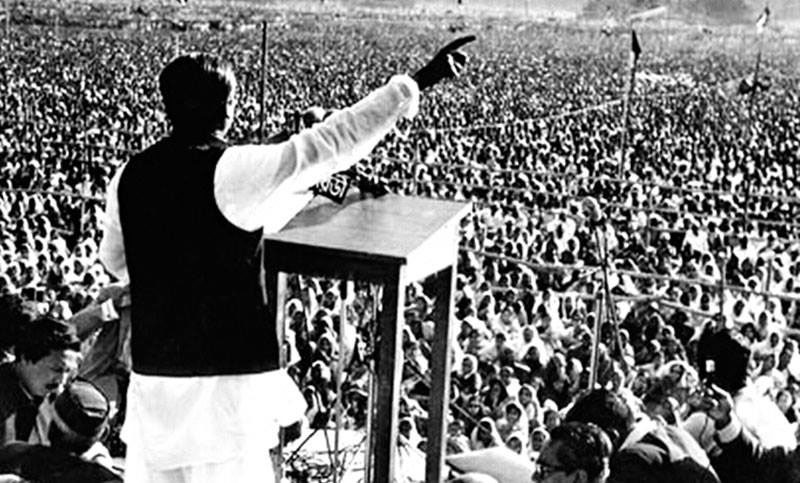
Melbourne, 7 March: Today marks Historic 7 March, a unique, unforgettable, and glorious chapter in the long struggle for freedom and independence of the Bengali…





Melbourne, 7 March: Former advisers of Bangladesh’s interim government are increasingly coming under public scrutiny as one corruption allegation after another begins to surface. Those who once stood at the centre of state power are now facing serious accusations of corruption, abuse of authority, money laundering, influence trading, and administrative irregularities. The volume and nature of the complaints have reached a point where many are now asking whether those entrusted with power during a critical national transition may have used that trust and influence for personal or political advantage.
According to sources familiar with the matter, hundreds of written complaints have been submitted to the Anti-Corruption Commission (ACC) in recent weeks against members of the former advisory council. Among the most discussed names is Asif Mahmud Sajeeb Bhuiyan, the former adviser for Local Government, Rural Development, and Youth and Sports.
Investigative sources say that modern financial crime often bypasses conventional banking systems altogether. Offshore accounts, nominee transactions, proxy ownership structures, and digital currencies are frequently used to move funds beyond easy detection. For that reason, analysts argue that reviewing bank statements alone may not be enough to determine the true origin and destination of suspicious wealth. Instead, they say, digital forensic analysis, international financial data-sharing, and crypto-tracing tools may be essential to uncover the full picture.
Serious allegations have also emerged against his close associates. His former Assistant Private Secretary, Moazzem Hossain, has been accused of abuse of power, tender manipulation, and accumulating substantial wealth through influence. The pressure of these allegations reportedly became so intense that he had to be removed from his post while the adviser was still in office. The ACC is now said to be examining those complaints as well.
In a report published on 24 April 2025, The Daily Ittefaq reported that Moazzem Hossain had been accused of using his position to run influence-based lobbying operations in various official matters.
Similar allegations have also been raised against Tuhin Farabi, a personal officer linked to Health Adviser Nurjahan Begum, and Dr Mahmudul Hasan. According to the complaints, they allegedly built an influential network through which administrative and professional favours were brokered. The allegations further claim that, in exchange for money, they promised rehabilitation or protection to certain doctors, engineers and officials accused of collaborating with authoritarian interests, and that this network may have handled transactions involving hundreds of crores of taka. These claims remain allegations and call for independent verification.
Other unusual financial details have also come under scrutiny. According to income tax records from the National Board of Revenue (NBR), the brother of the driver employed by the former adviser’s APS declared an income of approximately Tk 18 million in the 2024-25 fiscal year. Officials familiar with the matter reportedly believe that such an income does not align with his known professional or financial standing, raising further questions that may warrant deeper investigation.
There are also allegations that, while in office, Asif Mahmud Sajeeb Bhuiyan used his influence to inflate the costs of several development projects and prioritised projects in his own area. Sources suggest that alleged cost escalations in the upazila mini-stadium construction project may also come under formal scrutiny.

Moazzem Hossain and Tuhin Farabi. Photo: Collected (Daily Ittefaq)
Further controversy surrounds Mohammad Ejaz, who was appointed as administrator of Dhaka North City Corporation following a recommendation reportedly linked to Asif Mahmud. Ejaz is now facing allegations of fund misuse and other irregularities. The ACC has reportedly begun looking into these claims, while DNCC authorities have also decided to conduct their own inquiry.
Public criticism intensified further over the contracting licence of Billal Hossain, the father of then Local Government Adviser Asif Mahmud Sajeeb Bhuiyan. Following widespread discussion and backlash in political circles, on social media, and among the public, that licence was eventually cancelled. The issue sparked broader concern over whether family members of politically influential individuals should be involved in state-linked contracting activities at all.
At the same time, even more serious allegations have emerged regarding possible money laundering. Sources connected to the broader inquiry claim that roughly Tk 110 billion may have been moved abroad over the past 16 months through a syndicate-based network. According to those allegations, part of the money was transferred to Dubai, Australia, Switzerland, and Singapore. There are also claims that some transactions may have involved Bitcoin and other cryptocurrencies.
ACC sources further claim that complaints involving nearly Tk 10 billion in alleged corruption have been submitted specifically against Asif Mahmud Sajeeb Bhuiyan. A significant number of these complaints were reportedly filed by direct victims, some of whom provided names, addresses, and allegations of bribery, tender irregularities, and abuse of authority. In several cases, supporting documents and preliminary evidence were also submitted.
The allegations are also being taken seriously by Bangladesh’s financial intelligence authorities. In that context, the Bangladesh Financial Intelligence Unit (BFIU) has reportedly sent letters to all banks and financial institutions in the country seeking detailed information on the bank accounts of former adviser Asif Mahmud Sajeeb Bhuiyan. According to relevant sources, investigators are examining whether there were any unusual transactions in his accounts or in the accounts of individuals associated with him. As part of that process, transaction records from recent years are said to be under review.
Even so, many analysts have asked a central question: Would illicit money from corruption necessarily be kept in a personal bank account? Financial crime experts say that the proceeds of major corruption are often layered through multiple channels in ways that make direct proof difficult to obtain. That is why international investigations increasingly focus on cryptocurrency movements, offshore entities, and third-party financial pathways.
Investigative sources say that modern financial crime often bypasses conventional banking systems altogether. Offshore accounts, nominee transactions, proxy ownership structures, and digital currencies are frequently used to move funds beyond easy detection. For that reason, analysts argue that reviewing bank statements alone may not be enough to determine the true origin and destination of suspicious wealth. Instead, they say, digital forensic analysis, international financial data-sharing, and crypto-tracing tools may be essential to uncover the full picture.

Asif Mahmud Sajeeb Bhuiyan at a press conference at the central office of the National Citizens Party (NCP) at Bangla Motor in the capital. Photo: Courtesy of NCP
Facing the allegations, former adviser Asif Mahmud Sajeeb Bhuiyan held a press conference and publicly disclosed his own and his family members’ bank account balances. He stated that his wife’s bank account contained only Tk 613, his mother’s account a little over Tk 21,000, and his father’s account approximately Tk 547,000. He also said that his own two bank accounts together held roughly Tk 978,000.
Yet this disclosure has not ended public debate. Analysts note that individuals involved in large-scale corruption rarely keep questionable funds in obvious personal accounts. In many cases, investigators must look beyond conventional banking data to identify hidden assets, proxy holdings, illicit offshore transfers, or digital channels of movement.
Dr Iftekharuzzaman, Executive Director of Transparency International Bangladesh, has said that corruption allegations must be investigated impartially, without regard to political identity. According to him, if preliminary information suggests an actionable corruption offence, those involved should be brought under legal accountability. In his view, the rule of law requires that no individual or group be placed above scrutiny.
The issue is also drawing political attention. When asked by journalists, Local Government Minister Mirza Fakhrul Islam Alamgir said it would be premature to comment before the facts are established, and that it would be better to wait and see what emerges through investigation.
Experts say the matter goes beyond the question of personal misconduct. At its core, it is a test of state accountability, institutional credibility, and equal application of the law. Political influence or prior status in government cannot be allowed to create immunity from investigation. On the contrary, the more serious the allegation, the more transparent and rigorous the inquiry must be.
Earlier, a report published in Jugantor on 11 December 2025 noted that despite serious corruption allegations against former interim government advisers including Asif Mahmud, the ACC had not taken any visible action at the time. Expressing concern, Nadim Mahmud, General Secretary of the Youth Rights Council, said that the failure to pursue investigation or legal action despite so many allegations had raised public questions and reinforced the need for a transparent inquiry.
Meanwhile, Nasir Uddin Nasir, General Secretary of the central committee of Jatiyatabadi Chhatra Dal, has publicly accused Asif Mahmud Sajeeb Bhuiyan of corruption and demanded both investigation and trial. Speaking at a protest programme organised by the student wing, Nasir said the allegations against Asif Mahmud should be investigated through the ACC and that, if proven, justice should be delivered in Bangladesh.
Nasir further claimed that allegations involving thousands of crores of taka have become an “open secret” in the country. He acknowledged Asif Mahmud’s visible role and leadership during the July-August movement, but alleged that after assuming state office, he misused that position and authority to engage in large-scale corruption. These, too, remain political allegations unless substantiated through due process.
Commenting on the wider allegations against former advisers, Rajekuzzaman Ratan, a Politburo member of the Bangladesh Samajtantrik Dal (BASD), said that when those at the top of government are seen as benefiting from power for personal interests, it is not surprising if others within the administration are also implicated. He added that allegations of thousands of crores being siphoned abroad over the past 18 months should be investigated impartially and followed by appropriate action where evidence exists.
At this stage, the allegations remain allegations. But the scale, repetition, and institutional attention surrounding them have made one point unavoidable: public confidence now depends not on political defence or counterclaims, but on whether the relevant authorities conduct a credible, independent and thorough investigation. In a democratic state, the law must apply equally to all. If the allegations are true, those responsible should face legal consequences. If they are false or exaggerated, that too should be established clearly through due process. What the public now expects is not rhetoric, but facts.




Melbourne, 7 March: Today marks Historic 7 March, a unique, unforgettable, and glorious chapter in the long struggle for freedom and independence of the Bengali…

Melbourne, March 7: The ongoing conflict between the United States and Iran has entered a new and potentially dangerous phase, with US stealth bombers reportedly…

Melbourne, 6 March: The death toll in Iran continues to rise as the United States and Israel intensify their strikes, with residents in the capital…
Melbourne, 6 March: A series of corruption and misconduct allegations have begun to surface against several former advisers of Bangladesh’s interim government, as well as…

Melbourne, March 6: A video of US Secretary of State Marco Rubio predicting Iran’s future actions during a Senate speech in 2015 has recently gone…

Melbourne, March 5: Queensland’s state parliament has passed new hate speech legislation banning the use of two controversial slogans under certain circumstances. The phrases “from…




All Rights Reserved by © OTN Bangla.com.au - 2026 | Privacy Policy | Terms of Use | Editorial Policy | Proudly Developed by @SSB it.au