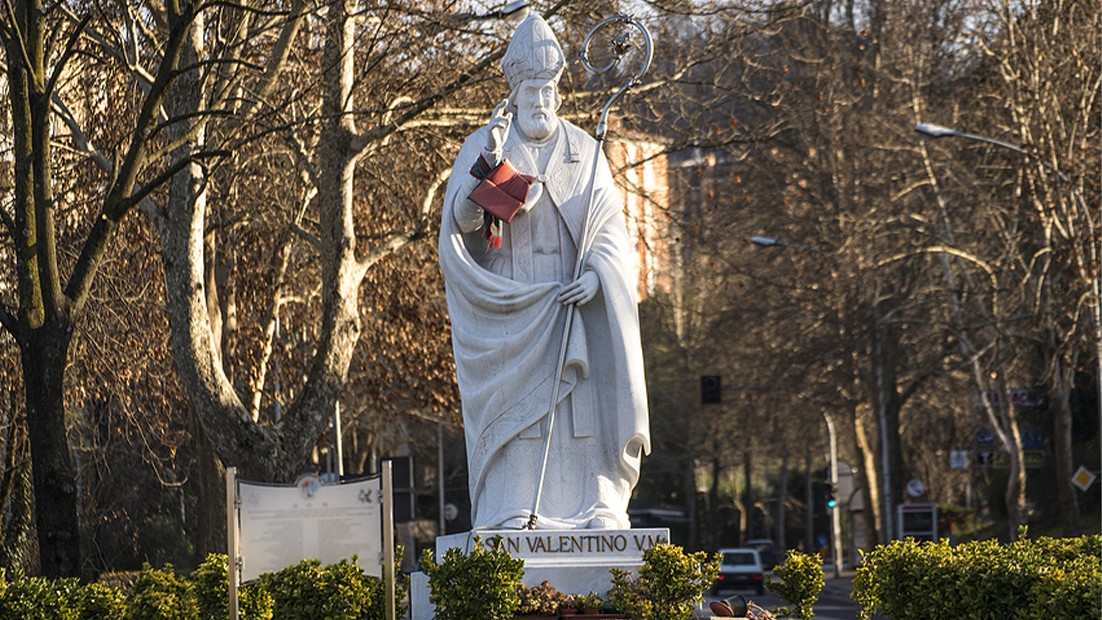
caption-The statue of Saint Valentine in the City of Terni, Italy. Photo: Collected
Melbourne, February 14: February 14 is Valentine’s Day — a time for chocolates, greeting cards, flowers, and romantic gestures toward the special people in our lives. But the origins of this day are far removed from candlelit dinners and heart-shaped boxes. The story of Valentine’s Day begins not with romance, but with religion — Christianity in particular.
The day traces back to Saint Valentine, a Christian priest in Rome in the third century. During the reign of Emperor Claudius II, Valentine refused to worship the emperor, an act that was considered disloyalty to the Roman Empire. As a result, he was executed by beheading on February 14 in the year 270.
More than 200 years later, in 496, Valentine was canonised as a saint. February 14 was officially declared his feast day in the Christian calendar. The purpose of the day was to honour his willingness to die for his faith in Jesus Christ. At that time, the day had nothing to do with romance or romantic love.
So how did a solemn religious feast day become associated with love, cards, and chocolates?
The transformation was gradual. After Valentine’s death, a story began to circulate linking him to love and romance. According to legend, Valentine secretly performed weddings for soldiers after the emperor had banned them from marrying. This defiance of authority in the name of love helped connect Valentine’s name to romance.
The idea gained cultural momentum in the 14th century when the famous English poet Geoffrey Chaucer wrote a poem titled The Parliament of Fowls. The poem referred to a folk belief that birds chose their mates on Saint Valentine’s feast day. Chaucer linked this idea to human love, and his poem is widely regarded as the first literary work to associate Valentine’s Day with romance.
From there, the custom of exchanging “valentines” slowly took root. By the 17th century in England, lovers commonly exchanged small tokens of affection on February 14. In the 19th century, commercial printing made it possible to mass-produce Valentine’s Day cards. Around the same time, chocolate became part of the tradition, after the Cadbury company in England created the first Valentine’s Day-themed chocolate boxes.
The celebration truly took off in the 20th century. The Hall Brothers printing company in Kansas City recognised Valentine’s Day as a major commercial opportunity and began producing large volumes of greeting cards. The company later became known as Hallmark, a brand now synonymous with Valentine’s Day celebrations around the world.
Today, Saint Valentine himself is largely forgotten by the public. However, his feast day still appears on the church calendars of Roman Catholics, Anglicans, Lutherans, and Eastern Orthodox Christians, though it is considered a minor observance within all these traditions.
Valentine’s Day is not the only religious observance that has been reshaped by culture and commerce. Christmas, once purely a religious celebration, is now widely associated with gifts, decorated trees, lights, and Santa Claus. Easter has become linked to chocolates, eggs, and bunnies.
A lesser-known example is All Hallows’ Eve on October 31, originally a Christian vigil before All Saints’ Day on November 1. Today, it is known worldwide as Halloween, a night of costumes and trick-or-treating. St Patrick’s Day, once a day to honour the saint who brought Christianity to Ireland, has also evolved into a global celebration of Irish culture and, for many, drinking and festivities.
Not all religious days have been commercialised. In the Christian calendar, Epiphany, Pentecost, Ash Wednesday, and Good Friday have largely remained outside the commercial spotlight. Unlike Valentine’s Day, no major industries have yet found ways to turn them into global consumer festivals — at least, not yet.
Love-themed celebrations are not unique to Christianity. Judaism observes Tu B’Av, sometimes called the Jewish Valentine’s Day, an ancient festival linked to matchmaking and marriage that remains especially popular in Israel. Hindu traditions celebrate Kama, the god of love, emphasising love for family, community, and humanity.
Buddhism and Islam, however, do not dedicate a specific day to love. Instead, both traditions encourage love, compassion, and care for partners, family members, and society throughout the year.
From a beheaded saint in ancient Rome to a global industry of cards, chocolates, flowers, and candlelit dinners, Valentine’s Day is a powerful example of how religious traditions can evolve into cultural and commercial phenomena. What began as a solemn day of remembrance has become one of the world’s most recognisable celebrations of love — reshaped by poetry, folklore, and the forces of modern commerce.
-With Canadian Affairs