Five Hours of Parole—But Only After His Mother’s Death: What Kind of Humanity Is This?
The iron gates of the prison opened for just five hours—not to offer the joy of freedom, but to allow a grieving son to attend…


Melbourne, 19 July, 2026: By Parvez Hashem
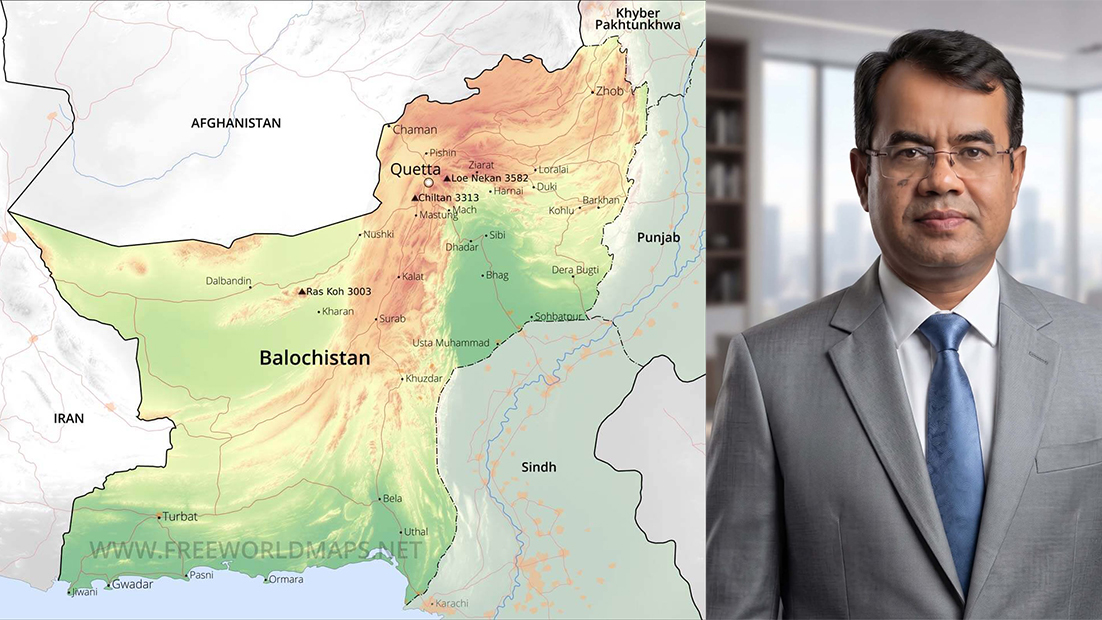
In the middle of July 2026, a claim has once again lit up newsrooms and social media timelines across South Asia. Baloch nationalist leaders, led by the vocal exile Mir Yar Baloch, have declared the formation of a “Republic of Balochistan”, complete with a flag, an anthem and a promise of self-rule. No country, and certainly not the United Nations, has recognized this declaration. Islamabad continues to administer the province through its civilian government and its army. Yet, to dismiss the moment merely as theatre would be to miss the point entirely. Whatever the legal fate of this particular declaration, it is the visible tip of a struggle for democracy and dignity that has simmered in Balochistan for nearly eight decades. That struggle deserves an honest reading, not a hasty verdict.
It goes back to 1947, when the princely state of Kalat briefly declared its own independence following the end of British paramountcy in India, only to be forcibly absorbed into the newly formed Pakistan in 1948. Baloch nationalists have never quite made peace with that annexation. Since then, the province has seen at least five significant uprisings, the current one tracing its roots to the early 2000s.
A History That Pakistan Would Rather Forget
The Baloch grievance did not begin last week, nor last year. It goes back to 1947, when the princely state of Kalat briefly declared its own independence following the end of British paramountcy in India, only to be forcibly absorbed into the newly formed Pakistan in 1948. Baloch nationalists have never quite made peace with that annexation. Since then, the province has seen at least five significant uprisings, the current one tracing its roots to the early 2000s. Each cycle of rebellion has followed the same pattern: political demands met with military force, followed by an uneasy calm that never really settles. History, in Balochistan, has a habit of repeating itself because the underlying question, who gets to decide the fate of the Baloch people, has never been honestly answered.
Democracy on Paper, Not in Practice
Pakistan describes itself as a federal, democratic republic. In Balochistan, that description has often read like a cruel joke. Provincial elections have repeatedly been shadowed by allegations of manipulation, low turnout in areas hostile to the state, and governments installed in Quetta that appear more answerable to Islamabad and Rawalpindi than to the Baloch electorate. Genuine federalism would mean the province controlling its own resources, policing and development priorities. What Balochistan has experienced instead is a hollowed-out provincial assembly functioning under the long shadow of the security establishment. When democratic institutions exist only in form and not in substance, it is hardly surprising that a section of the population begins to look beyond the ballot box for a way to be heard.
A Multi-Faith Land That Deserved Better Than Being Used as a Battleground
Balochistan has historically been home to a mix of Sunni and Shia Muslims, along with Hindu, Sikh, Christian and small Zoroastrian communities, coexisting in a region shaped by trade routes and tribal customs rather than religious uniformity. Baloch nationalism itself has largely been secular and ethnic in character rather than religious, a fact that distinguishes it from the sectarian violence that has scarred other parts of Pakistan. Ironically, this secular, pluralistic character of Baloch identity has often made the province an uncomfortable fit within a state that has, at various points, leaned on religion as a unifying and legitimizing force. A movement rooted in language, land and ethnicity does not fit neatly into that narrative, and it has paid a price for it.
The Army as Administrator, Judge and Jailer
Perhaps the most damaging feature of governance in Balochistan has been the outsized role of the Pakistani military and its intelligence agencies in what ought to be civilian affairs. Security operations, not elected representatives, have shaped the province’s day-to-day reality for decades. Human rights organizations, including Amnesty International and Human Rights Watch, have for years documented patterns of enforced disappearances and extrajudicial killings in Balochistan. Families in Turbat, Kech and Panjgur have grown tragically accustomed to the routine of a son or a brother picked up by unmarked vehicles, never to be seen again, or found later in an unmarked grave. When an army fights an insurgency by treating an entire population as suspect, it does not defeat the insurgency, it deepens the very alienation that feeds it.
Bodies as Battlegrounds
Beyond disappearances lies a more visceral horror: credible, repeated allegations of custodial torture. Survivors and rights groups have spoken of detainees subjected to beatings, prolonged confinement and worse in the course of interrogation. These are not isolated whispers but a pattern serious enough to have drawn sustained international attention over many years. A state that governs through fear rather than consent forfeits its claim to legitimacy, no matter how strong its constitutional paperwork looks on parchment.
Rich Land, Poor People
Nowhere is the Baloch grievance more concrete than in economics. Balochistan is Pakistan’s largest province by area and its least populated, sitting atop enormous reserves of natural gas, copper, gold and coal, and hosting Gwadar Port, the crown jewel of the China-Pakistan Economic Corridor. And yet it remains, by most development indicators, Pakistan’s poorest province. Gas extracted from Sui has for decades fuelled kitchens in Lahore and Karachi while many Baloch villages near the wellhead itself went without a functioning supply. CPEC and the Gwadar project were sold as instruments of shared prosperity, but many locals see them instead as an extension of an old story: outsiders extracting wealth while the Baloch people watch from the margins, denied jobs, denied royalties, denied even a meaningful say in projects built on their own soil. Economic repression of this kind, sustained over generations, does not require a conspiracy theory to explain the resentment it breeds. It only requires arithmetic.
Sovereignty is a Claim, Grievance is a Fact
None of this is to suggest that the “Republic of Balochistan” announced this month is a fait accompli. Statehood under international law requires a permanent population, a defined territory, an effective government and the capacity to conduct relations with other states, and by any honest reckoning, this declaration does not yet meet that bar. Pakistan’s counter-position also deserves a hearing: Islamabad insists that CPEC and related projects are intended to benefit the whole province, that security operations target militant groups rather than ordinary citizens, and that the Baloch Liberation Army and similar outfits are proscribed terrorist organizations whose violence against civilians and soldiers cannot be waved away as mere resistance. These are contested claims, and a fair-minded observer must hold both realities in view at once, the reasonableness of the underlying Baloch grievance and the genuine complexity of translating that grievance into a recognized state.
What Should Follow
Whatever becomes of this latest declaration, the underlying questions it has forced into the open cannot be wished away by a press release from Islamabad or a hashtag from the diaspora. A province cannot be governed indefinitely through disappearances and denial. If Pakistan wishes to keep Balochistan within its fold, and if the international community wishes to see a peaceful outcome rather than a widening insurgency, the answer lies in the unglamorous work of genuine federalism: honest elections, civilian oversight of the security apparatus, accountability for custodial deaths and enforced disappearances, and a fair share of resource revenues flowing back to the people who live above the gas fields and the mines.
At the same time, if the people of Balochistan clearly and freely express, through peaceful and democratic means, a desire for self determination or independence, democratic political parties and the international community should respect their democratic aspirations. Any lasting political settlement should be guided by the freely expressed will of the people of Balochistan and by the principles of democracy, human rights, and international law.
An opinion essay by Parvez Hashem
Lawyer and Human Rights Defender


The iron gates of the prison opened for just five hours—not to offer the joy of freedom, but to allow a grieving son to attend…
Hundreds of Awami League supporters took part in a march in Dhaka’s Gulshan area on Friday, chanting the slogan ‘Joy Bangla’. The march was planned…
Police have recovered the body of senior journalist Pulak Chatterjee, president of the National Dailies Bureau Chief Association and former bureau chief of Bangladeshi newspaper…
Melbourne: The Australian Federation for Ethnic and Religious Minorities in Bangladesh (AFERMB) has expressed profound sorrow over the death of Shrimati Sandhya Rani Dhar, mother…

Melbourne: “Ask R U OK? Any Day” — Australians are being encouraged to check in with the people around them, not just today but throughout…
A gold trader has been hacked to death by unidentified assailants while returning home after closing his shop in Mahadebpur, Naogaon. The victim, identified as…
Bangladesh’s former Prime Minister and Awami League president Sheikh Hasina may be accompanied by a group of independent international observers if and when she returns…
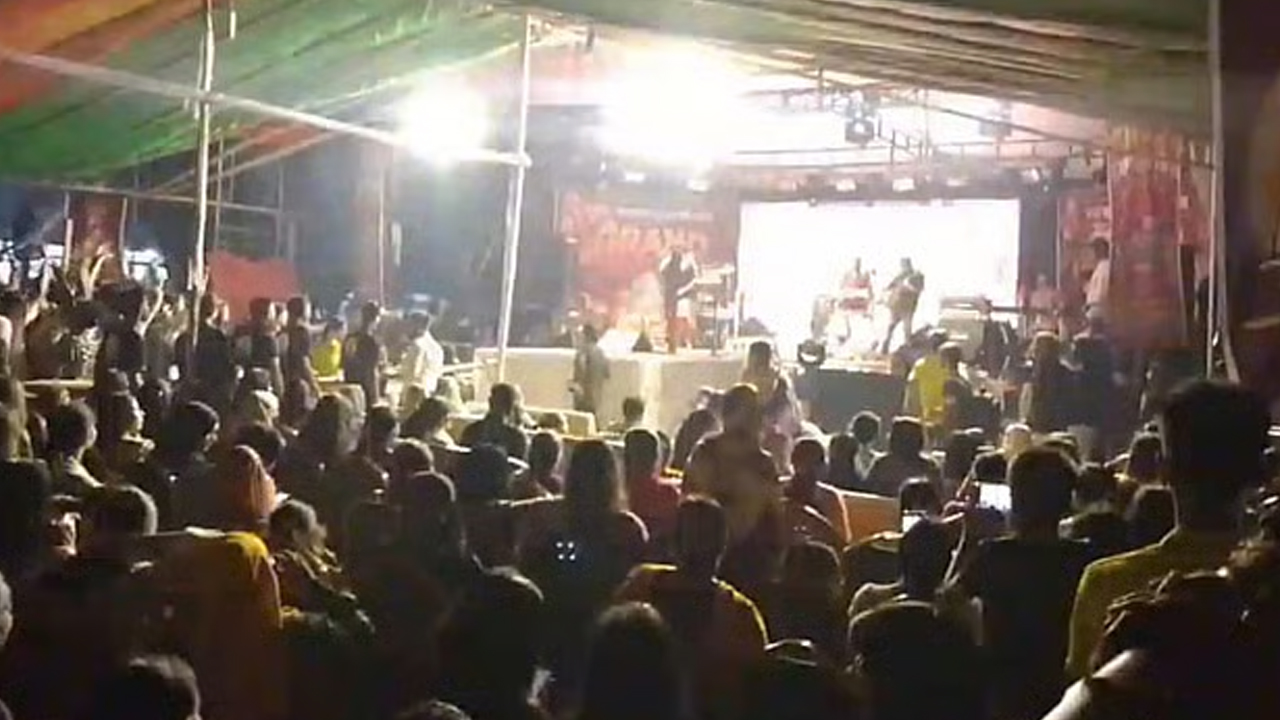
Police in Gopalganj have arrested Hafizur Rahman Piyal, owner of FNF Convention Hall and Party Centre, over allegations that a concert was organised without police…




All Rights Reserved by © OTN Bangla.com.au - 2026 | Privacy Policy | Terms of Use | Editorial Policy | Proudly Developed by @SSB it.au