According to ARTICLE 19, the move—introduced at the very end of the interim government’s tenure—lacks transparency and proper consultation, raising the risk of undermining freedom of expression in the country. The organisation warned that such last-minute initiatives fall short of due process and democratic accountability, particularly at a sensitive political moment.
The draft National Media Commission Ordinance proposes a regulatory body whose structure, mandate, and administrative and financial arrangements would remain under direct government control and heavy bureaucratic influence. ARTICLE 19 argues that this design leaves the commission vulnerable to political interference and fails to meet international human rights standards. In particular, it contravenes Article 19 of the International Covenant on Civil and Political Rights (ICCPR), which requires media regulators to be independent, impartial, and free from executive control.
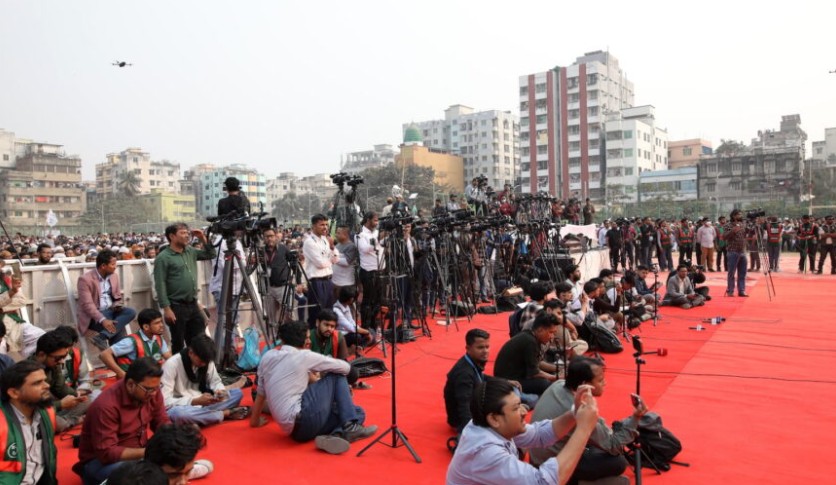
Beyond structural concerns, the ordinance contains additional flaws. Notably, freelance journalists are excluded from the definition of “journalist,” effectively denying a significant segment of the media community access to legal protections, accreditation, and safety mechanisms. ARTICLE 19 cautioned that this exclusion could further destabilise an already fragile media environment.
The proposed Broadcasting Commission Ordinance reflects similar shortcomings, the organisation said, as it prioritises centralised state control over the protection of pluralism and public-interest journalism.
ARTICLE 19 also highlighted the timing of the move as particularly troubling. The Bangladesh Media Reform Commission submitted its report on 22 March 2025, including recommendations for a National Media Commission. However, the interim government took no meaningful action on those recommendations for nearly a year, prompting public frustration from members of the Reform Commission. The sudden urgency after months of inaction, ARTICLE 19 noted, raises serious questions about the government’s motives and the legitimacy of the process.
With Bangladesh expected to form a new elected government following the 12 February national election, ARTICLE 19 has urged the interim authorities to immediately halt the enactment of the draft ordinances and leave such far-reaching reforms to the incoming administration with a fresh democratic mandate.
The organisation called on the government of Bangladesh to stop the enactment process, commit to transparent and inclusive consultations with journalists, editors, civil society, and legal experts, and ensure that any future media regulator is fully independent and free from executive control. It also urged formal recognition and equal protection for freelance journalists, alignment of all reforms with international human rights standards—including Article 19 of the ICCPR—and guarantees for the safety and free movement of journalists during the election period.
ARTICLE 19 reaffirmed its solidarity with Bangladesh’s media community and called on the authorities to uphold transparency, independence, and human rights in all media-related reforms.