India Crush New Zealand to Retain T20 World Cup Title
Melbourne, March 9: Finals are usually defined by tension, fierce competition and last-minute drama. But the T20 World Cup final in Ahmedabad told a completely…




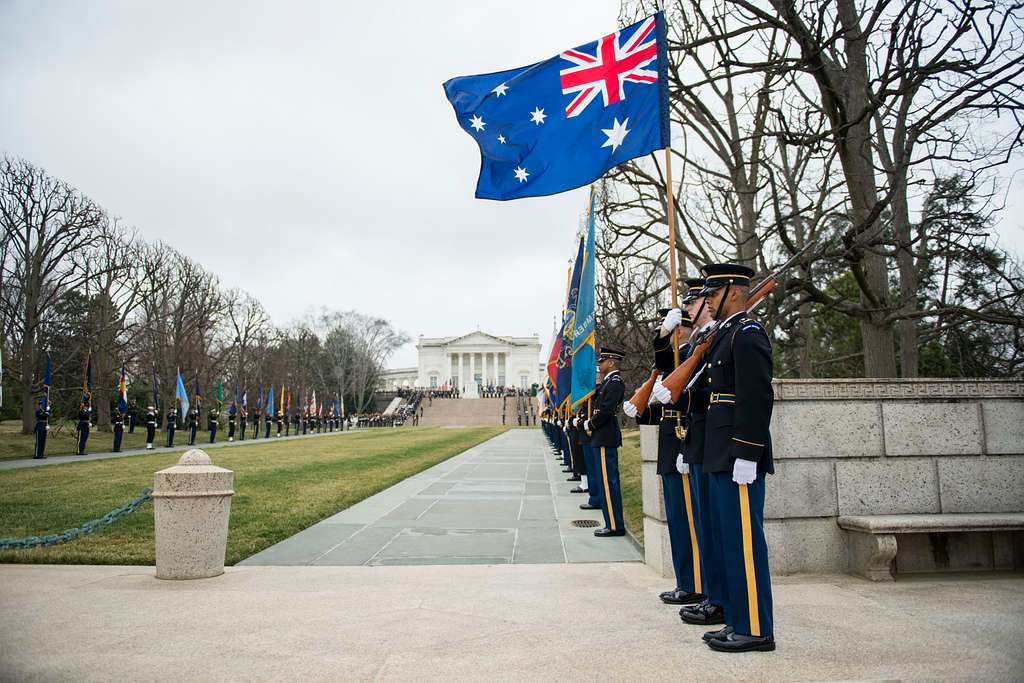
Melbourne, 9 March: As tensions escalate in the growing conflict between the United States, Israel and Iran, questions are emerging about whether Australia could become involved in the unfolding war. Reports indicate that Australia’s Army has begun contingency planning for a possible deployment to the Middle East, suggesting military leaders want to provide the Albanese Government with options if the situation deteriorates further.
Former Australian Prime Minister Tony Abbott has sharply criticised the Albanese government, accusing it of failing to support the United States and Israel in their military campaign against Iran.
In his latest newsletter, Abbott wrote that the government appeared more focused on political management than national security.
“Everything is about political management, nothing is about national security,” Abbott said.
He argued that Australia has historically stood alongside the United States in major conflicts since the First World War, including the Korean War, the Vietnam War, both Gulf wars, Afghanistan, and the fight against Islamic State.
“And now, as America and Israel strike to destroy Iran’s nuclear ambitions, Australia is doing nothing,” Abbott wrote. “We weren’t asked. We weren’t consulted. We weren’t even advised.”
Abbott described the Australian government’s current position as “shameful” and “humiliating”.
Meanwhile, reports from Iran suggest that Mojtaba Khamenei, the son of former Supreme Leader Ayatollah Ali Khamenei, has been selected as the country’s new leader.
The development follows remarks by US President Donald Trump, who said on Sunday that Iran’s next supreme leader would not remain in power for long without Washington’s approval.
Iran’s Foreign Ministry has also issued a strongly worded response to the recent US and Israeli military strikes. Speaking to reporters, ministry spokesperson Esmaeil Baghaei said the attacks had “crossed all red lines”.
Baghaei rejected ongoing discussions about mediation for a ceasefire, describing such proposals as irrelevant while military confrontations continue.
However, he warned that Iran reserves the right to defend itself if other countries allow their territory to be used to launch attacks against it.
“The belligerent parties have crossed all red lines,” Baghaei said, signalling Tehran’s growing frustration with the escalating conflict.
He also denied reports that Iran had launched offensive actions against Türkiye, Cyprus or Azerbaijan in the past week, suggesting some of the incidents reported in the media may have been “staged”.
Baghaei further accused the United States of undermining diplomatic efforts, claiming Washington had “torpedoed” negotiations that were underway before the latest American strikes on Iranian targets.
“That’s the job of the defence force, to plan for contingencies,” he said. “I would be absolutely astounded if there wasn’t some contingency planning going on.”
According to him, the US–Israeli air strikes threaten international law and risk destabilising the broader region.
The spokesperson also alleged that the United States and Israel are seeking to fragment Iran and gain control over the country’s oil resources. Despite the criticism, he emphasised that Iran remains committed to maintaining “good and friendly relations” with neighbouring countries.
Amid the escalating tensions, Australia’s Army has reportedly begun contingency planning for a possible deployment to the Middle East. The move is intended to give the Albanese Government operational options, even though Australia has ruled out direct ground combat operations in Iran.
A senior source told The Nightly that the Brisbane-based 1st Division is preparing for potential operations in the region. However, it remains unclear whether these plans would involve combat roles, logistical support, or participation in a peacekeeping mission.
The 1st Division, headquartered at Gallipoli Barracks in Brisbane, commands the Army’s three full-time combat brigades during wartime and focuses on training and operational planning in peacetime.
Defence analyst Neil James said contingency planning is a normal responsibility for military forces.
“That’s the job of the defence force, to plan for contingencies,” he said. “I would be absolutely astounded if there wasn’t some contingency planning going on.”
Australia’s Foreign Minister Penny Wong confirmed that some countries attacked by Iran had requested assistance from Australia. However, she stressed that the government would not deploy ground troops to Iran.
“We’ve made clear we would not participate in any ground troop deployment into Iran,” she told ABC.
Australia has already been involved in a limited capacity. According to reports, three Australian personnel were aboard a United States submarine that sank the Iranian frigate Dena near Sri Lanka last week under a personnel-sharing arrangement with the US Navy.
Military experts say the Australian Army is the least likely branch to become directly involved in combat operations.
Instead, the Royal Australian Air Force could potentially deploy F-35 fighter jets or radar aircraft, while the Royal Australian Navy might send a destroyer or frigate to help protect shipping routes in the region.
Analysts warn that any ground combat operation in Iran would be highly risky, given that the country has an estimated one million soldiers and extensive defensive capabilities.





Melbourne, March 9: Finals are usually defined by tension, fierce competition and last-minute drama. But the T20 World Cup final in Ahmedabad told a completely…

Melbourne, March 9: Bangladesh’s Anti-Corruption Commission (ACC) is reviewing a series of complaints accusing former law adviser Dr Asif Nazrul of corruption, abuse of power,…

Melbourne, 8 March: The second episode of OTN Bangla’s ongoing investigative reporting series has been released today, focusing on allegations of abuse of power and…

Melbourne, 8 March: Australian media outlet ABC, in its analysis titled “Women’s Asian Cup 2026: Plucky Bangladesh teases much-needed jeopardy,” noted that Bangladesh has injected…
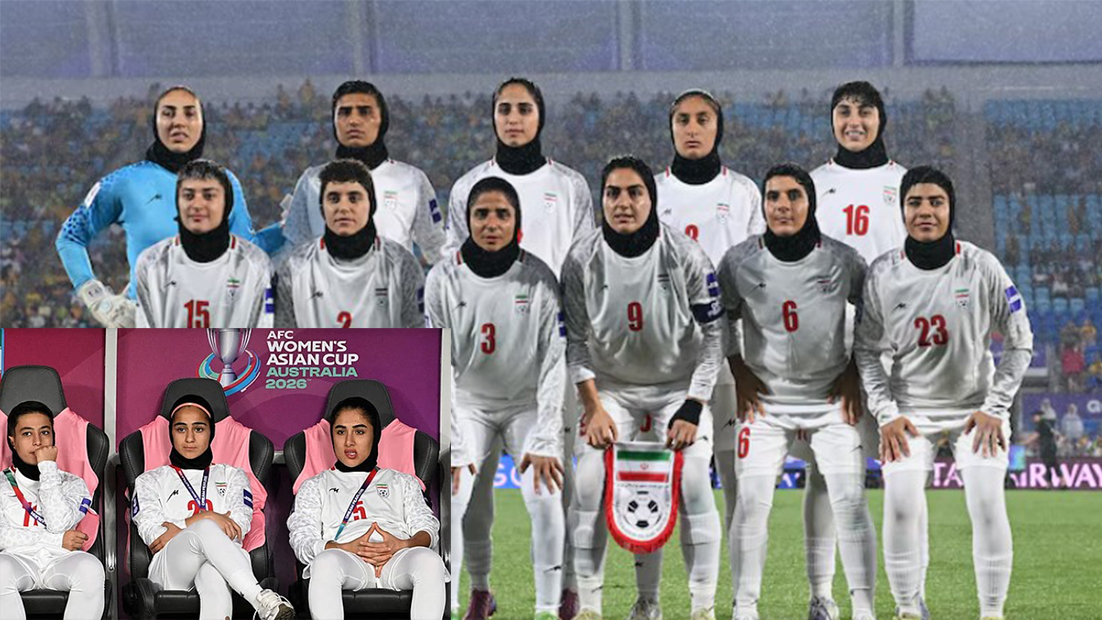
Melbourne, 7 March: The Iranian women’s national football team competing in the AFC Women’s Asian Cup 2026 in Australia has found itself at the centre…

Melbourne, 7 March: Former advisers of Bangladesh’s interim government are increasingly coming under public scrutiny as one corruption allegation after another begins to surface. Those…




All Rights Reserved by © OTN Bangla.com.au - 2026 | Privacy Policy | Terms of Use | Editorial Policy | Proudly Developed by @SSB it.au