Could Australia Be Drawn Into the US–Iran Conflict?
Melbourne, 9 March: As tensions escalate in the growing conflict between the United States, Israel and Iran, questions are emerging about whether Australia could become…




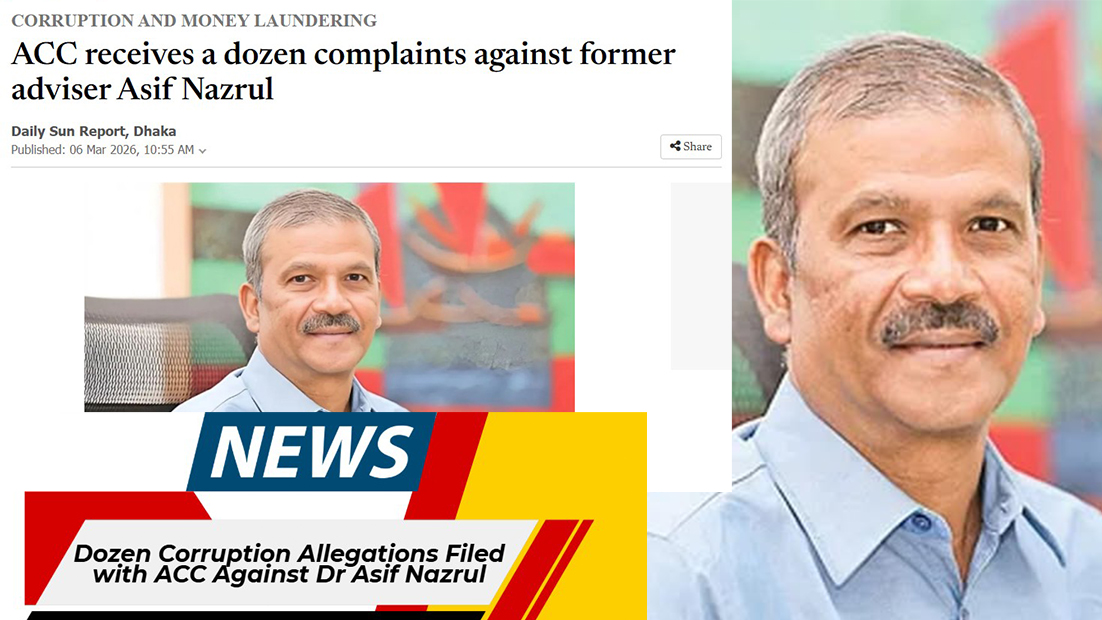
Melbourne, March 9: Bangladesh’s Anti-Corruption Commission (ACC) is reviewing a series of complaints accusing former law adviser Dr Asif Nazrul of corruption, abuse of power, influence over appointments and money laundering, according to officials familiar with the matter.
ACC sources said the allegations will be examined following the same verification process used for other complaints submitted to the commission.

More than a dozen complaints accusing Dr Asif Nazrul of corruption, money laundering and influence over appointments have been submitted to the ACC
One of the major accusations concerns alleged “bail trading”. Complainants claim that in several high-profile cases, defendants were able to secure bail through political influence and large financial transactions.
Dr Nazrul has also been accused of irregularities in judicial appointments and transfers. According to the complaints, bribes ranging from Tk 5 million to Tk 20 million were allegedly taken in connection with the transfer of judges in Dhaka and surrounding areas. Allegations also include large-scale corruption in the transfer and appointment of sub-registrars.
In one complaint, it is alleged that the chief executive officer of an industrial group fraudulently seized property belonging to his brother and sister. After the sister filed a case, the Police Bureau of Investigation (PBI) reportedly found evidence of fraud and a court issued an arrest warrant against the accused. However, the complaint claims that a directive was later given to grant bail to the VIP defendant in exchange for approximately Tk 200 million.
Similar allegations have also surfaced regarding the bail of Gaan Bangla Television’s Taposh, where complainants claim the bail was secured through substantial financial transactions. Documents relating to these allegations have reportedly been attached to the complaints. The submissions further claim that during his roughly 18 months in office, multiple defendants secured bail through financial deals.
Dr Nazrul has also been accused of irregularities in judicial appointments and transfers. According to the complaints, bribes ranging from Tk 5 million to Tk 20 million were allegedly taken in connection with the transfer of judges in Dhaka and surrounding areas. Allegations also include large-scale corruption in the transfer and appointment of sub-registrars.
The complaints claim that soon after assuming office, Dr Nazrul oversaw widespread transfers of sub-registrars in high-revenue areas such as Uttara, Badda, Gulshan and Savar. Complainants allege that large sums of money were collected through these lucrative postings.
The allegations also include claims of large-scale money laundering. According to the complaints submitted to the ACC, hundreds of millions of taka allegedly obtained through corrupt practices may have been transferred abroad.
An unnamed senior ACC official said multiple complaints alleging abuse of power, bribery and illegal wealth accumulation have been submitted against the former adviser. These complaints are currently under preliminary scrutiny and formal investigations may begin if the allegations are deemed credible.
According to the asset declaration published by the government, Dr Nazrul’s total assets stood at Tk 16,098,232 as of June 30 last year, an increase of approximately Tk 1,287,799 from the previous year. During the same period, the assets of his wife, Shila Ahmed, were reported at Tk 24,492,613, an increase of about Tk 4,357,893. The published statement did not detail the sources of their income.
ACC Director General Mohammad Akhtar Hossain said that when complaints are received, they are first evaluated by a verification committee. Each complaint is assessed on a 100-point scale, and those scoring 80 or above are accepted for formal investigation.
Meanwhile, Dr Nazrul has strongly denied the allegations. In a Facebook post, he stated that he has never engaged in corruption and has not taken even a single illegal payment in his life.
He also claimed that he did not practice nepotism while in office and did not acquire any new assets during his time in government. He dismissed reports suggesting that he had purchased property abroad or planned to leave the country as baseless.
According to the asset declaration published by the government, Dr Nazrul’s total assets stood at Tk 16,098,232 as of June 30 last year, an increase of approximately Tk 1,287,799 from the previous year. During the same period, the assets of his wife, Shila Ahmed, were reported at Tk 24,492,613, an increase of about Tk 4,357,893. The published statement did not detail the sources of their income.

Complaints filed with the Anti-Corruption Commission allege corruption in judicial appointments and administrative transfers during Dr Asif Nazrul’s tenure.
Transparency International Bangladesh (TIB) Executive Director Dr Iftekharuzzaman said that if credible evidence of corruption emerges, it should be investigated. “No one is above the law. If the allegations are proven, accountability must be ensured,” he said.
A recent report published in a national daily also compared the situation with previous caretaker governments in Bangladesh in 1990, 1996, 2001 and 2007. Those administrations typically transferred power to elected governments after organising elections, and such large-scale corruption allegations against advisers were not widely reported at the time.
The rising number of allegations against advisers of the recently departed interim government has therefore raised questions in political and public circles. Sources indicate that the number of complaints has increased further since the transfer of power on February 17, and the issue has become widely discussed both on social media and within various institutions.
Dr Asif Nazrul, whose full name is Mohammad Nazrul Islam, was born on January 12, 1966. He is a writer, novelist, columnist, political commentator and professor of law at the University of Dhaka. In August 2024, he was appointed adviser to Bangladesh’s interim government, where he oversaw the Ministry of Law, Justice and Parliamentary Affairs, the Ministry of Expatriates’ Welfare and Overseas Employment, and the Ministry of Youth and Sports.
He completed his LLB in 1986 and LLM in 1987 from the University of Dhaka and later earned a PhD from SOAS University of London in 1999. He also conducted postdoctoral research at the Environmental Law Center in Germany.
Earlier in his career, Nazrul worked as a journalist and an administrative officer in the Bangladesh government before joining the University of Dhaka as a law professor. From 2011 to 2017 he served as a bureau member of South Asians for Human Rights (SAHR).
In 1992 he was associated with the Ekattorer Ghatak Dalal Nirmul Committee, which campaigned for the trial of war criminals from Bangladesh’s 1971 Liberation War, though he later distanced himself from the organisation.
Nazrul has often drawn attention for his political commentary and public statements. His remarks on various political issues, media organisations and governance questions have repeatedly sparked debate.
His personal life has also attracted public attention. He married television and film actress Rokeya Prachy in 2004, and the couple had a daughter before divorcing in 2013. He later married Shila Ahmed, daughter of renowned Bangladeshi writer Humayun Ahmed, and they also have a daughter.
Before and after assuming his advisory role, Nazrul and several analysts had publicly claimed in seminars and television talk shows that around 2.6 million Indian citizens were working in different sectors and NGOs in Bangladesh during the previous Awami League government. Critics argue that despite raising such allegations, no visible policy action was taken during the interim government’s tenure, which has drawn further criticism from observers.
Analysts say the allegations now under review by the ACC have raised broader questions about transparency and accountability in the country’s administrative and judicial institutions. Much attention is now focused on the ACC’s verification process, as any formal investigation could trigger significant political debate in Bangladesh.




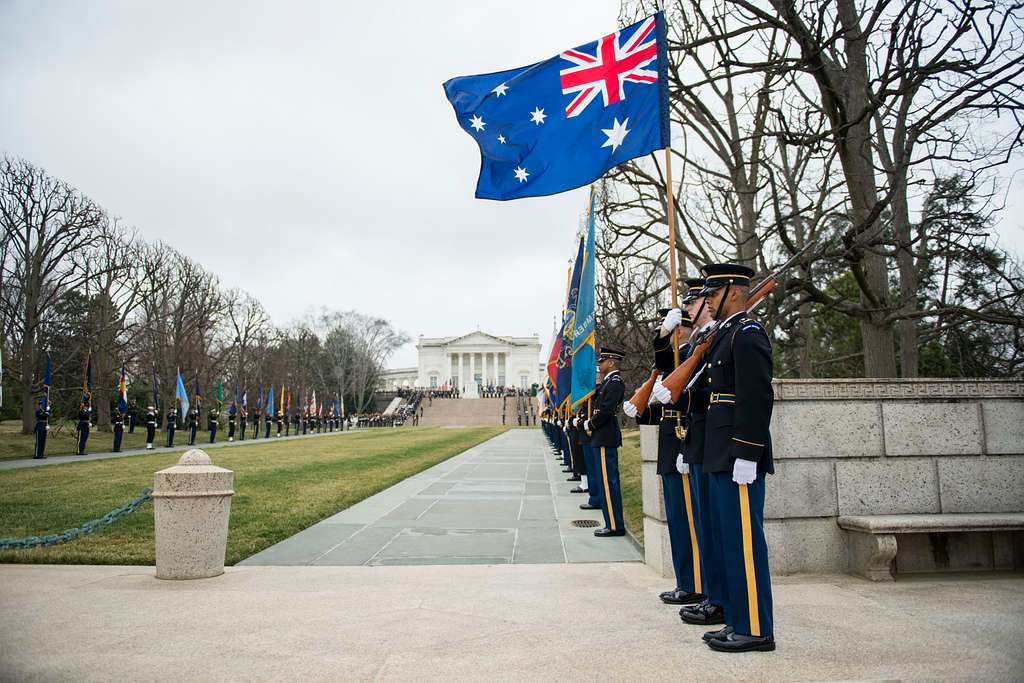
Melbourne, 9 March: As tensions escalate in the growing conflict between the United States, Israel and Iran, questions are emerging about whether Australia could become…

Melbourne, March 9: Finals are usually defined by tension, fierce competition and last-minute drama. But the T20 World Cup final in Ahmedabad told a completely…

Melbourne, 8 March: The second episode of OTN Bangla’s ongoing investigative reporting series has been released today, focusing on allegations of abuse of power and…

Melbourne, 8 March: Australian media outlet ABC, in its analysis titled “Women’s Asian Cup 2026: Plucky Bangladesh teases much-needed jeopardy,” noted that Bangladesh has injected…

Melbourne, 7 March: Former advisers of Bangladesh’s interim government are increasingly coming under public scrutiny as one corruption allegation after another begins to surface. Those…
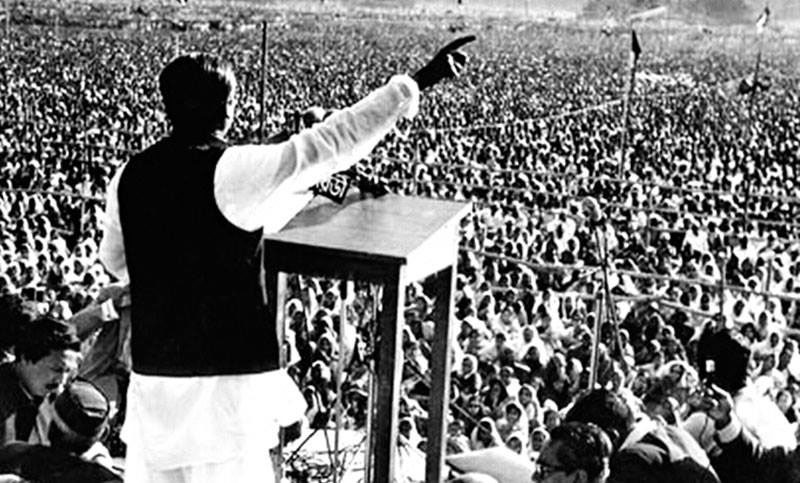
Melbourne, 7 March: Today marks Historic 7 March, a unique, unforgettable, and glorious chapter in the long struggle for freedom and independence of the Bengali…




All Rights Reserved by © OTN Bangla.com.au - 2026 | Privacy Policy | Terms of Use | Editorial Policy | Proudly Developed by @SSB it.au